

If you lead an active lifestyle, one of the first questions after getting a new tattoo is: when can I get back to the gym? Whether you are into weightlifting, running, swimming, or team sports, understanding the healing process is essential to protecting your new ink while staying fit. At Bosphorus Ink, we hear this question every day at our Istanbul Beşiktaş and Pendik studios. In this comprehensive guide, our team breaks down everything you need to know about returning to exercise after a tattoo.
Why Should You Take a Break from Exercise After a Tattoo?
A fresh tattoo is more than just body art — it is essentially an open wound. During the tattooing process, needles penetrate the epidermis (outer skin layer) and dermis (inner skin layer) to deposit ink. According to the American Academy of Dermatology, your skin then enters a healing phase similar to recovering from any cut or abrasion.
Exercise can interfere with this healing process in several important ways:
- Sweating and infection risk: Sweat creates a warm, moist environment over the tattoo area — ideal conditions for bacterial growth. The World Health Organization (WHO) emphasises the critical importance of hygiene for open wounds. Gym equipment, mats, and locker rooms harbour additional bacteria. During the healing phase, sweat can also cause ink to run and colours to fade.
- Stretching and friction: Movements involved in weight training, stretching, or intense cardio cause muscles to contract and expand, pulling on the skin over the tattooed area. This can dislodge scabs prematurely, lead to uneven ink distribution, and result in a patchy appearance once healed.
- Increased blood pressure: Intense physical activity elevates blood circulation. This can lead to excessive bleeding, swelling, and prolonged redness at the tattoo site, ultimately extending the healing timeline.
- Mechanical damage: Contact sports such as football, basketball, and martial arts carry the risk of direct impact to the tattooed area, which can damage the healing skin and compromise the final result.
Returning to Exercise After a Tattoo: A Week-by-Week Timeline
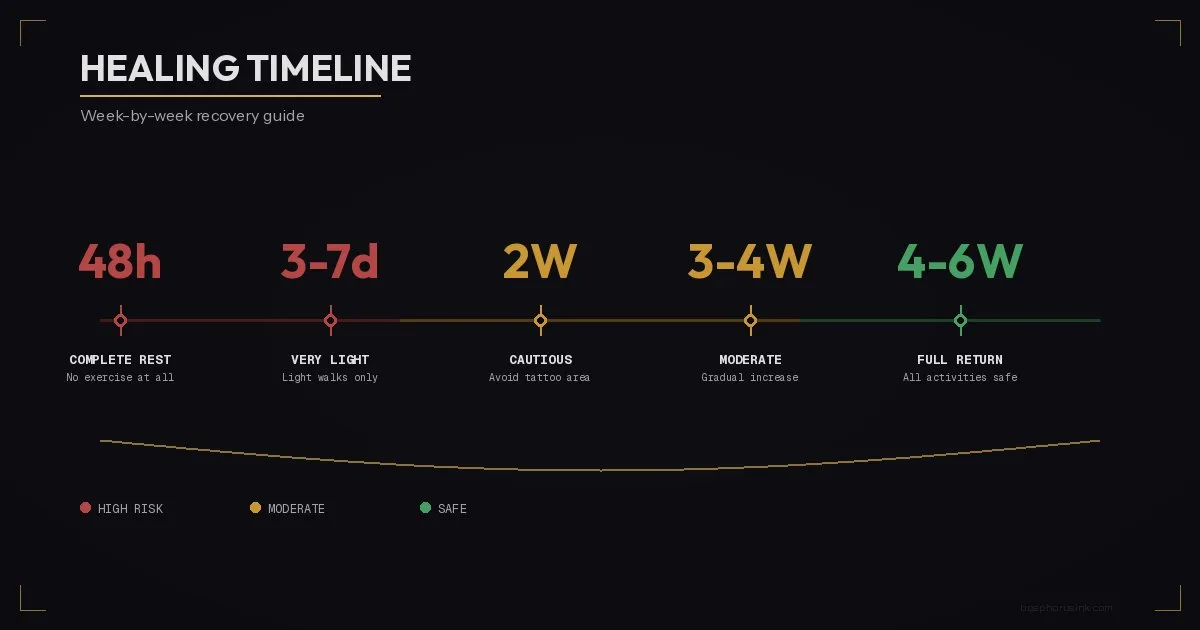
Healing times vary depending on your overall health, the size and placement of the tattoo, and your aftercare routine. However, the following general timeline can serve as a reliable guide:
First 48 Hours (Days 1-2): Complete Rest
This is the most critical period. Your tattoo is an open wound — redness, mild swelling, and some oozing are completely normal. Avoid all physical activity during this time. If a protective tattoo film (such as Dermalize) has been applied, follow the instructions provided. Focus entirely on your aftercare routine: gentle cleansing, moisturising, and keeping the area clean and dry.
Days 3-7: Very Light Activity Only
Your tattoo will begin to form scabs. You may experience itching, but do not scratch under any circumstances. During this stage, only very light walks that do not affect the tattooed area are acceptable. Any activity that causes sweating should be avoided. The skin remains highly sensitive.
Week 2: Cautious Return
Scabs begin to peel away and new skin forms underneath. You should still avoid exercises that directly engage the tattooed area. For example, if your tattoo is on your arm, you can do leg workouts; if it is on your leg, upper body exercises are a safe option. Light cycling or low-intensity walking is generally fine. Always clean the tattoo area gently before and after any exercise. See our complete aftercare guide for detailed cleaning steps.
Weeks 3-4: Gradual Increase
The outer layer of your tattoo has largely healed, but deeper skin layers are still regenerating. You can begin moderate-intensity exercises at this stage. Continue to avoid excessive sweating, direct pressure from weights on the tattoo area, and clothing that causes friction. Wear loose, breathable garments.
Weeks 4-6 and Beyond: Full Return to Normal
Once your tattoo has fully healed — meaning all redness, itching, scabbing, and flaking have completely stopped and the skin appears smooth — you can resume your full training routine. From this point on, all activities including swimming are considered safe.
Recommended Waiting Periods by Sport Type
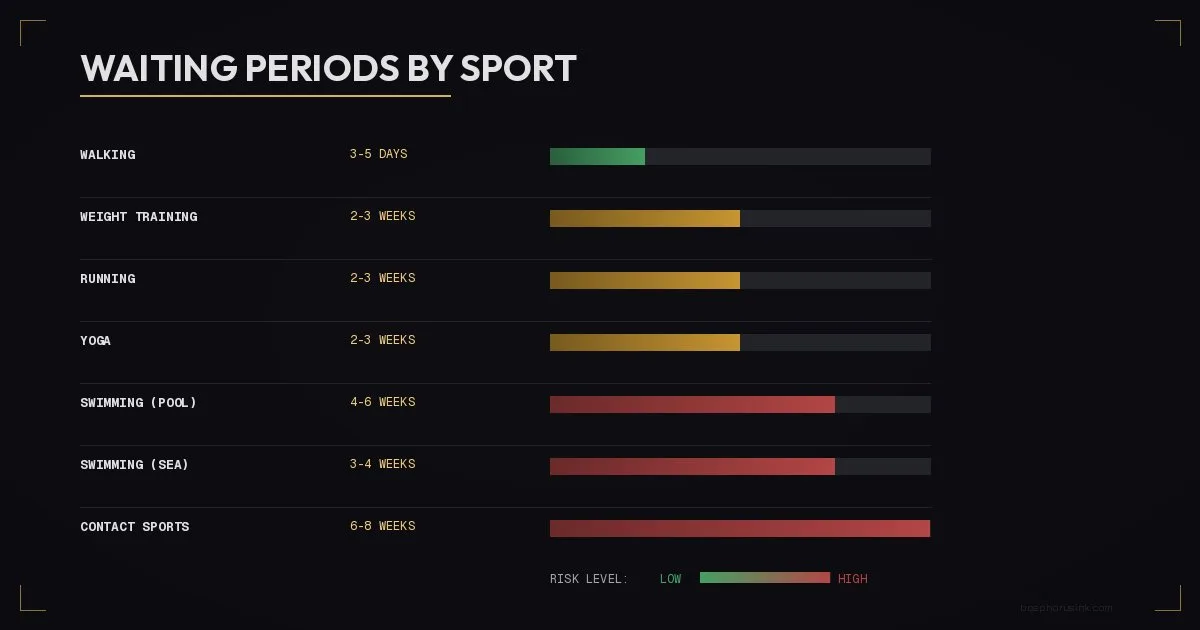
Different types of exercise carry different risks for a healing tattoo. Here are the minimum recommended waiting periods:
- Walking and light cardio: Can be resumed after 3-5 days. Ensure there is no friction on the tattoo area.
- Weight training and gym workouts: Wait at least 2-3 weeks. Exercises that directly work the tattooed area should be postponed even longer.
- Running: Can be resumed after 2-3 weeks depending on sweat intensity. Avoid clothing that rubs against the tattoo.
- Yoga and pilates: Wait at least 2-3 weeks. Stretching movements can pull on the healing skin and negatively affect recovery.
- Swimming (pool): Wait at least 4-6 weeks. Chlorine damages healing skin, fades ink, and increases infection risk.
- Swimming (sea): Wait at least 3-4 weeks. Salt irritates healing skin, and sand can cause mechanical damage.
- Contact sports (football, basketball, martial arts, etc.): Wait at least 6-8 weeks. The risk of impact and friction is very high.
Tips for Exercising with a Healing Tattoo
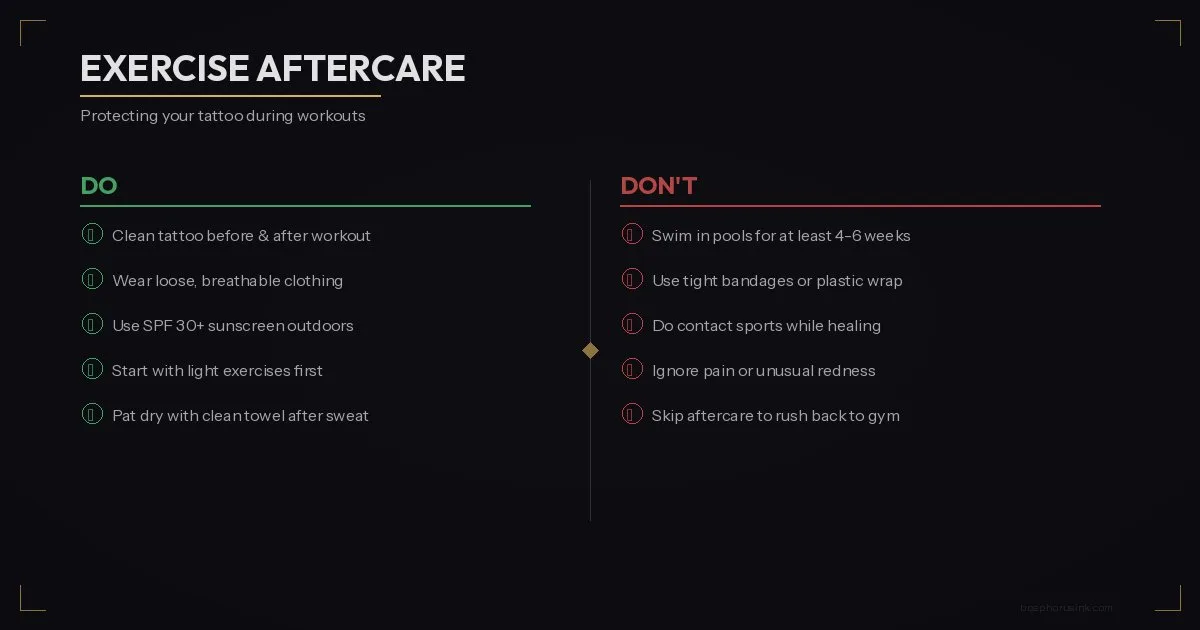
Once your waiting period is over and your tattoo has healed sufficiently, keep the following points in mind when returning to exercise:
- Gently wash the tattoo area with antibacterial soap before and after every workout, and pat it dry with a clean towel.
- Make sure any equipment that comes into direct contact with the tattoo is clean.
- Wear loose, breathable clothing — tight, synthetic fabrics cause friction and trap moisture.
- If you are training outdoors, protect your healed tattoo from the sun with SPF 30 or higher sunscreen.
- If you notice increased pain, redness, or unusual discharge, stop exercising immediately and contact our team.
Long-Term Relationship Between Exercise and Tattoos
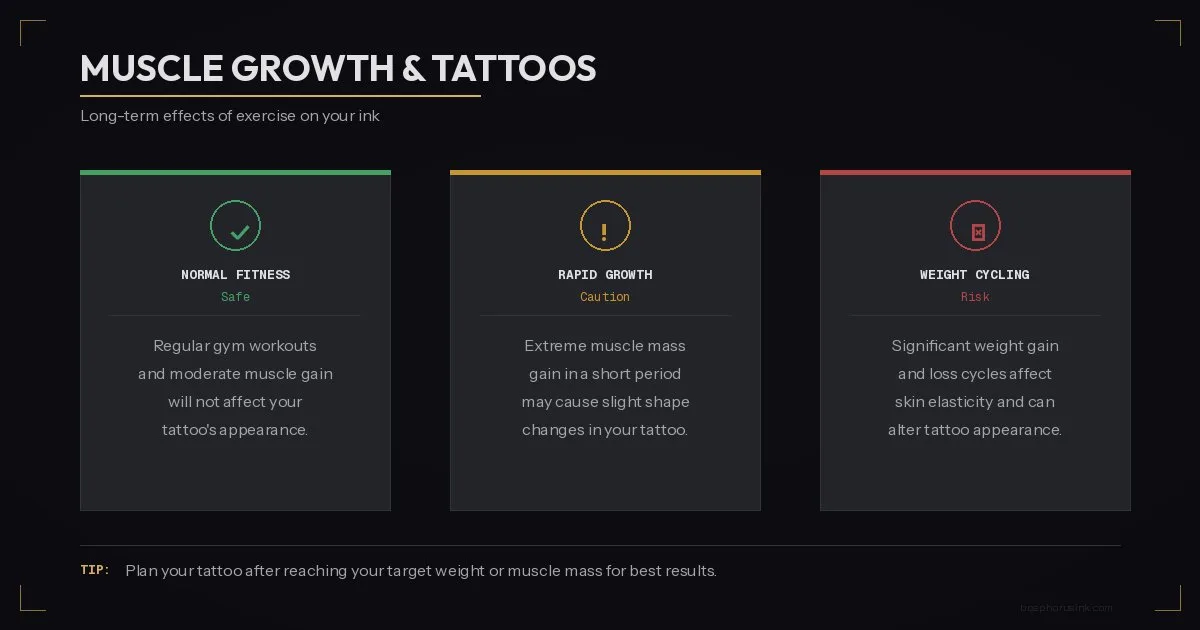
Once your tattoo has fully healed, regular exercise will not damage it. However, there are a few long-term considerations worth keeping in mind. Extreme muscle growth, particularly rapid increases in muscle mass in a short period, can cause slight distortion in the tattoo's shape. That said, normal fitness-level development will not negatively affect your tattoo. Significant weight gain and loss cycles can also impact skin elasticity and alter the appearance of your tattoo over time. If you are planning to get a tattoo (check our Istanbul tattoo prices guide to plan your budget) while undergoing a major body transformation, it may be wiser to wait until you have reached your target weight or muscle mass.
Planning Tips Before Getting a Tattoo
If you have an active fitness lifestyle, consider these strategies when scheduling your tattoo appointment (if it is your first tattoo, our pain guide by body area may also be helpful):
- Time your tattoo session to coincide with a rest week or deload period.
- Schedule your tattoo at least 4-6 weeks before any competitions, matches, or tournaments.
- In summer, plan around your beach and pool activities.
- When choosing a tattoo placement, consider which muscle groups you use most frequently and consult our team if needed.
For style inspiration that complements your active lifestyle, explore our trending tattoo styles guide.
The Bosphorus Ink Difference
At Bosphorus Ink, we provide our services in a hygienic, sterile, and professional environment at our Istanbul Beşiktaş and Pendik Lens Yaşam Merkezi locations. Our aftercare guide helps you track your healing process step by step, and our team is here to guide you back to your active lifestyle as safely and quickly as possible. For any questions about exercise after getting a tattoo, reach out to our team via WhatsApp.
Frequently Asked Questions
How many days after getting a tattoo can I exercise?
Can I go running after getting a tattoo?
When can I swim in a pool or the sea after getting a tattoo?
Can I lift weights after getting a tattoo?
Should I cover my tattoo when exercising?
Will exercising after a tattoo cause the colours to fade?
Will building muscle distort my tattoo?


