
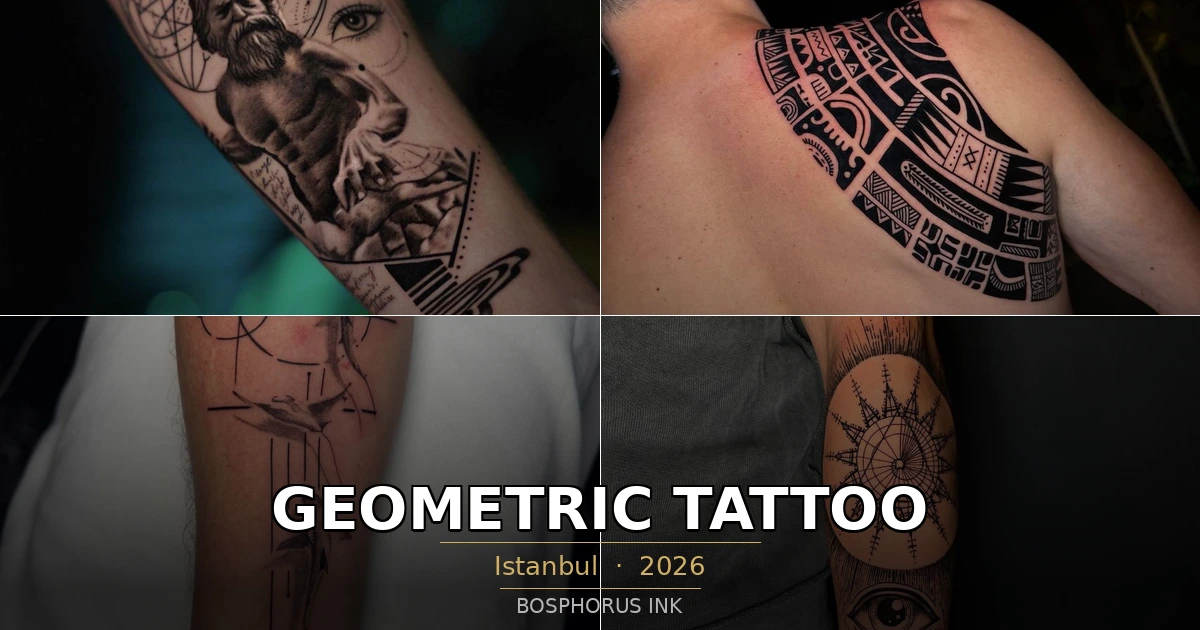
What Is Geometric Tattoo?
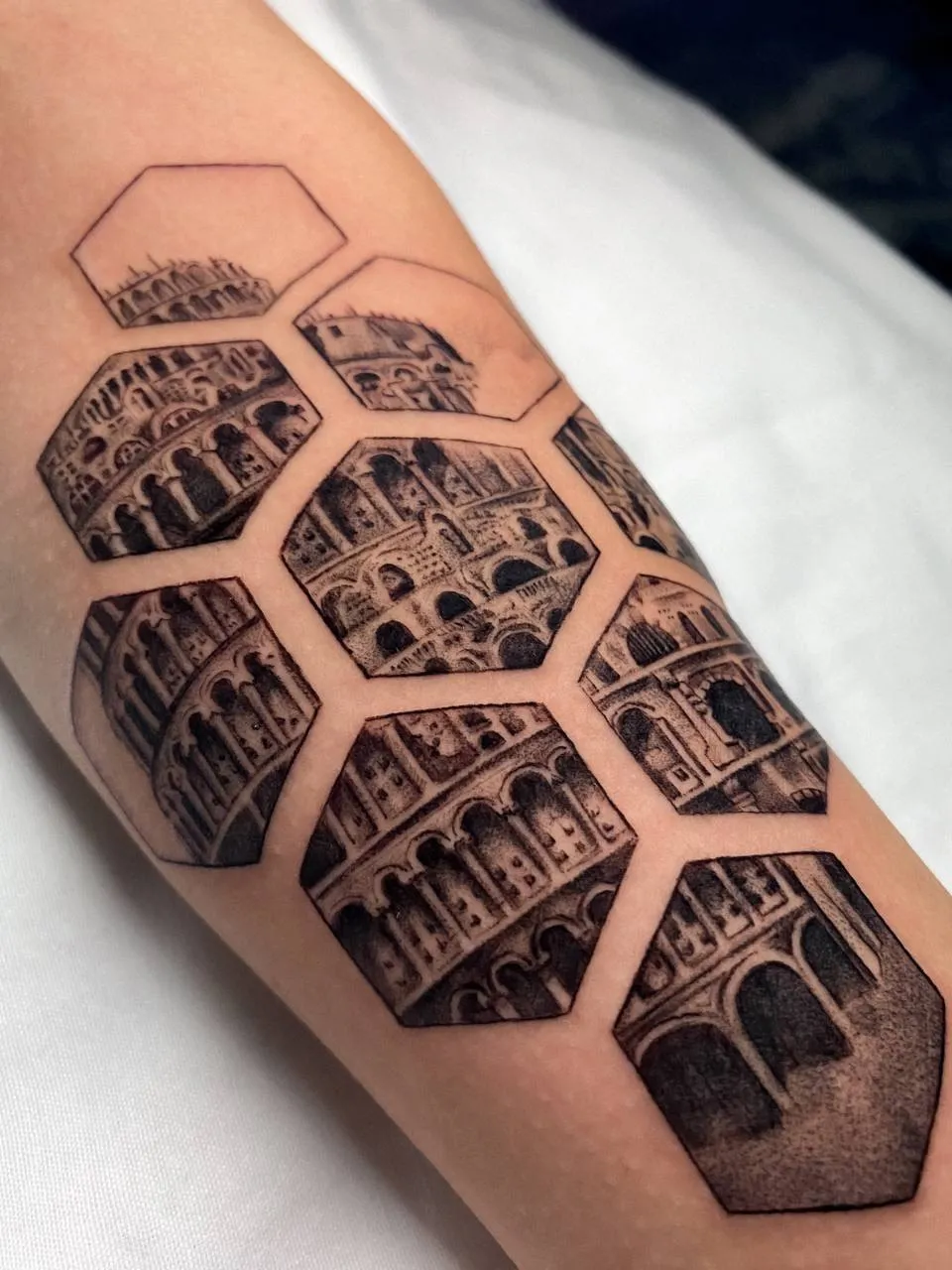
Geometric tattoo is a discipline built entirely on mathematical precision. Triangles, circles, hexagons, spirals, mandalas and other forms are arranged in deliberate, symmetrical compositions where every line must meet exactly, every angle must be intentional, and every proportion must be calculated. Unlike expressive or freehand styles, geometric tattooing leaves no room for happy accidents — the beauty is in the absolute control.
Beyond the technical dimension, geometric tattoos carry substantial symbolic weight. Triangles represent transformation and directional energy. Circles signify wholeness, continuity and the cycles of existence. Spirals reference growth, infinity and the unfolding of the universe. Hexagons mirror nature's most efficient structural form: the honeycomb. The Fibonacci spiral echoes patterns found in shells, galaxies and plant growth. This symbolic richness transforms a geometric tattoo from a decorative choice into a statement of personal meaning.
The style draws on an extraordinary range of cultural and historical traditions. Ancient Egyptian architecture, Greek philosophical geometry, Māori tribal patterns, Japanese family crest design, Islamic geometric ornamentation — all feed into the contemporary geometric tattoo vocabulary. Istanbul, sitting at the intersection of several of these traditions, offers an artistic environment where this style feels particularly at home.
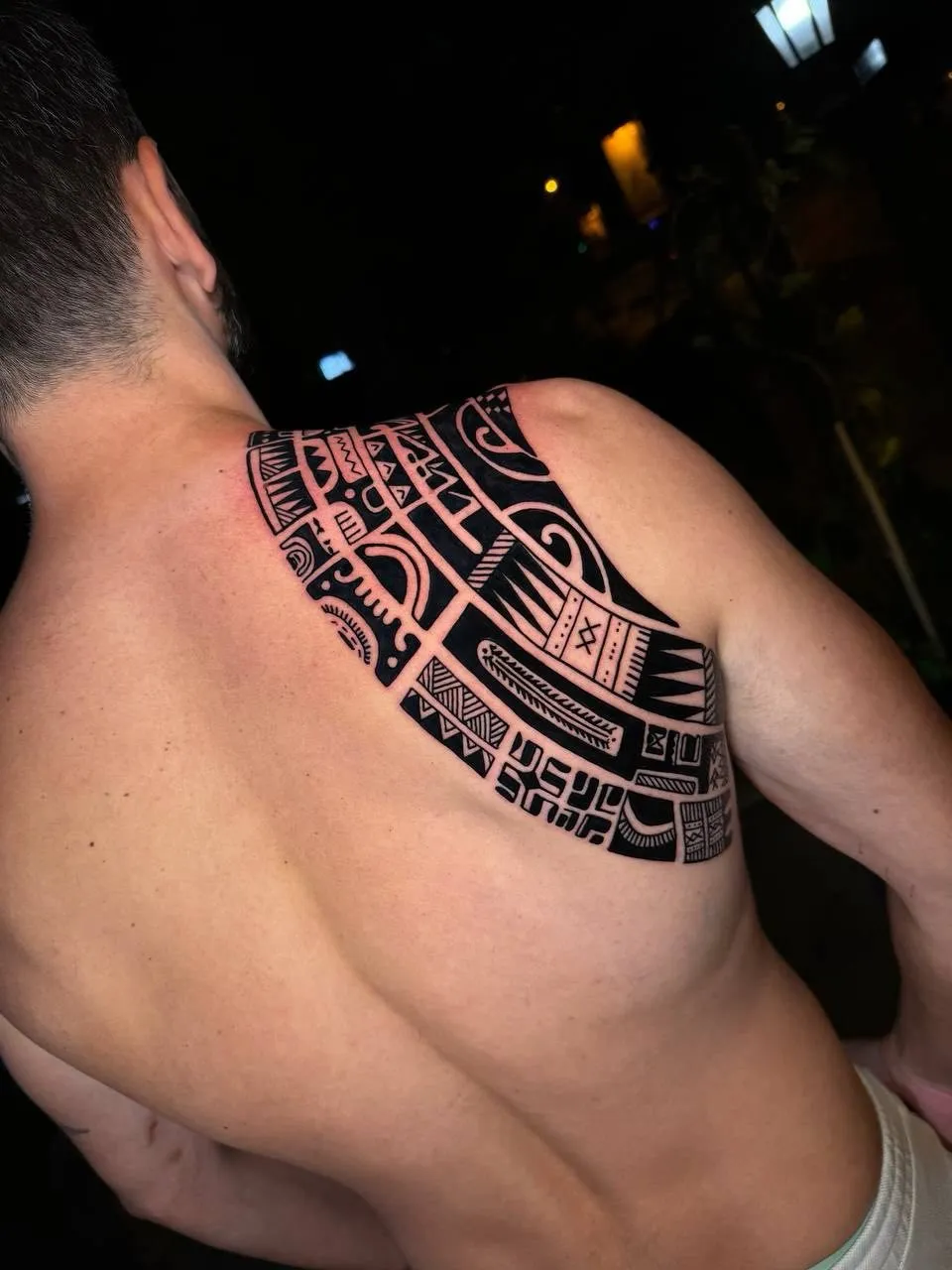
Geometric Tattoo Styles & Design Options
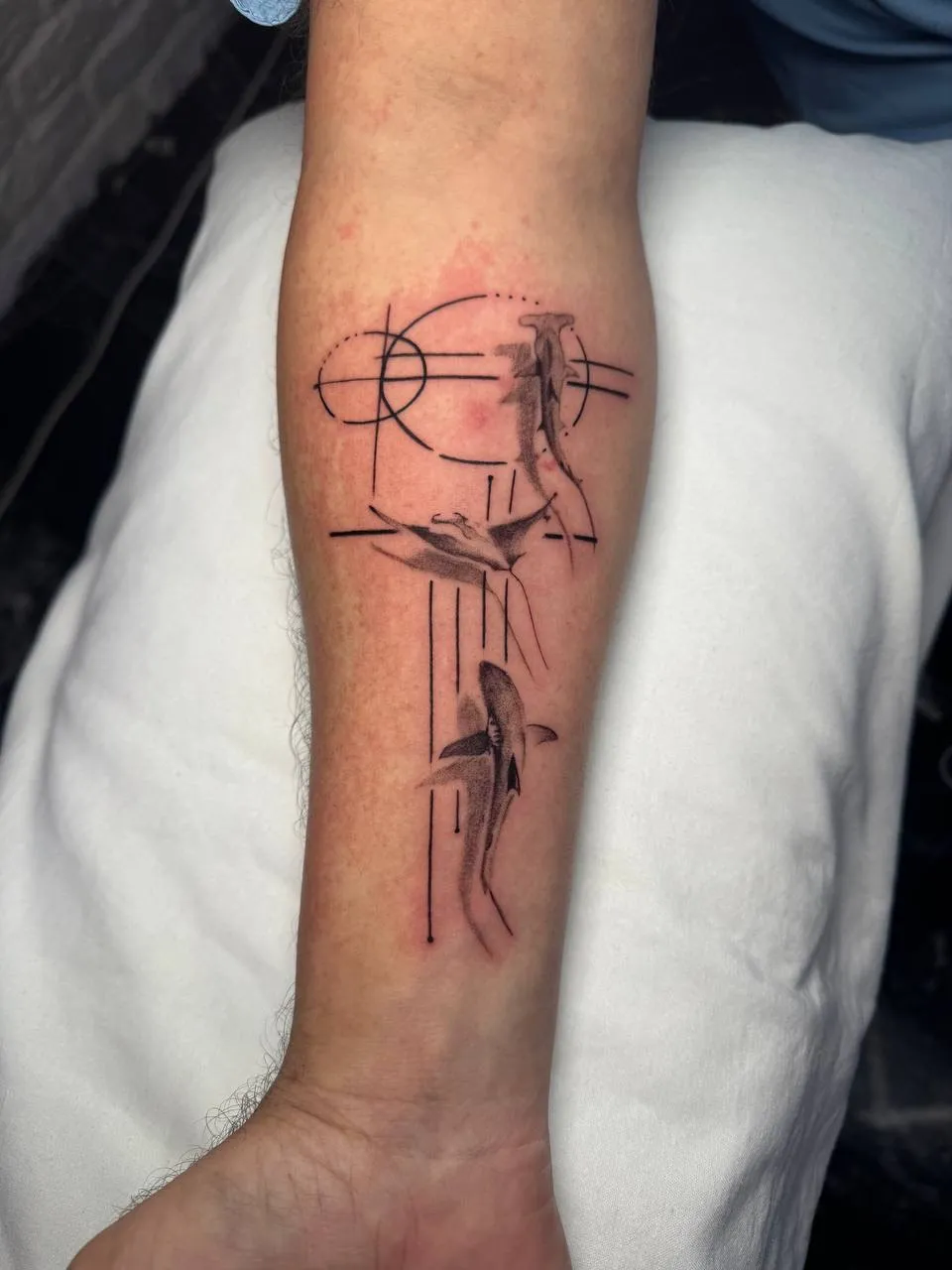 sacred geometry, blackwork and dotwork examples" width="300" height="400" loading="lazy">
Geometric tattooing is not a single aesthetic — it is a broad universe of sub-styles, each with its own visual language, technical demands and symbolic associations. The artists at Bosphorus Ink work across all of the following.
Sacred Geometry
Designs rooted in universal mathematical archetypes: the Flower of Life, Metatron's Cube, the Golden Ratio spiral, Platonic solids. The appeal of sacred geometry lies not only in the visual result, but in the idea that these patterns reflect the mathematical structure of the universe itself. This style tends to use fine, precise lines and requires exceptional technical control.
Blackwork Geometric
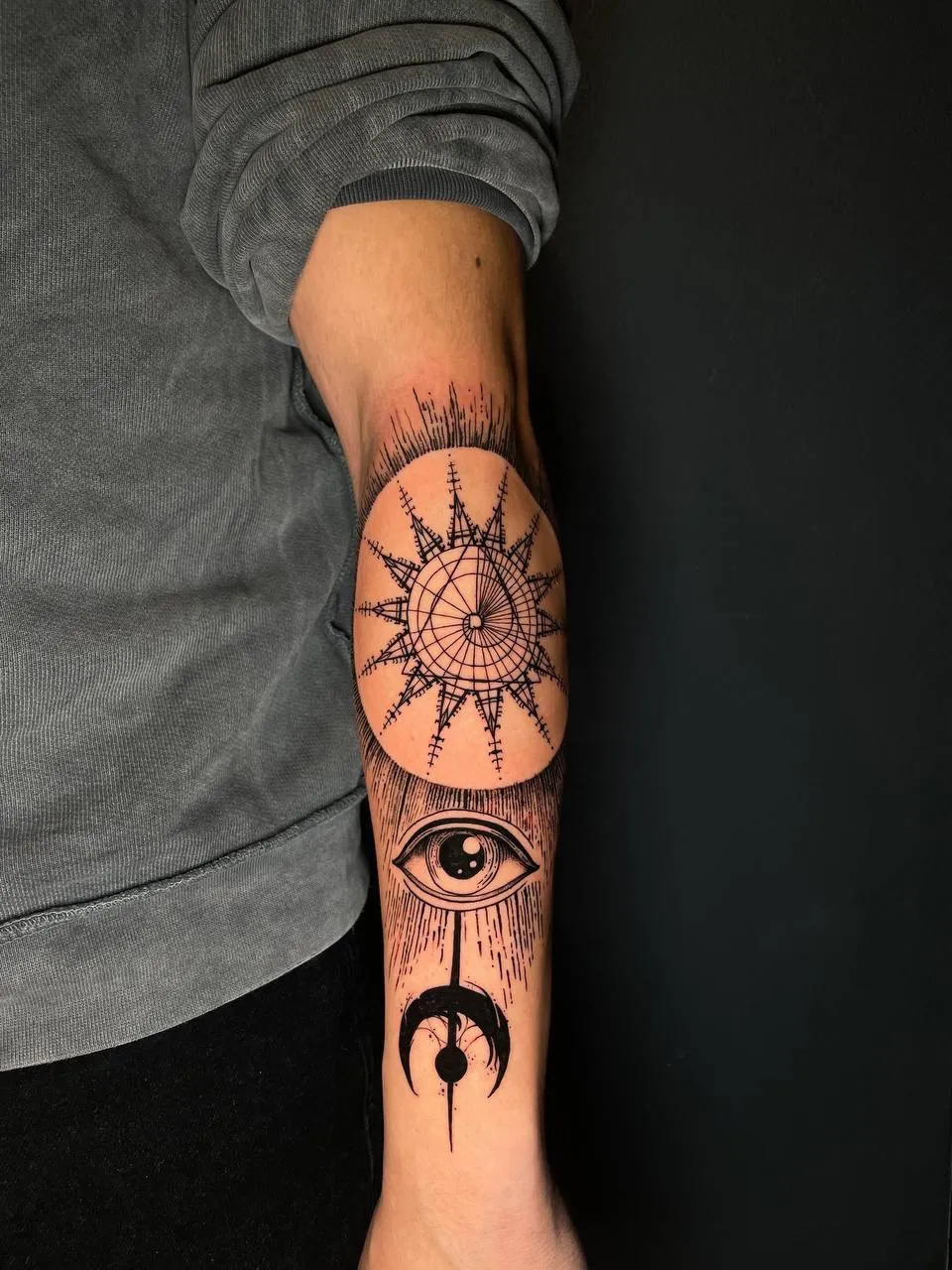
High-contrast designs executed entirely in black ink, often incorporating bold lines, dense fill areas and deliberate use of negative space. Blackwork geometric work is extraordinarily striking at scale and maintains visual impact as the tattoo ages. For large body coverage, it is one of the most effective choices available.
Dotwork & stippling
Texture, shading and gradients created through the accumulation of thousands of individual dots. When applied within geometric forms, stippling produces an almost tactile visual effect — dimensional, nuanced and unlike any other technique. Works beautifully in both small detailed pieces and large compositions.
Fine Line Geometric
Razor-thin lines forming intricate geometric structures. The result on skin is closer to a technical drawing than a conventional tattoo — minimal, precise and elegant. For more detail on this approach, see our Fine Line Tattoo Istanbul 2026 guide.
Geometric Mandala
The radial symmetry of the mandala tradition merged with geometric pattern language. These designs tend to be large-scale and centred on the body — back, chest, thigh — and are among the most visually powerful options in geometric tattooing. They also carry meditative and spiritual associations that make them particularly meaningful for many clients.
Geometric + Realism (Fusion)
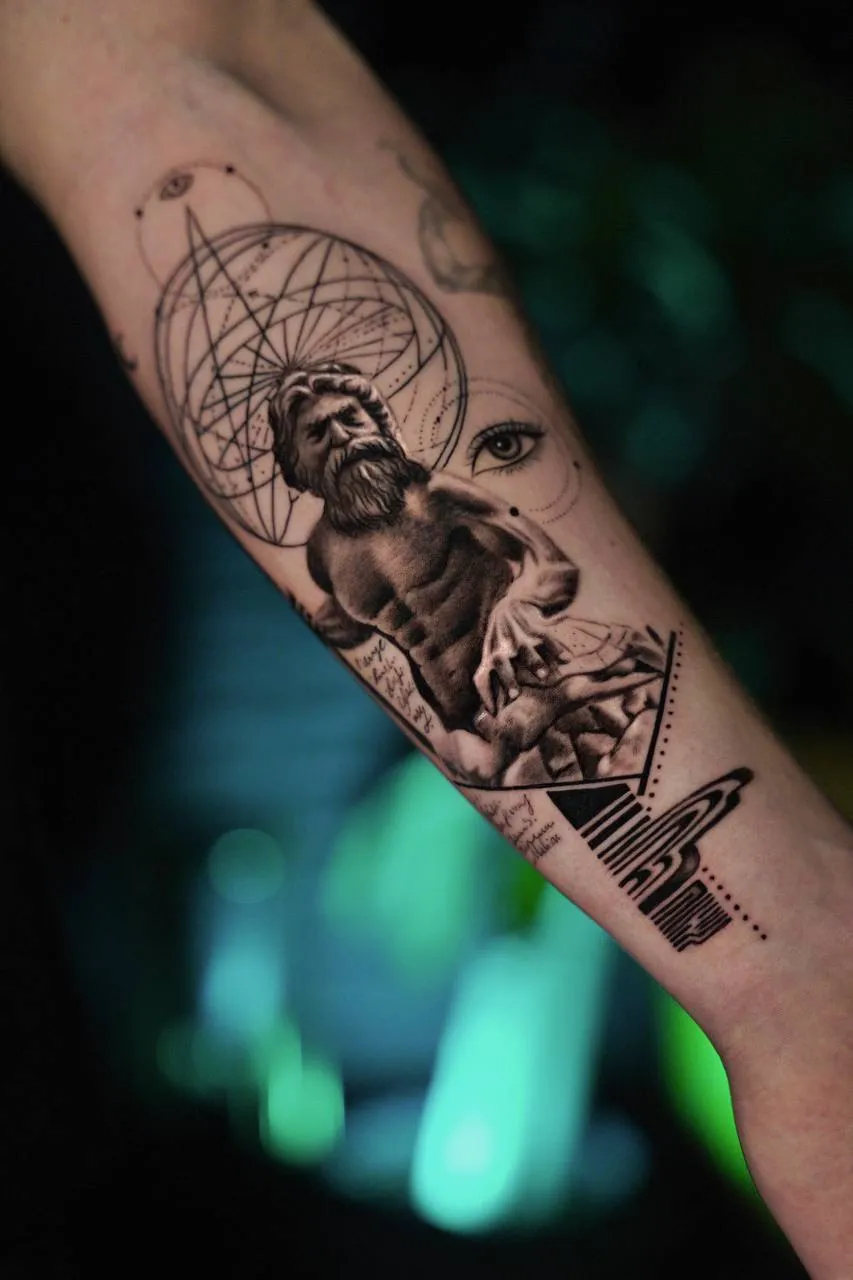
Realistic imagery — animals, portraits, natural elements — interwoven with geometric forms such as shattered glass patterns, polygonal overlays or structural frames. The tension between soft organic realism and hard geometric structure creates genuinely dynamic compositions. See our Realism Tattoo Istanbul 2026 guide for examples.
Neo-Tribal Geometric
A contemporary reinterpretation of Polynesian and Māori tattooing traditions through a modern geometric lens. Bold forms, high contrast, strong directionality. Particularly effective on arms, calves and shoulders.
Best Body Placements for Geometric Tattoos
The placement of a geometric tattoo is as significant as the design itself. The geometry must work with the body's natural topography — the curves, the muscles, the movement — not fight against it.
Forearm and wrist: The most consistently popular choice for geometric work. The forearm provides a relatively flat, elongated surface ideal for both vertical and horizontal compositions. High visibility makes it easy to display, and the placement is professionally adaptable.
Chest and sternum: The sternum creates a natural central axis that geometric designs can radiate from symmetrically. Mandala and sacred geometry designs read exceptionally well here. The ribcage's natural curvature adds organic flow to otherwise rigid geometric forms.
Upper back: The ideal location for large-scale geometric compositions. Spine-aligned pieces gain visual authority from the bilateral symmetry of the back. This is the preferred placement for clients wanting ambitious, full-scale geometric projects.
Thigh: A wide, relatively flat surface that accommodates complex geometric panels without compression. The thigh allows larger designs that would be constrained by the narrower surfaces of the forearm or calf.
Sleeve (full arm): Full sleeve geometric work connects multiple elements across the entire arm — from wrist to shoulder — into a single cohesive composition. This is the most ambitious category of geometric tattooing and requires careful long-term planning across multiple sessions.
Neck and scalp: Reserved for clients with significant existing coverage or those making a bold artistic statement. Geometric work in these zones creates an unmistakable visual presence but requires full consideration of professional and social context.
A note on joint areas: The skin over knees, elbows and ankles is subject to considerable movement and friction, which accelerates fading. If tattooing these zones, bolder line weights and simpler forms will age better than fine-line geometric detail.
Geometric Tattoo Prices Istanbul 2026
Pricing depends on the size of the piece, its detail density and complexity, the chosen body placement, the technique used (fine line vs blackwork vs dotwork) and the experience level of the artist. The following reflects current Bosphorus Ink pricing for 2026.
| Design Type | Size | Price Range |
|---|---|---|
| Minimal Geometric (single form) | 5–8 cm | 3000 – 6000 TL |
| Medium Geometric | 10–15 cm | 6000 – 15000 TL |
| Large Geometric / Sleeve piece | 20 cm+ | 10000 – 25000 TL |
| Full Sleeve Geometric | Full arm | From 25,000 TL per session |
| Geometric Mandala (back/chest) | 20–30 cm | 20,000 – 35,000 TL |
| Dotwork Geometric | Size-dependent | 3,500 – 25000 |
| Neo-Tribal Geometric | Size-dependent | 4,000 – 30000 |
All prices include VAT. For a precise quote, a free consultation is strongly recommended — the exact complexity and coverage area of a design always determines the final figure.
For a broader overview of tattoo costs across all styles in Istanbul, see our Istanbul Tattoo Prices 2026 guide.
Aftercare Guide for Geometric Tattoos
Geometric tattoos — particularly fine line and dotwork pieces — are especially sensitive to aftercare errors. A line that shifts or blurs during healing can undermine the mathematical precision that makes the design work.
First 48 hours: Keep the tattoo moist under a protective film or second-skin bandage as directed by your artist. Do not touch, rub, scratch or wet the area beyond gentle rinsing. This phase carries the highest risk of infection and is critical to the healing outcome.
Days 3–14: Apply unscented, colorless moisturizer two to three times daily. The skin will peel — this is completely normal. Do not pick, scratch or attempt to remove peeling skin. Premature removal can pull ink out of the dermis.
First 4 weeks: Avoid swimming pools, open water, saunas and prolonged sun exposure. Chlorine, saltwater and UV radiation are the primary external threats to a healing geometric tattoo. Even brief intense sun exposure can cause permanent fading in fine-line work.
Long term: Apply SPF 50 sunscreen to the tattooed area whenever it is exposed to sun, particularly during summer. Darker geometric tattoos retain their sharpness longer; fine-line work may require touch-up sessions after several years. Ask about touch-up options during your consultation.
How to Choose the Right Artist
Geometric tattooing is technically one of the most demanding disciplines in the craft. A freehand artist can correct course mid-stroke; a geometric artist cannot. A line that is even slightly off-axis destroys the symmetry that the entire design depends on. The wrong artist choice results in uneven spacing, broken symmetry and proportion errors that are extremely difficult — sometimes impossible — to correct.
Scrutinise the portfolio with precision: Do not just assess whether geometric tattoos look appealing in photographs. Look specifically at whether parallel lines are genuinely parallel, whether angles are crisp and consistent, and whether the overall composition holds its symmetry across the whole piece.
Ask directly about specialisation: "How long have you been working in geometric? What size of geometric piece have you completed most recently?" These are reasonable questions that every qualified artist will welcome.
Take the consultation seriously as a quality test: An artist who proposes customising the design to the natural contours of your specific body is demonstrating the level of care that geometric work demands. An artist who offers no design consultation and jumps straight to stencil application is a significant red flag.
Verify hygiene standards independently: Sterilised environment, single-use needles and materials, licensed premises — these are absolute minimum requirements, not optional extras.
Why Istanbul — Why Bosphorus Ink?
Istanbul has quietly established itself as one of Europe's premier tattoo destinations over the past decade, and the trajectory continues upward. Several factors converge to make it an exceptionally strong choice for international clients.
Competitive pricing relative to Western Europe makes high-quality, large-scale work financially accessible without any compromise on artist calibre. A favorable exchange rate further extends this advantage for visitors paying in euros, dollars or pounds. And unlike tattooing in a purely tourist-facing context, Istanbul's tattoo scene is built for a broad, design-literate local clientele — which keeps standards high.
Beyond the financial dimension, Istanbul's cultural position — between East and West, between ancient and contemporary — gives its artists a visual vocabulary that feels genuinely different from studios in Berlin, London or Amsterdam.
Bosphorus Ink: professional tattooing in Istanbul since 2021 · Beşiktaş and Pendik branches · Specialist artists in Black & Grey and Geometric · Full client service in Turkish, English and German · Flexible scheduling built around international visitor timelines
Frequently Asked Questions
How long does a geometric tattoo session take?
Are geometric tattoos more painful than other styles?
Do fine line geometric tattoos fade over time?
Which is the best studio for geometric tattoos in Istanbul?
How much does a geometric tattoo cost in Istanbul in 2026?
Can tourists get a geometric tattoo in Istanbul?
What is the difference between geometric mandala and sacred geometry?
How should I prepare for a geometric tattoo session?


