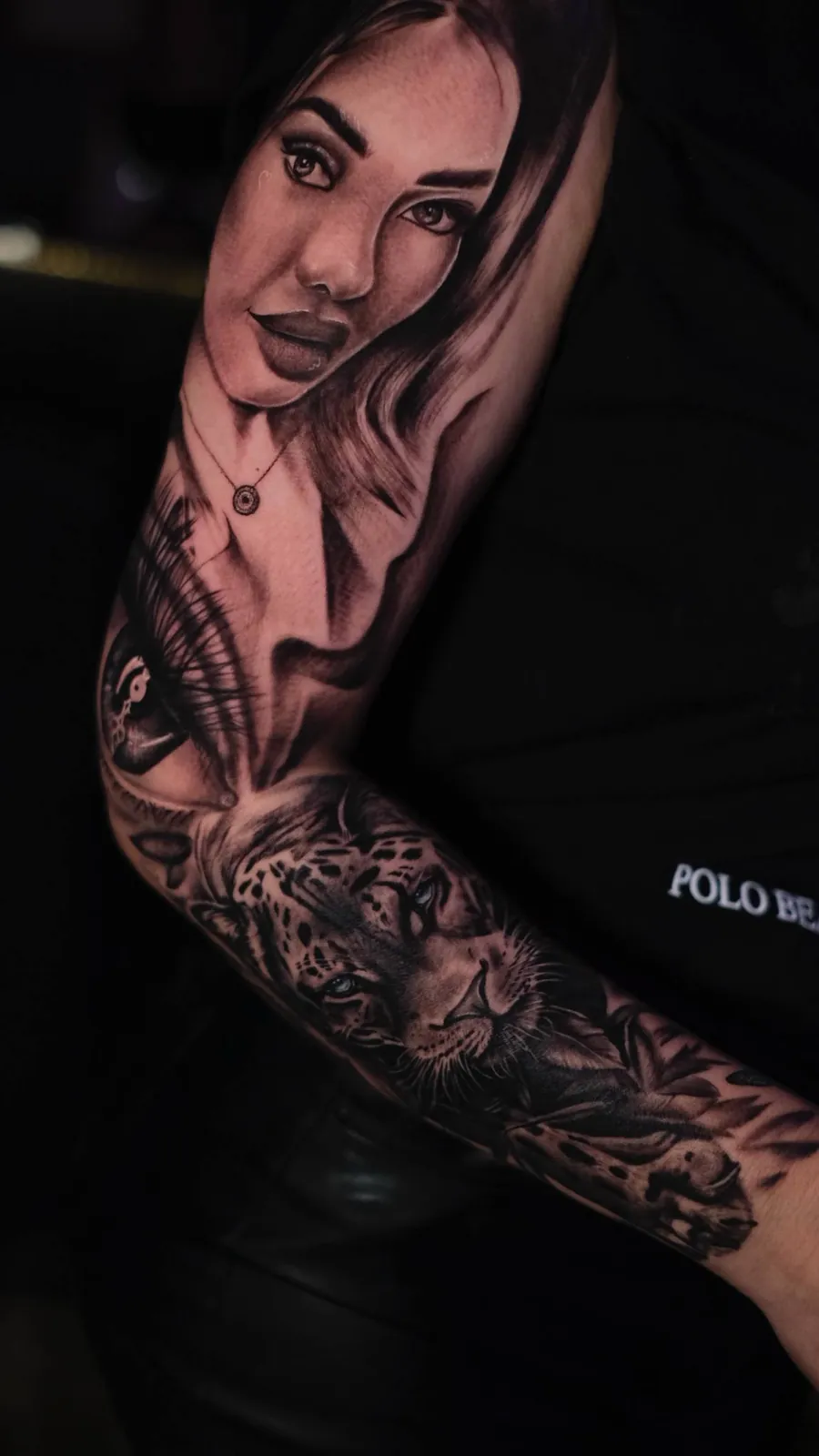

The Origins of Tattooing: One of Humanity's Oldest Forms of Expression
Tattooing may feel like a modern form of self-expression, but its history reaches far beyond contemporary studios, social media trends, and today's design culture. For thousands of years, people have used tattoos to express identity, belief, courage, belonging, memory, status, and personal transformation.
One of the most famous ancient examples is Ötzi the Iceman, who lived around 3250 BCE and had 61 tattoos across his body. His preserved tattoos are among the strongest archaeological signs that tattooing has been part of human culture for more than 5,000 years.
Today, in cities like Istanbul, tattooing has evolved into a respected visual art form. In districts such as Beşiktaş, tattoos are not only aesthetic choices — they are personal stories, cultural statements, and carefully designed works of art.
Why Tattooing Was Never Just Decoration
Before written language, modern symbols, or digital identity, the body was one of the most powerful surfaces for human expression. Tattoos allowed people to show who they were, where they belonged, what they believed in, or what they had experienced.
In ancient societies, tattoos could represent protection, spirituality, social status, healing, bravery, or group identity. In some cultures, warriors used tattoos as symbols of courage. In others, tattoos were connected to ritual, faith, or protection.
This is why tattoo history should not be reduced to decoration. Tattooing is one of the oldest ways humans transformed the body into a personal and cultural narrative.
Ancient Egypt, Anatolia and the Cultural Layers of Tattooing
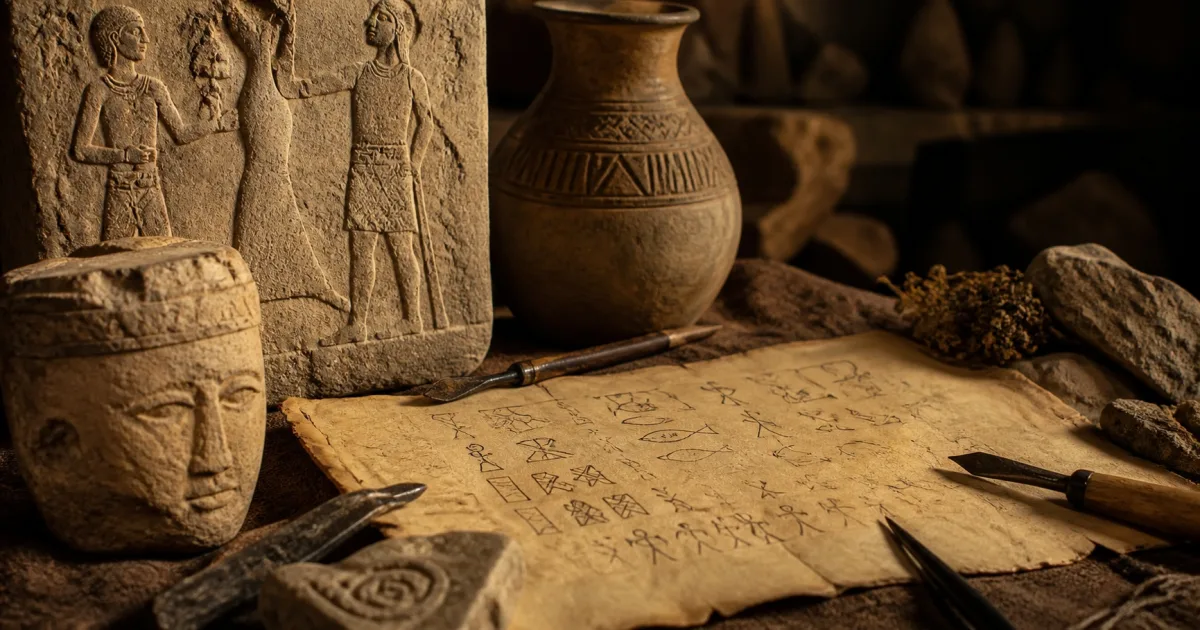
Ancient Egyptian mummies provide some of the most important evidence of early tattooing. Research on the Gebelein mummies in the British Museum revealed figurative tattoos dating back around 5,000 years, including animal forms and symbolic marks.
Across Anatolia, the Balkans, Central Asia and the wider Middle East, body marking practices carried different meanings depending on time, region, and community. Tattoos could be connected to family, tribe, faith, protection, beauty, or tradition.
Modern tattoo culture in Istanbul carries echoes of this layered history. A tattoo today may be created with modern equipment and contemporary design language, but the human desire behind it is ancient: to mark meaning on the body.
Sailors, Symbols and Traditional Tattoo Culture
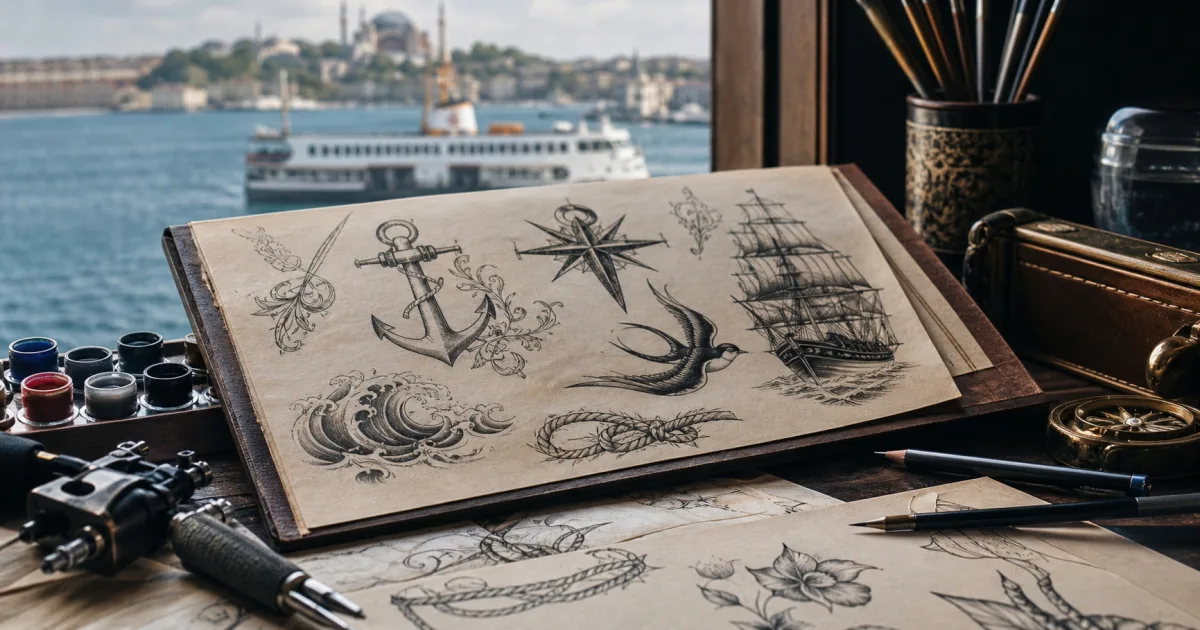
Sailors played a major role in the global spread of tattoo culture. Motifs such as anchors, compasses, ships, swallows, waves and lighthouses were not only decorative. They represented travel, loyalty, direction, survival, distance, and the hope of returning home.
This symbolism connects strongly with Istanbul. Istanbul is a city shaped by water, movement, ports, ferries and the Bosphorus Strait. Beşiktaş, in particular, carries this maritime identity through its coastline, ferry culture, Naval Museum and historic memory.
This is one reason tattoo culture feels natural in Beşiktaş. The district already has the right ingredients: symbols, stories, movement, identity and visual culture.
How Tattoo Perception Changed in Turkey
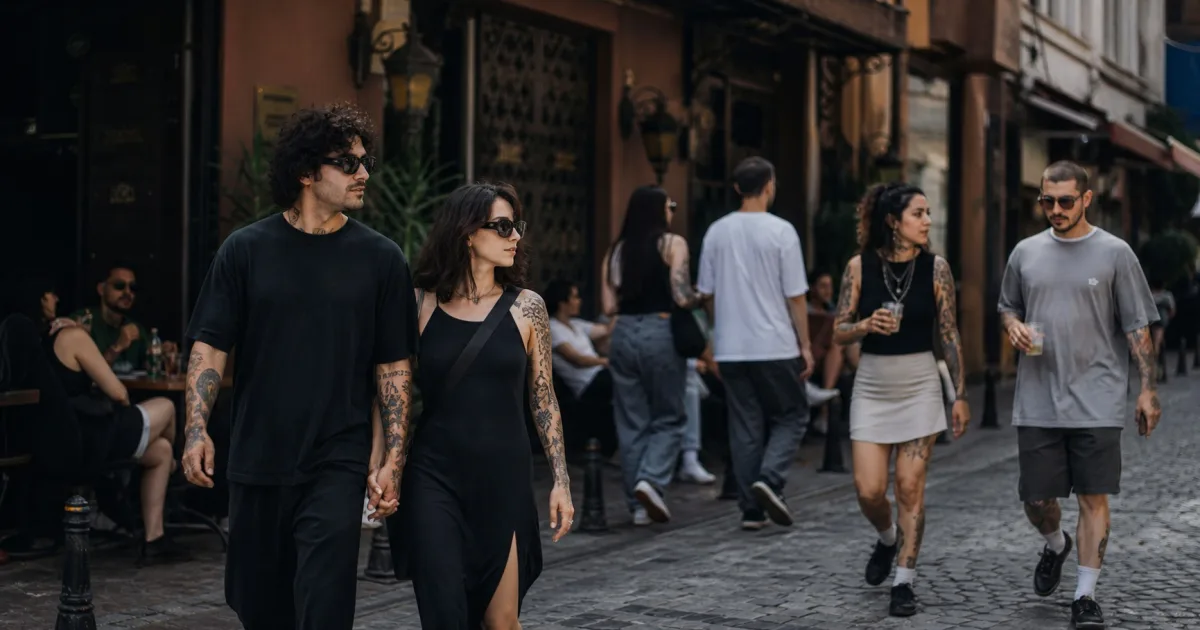
For many years in Turkey, tattoos were associated with specific professions, subcultures or limited social circles. Over time, this perception changed dramatically.
Since the 2000s, social media, international tattoo artists, improved studio standards and a younger generation more open to personal expression have reshaped the tattoo scene in Turkey.
Today, tattoos are no longer limited to one social group. Students, entrepreneurs, doctors, lawyers, designers, musicians, engineers and artists all use tattoos as part of their personal visual language.
Istanbul has become the heart of this transformation — and one of the strongest tattoo destinations in the entire region.
Modern Tattoo Culture in Istanbul
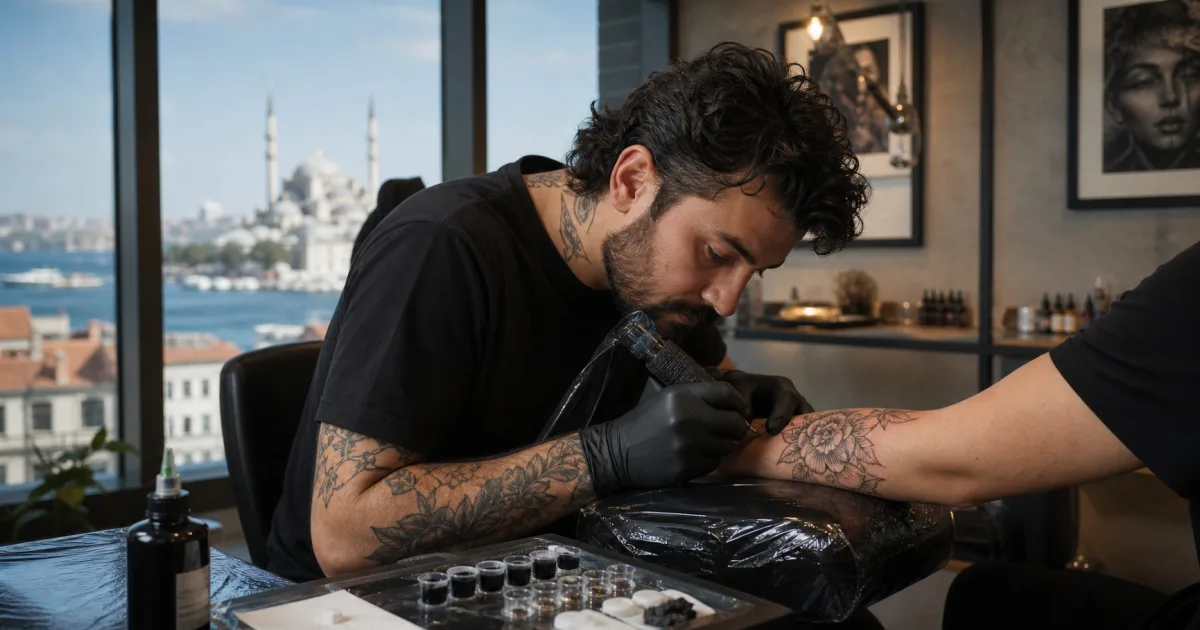
Istanbul has always been a meeting point of cultures, languages, religions and artistic influences. This diversity has also shaped its tattoo culture, making Istanbul one of the most important cities in Europe and the Middle East for tattoo art.
Today, Istanbul offers a wide range of tattoo styles: fine line, black and grey realism, geometric tattoos, minimalist designs, neo-traditional, Japanese-inspired work, ornamental tattoos and lettering. Visitors and residents alike increasingly choose Istanbul — and specifically studios in Beşiktaş — when looking for quality tattoo work.
Modern Istanbul tattoo culture is defined by three major shifts. First, people now approach tattoos as a thoughtful design process rather than an impulsive decision. Second, studio choice is based not only on price, but also on hygiene, artist portfolio, design quality and trust. Third, tattooing has become more visible, more accepted and more respected as a visual art form.
If you are exploring specific styles, our guides on fine line tattoos and black and grey realism offer detailed insight into each approach.
The Role of Beşiktaş in Istanbul Tattoo Culture
Beşiktaş is one of Istanbul's most energetic and culturally active districts. Universities, cafés, music venues, art spaces, coastal life and alternative culture all shape the district's identity.
This makes Beşiktaş a natural environment for tattoo culture. Tattooing is closely linked to individuality, aesthetic taste, visual identity and personal storytelling. Many people who come to Beşiktaş for a tattoo arrive with research, references, style ideas and a clear creative direction.
That improves the final result. A strong tattoo is not only about technical execution. It is about the right idea, the right design, the right placement and the right artist-client match.
The Bosphorus Ink Perspective: Tattooing as Art and Responsibility
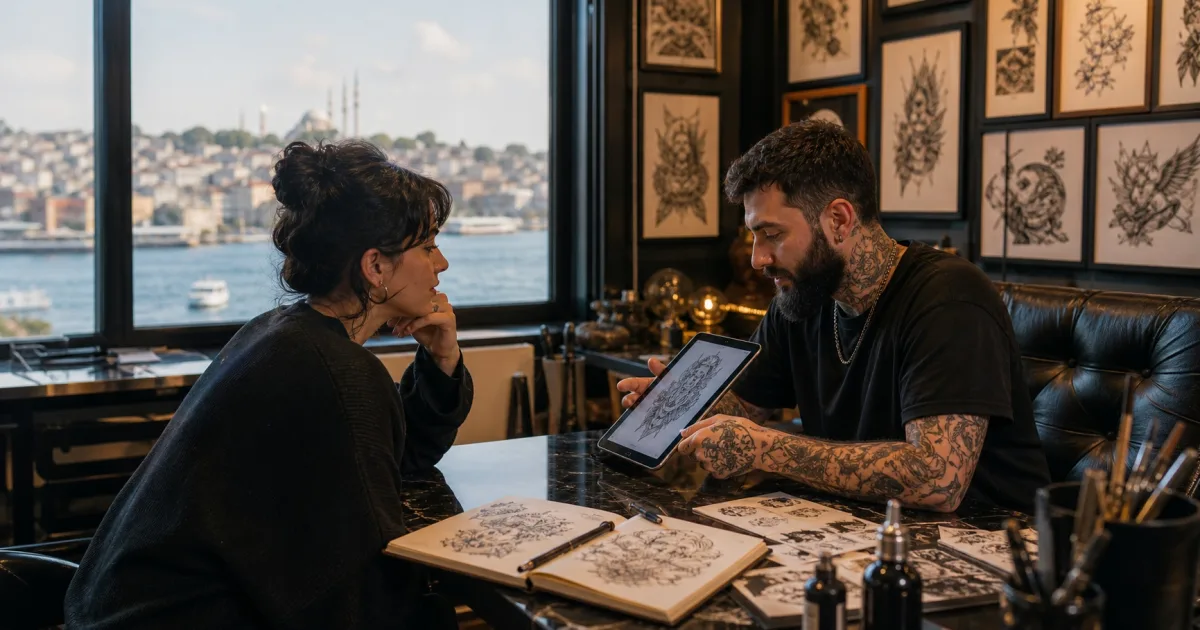
At Bosphorus Ink, we see tattooing as more than a procedure. It is a personal design process, a trust-based experience and a permanent artistic decision.
Every tattoo has a story behind it. It may be someone's first tattoo, a large piece planned for years, a symbol of memory, or a purely aesthetic design. In every case, the process requires careful listening, precise design, professional application and a safe studio experience.
Being part of modern Istanbul tattoo culture means more than creating beautiful tattoos. It means respecting the culture, guiding clients properly and treating every piece as something that will live with the person for years.
Our studio in Beşiktaş (Polat Towerside, Fulya) and our second location at Pendik Lens Yaşam Merkezi are both equipped to guide you through this process — from the first consultation to the finished piece.
Today's Tattoo: From Identity to Story
Tattooing is no longer only a marker of identity. In the modern world, tattoos have become one of the most personal ways to carry a story.
A tattoo may represent a memory, a loss, a beginning, a belief, a place, a person or simply a visual taste. The tools and styles have changed over 5,000 years, but the core reason remains the same: humans want to express meaning through the body.
The history of tattooing shows us one thing clearly: people do not only tell their stories with words. Sometimes, they carry them on their skin.
Book Your Tattoo Consultation in Istanbul
Ready to start your tattoo journey at one of Istanbul's leading studios? Our team in Beşiktaş and Pendik is ready to help — from design and style selection to the finished tattoo. Reach us directly on WhatsApp for availability, pricing information and consultations.
Frequently Asked Questions
How old is tattooing?
What did tattoos mean in ancient times?
When did tattooing become popular in Turkey?
Why is Istanbul important for tattoo culture?
Why is Beşiktaş important for tattoos in Istanbul?
Where is Bosphorus Ink located?