Getting your first tattoo is an exciting milestone, but without the right preparation, it can turn into regret. Which design should you choose? Where on your body is best? How much will it hurt? How do you find the right studio? At Bosphorus Ink, we guide first-time clients through every step of the process at our Istanbul Beşiktaş and Pendik studios. This comprehensive guide covers every stage of getting your first tattoo.
1. Choosing Your Design: It's About You, Not Trends
The most critical step for your first tattoo is choosing the right design. It can be tempting to follow trends you see on social media, but a tattoo will stay with you for life. When selecting a design, ask yourself: Will this still be meaningful to me in five years? Is there a personal connection beyond visual appeal? Does it suit my body shape and placement?
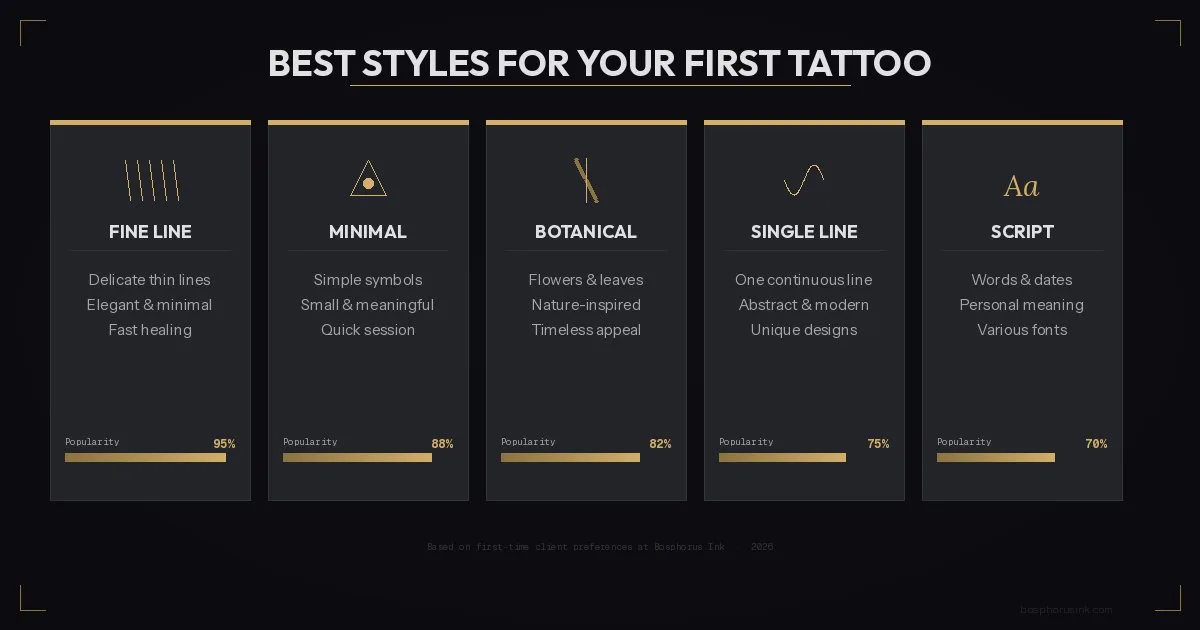
In 2026, fine line designs are by far the most popular choice for first tattoos. Created with delicate, thin lines, these designs are both aesthetically elegant and comfortable during the healing process, making them ideal for beginners. Minimal symbols, botanical illustrations, single-line figures, and small script tattoos are also among the most requested first tattoo styles.
Take your time with the design process. Gather inspiration from Pinterest or Instagram and share your ideas with our team when you visit. A custom design process delivers far more satisfying and lasting results than choosing from ready-made templates.
2. Placement: The Best Body Areas for a First Tattoo
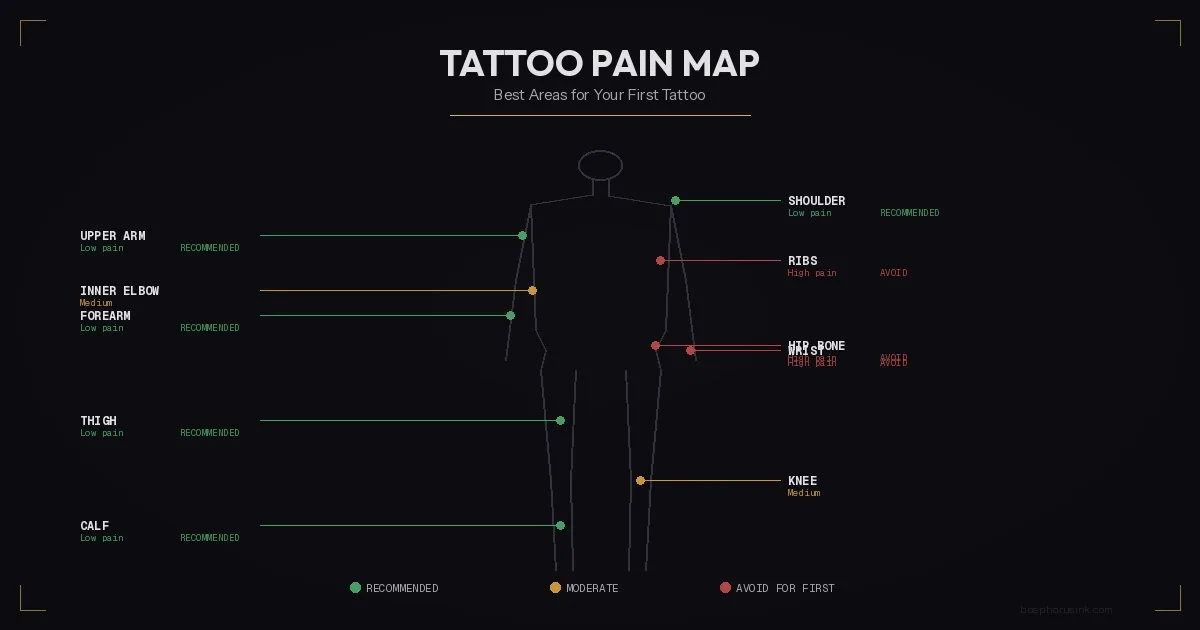
Where your tattoo is placed directly affects both the pain level and the long-term appearance of the design. For a first tattoo, areas with dense muscle tissue and fewer bone and nerve endings are recommended.
The best areas for a first tattoo include the outer upper arm, forearm, shoulder, calf, and thigh. These areas are less painful and help the tattoo maintain its shape over time. Sensitive areas such as the ribs, inner wrist, ankle, fingers, and neck are not recommended for first tattoos. These areas have higher pain levels, and the thinner skin can cause the tattoo to spread or fade more quickly.
Visibility is another factor to consider. Think about your professional and social environment and decide when you want your tattoo to be visible.
3. Pain Expectations: Being Realistic
Pain is the biggest concern for first-time tattoo clients. To be straightforward — getting a tattoo is not painless, but for most people it is far less painful than expected. The sensation is generally described as a continuous scratching or pricking feeling.
Pain levels vary depending on your personal pain threshold, the body area, the size of the tattoo, and the session duration. Areas with more muscle tissue are less painful, while areas over bone or with thin skin are more intense.
To minimise pain: get a good night's sleep and eat a proper meal before your session. Avoid alcohol and blood-thinning medications. Limit caffeine intake. Wear comfortable clothing that allows easy access to the tattoo area. Practice deep breathing during the session to stay relaxed. For detailed information, check out our tattoo pain guide.
4. Choosing the Right Studio: Quality Over Price
The success of your first tattoo depends largely on choosing the right studio. Low prices may be tempting, but a tattoo is a lifelong piece of art — cutting corners in this area can have serious consequences.
When selecting a studio, pay attention to: hygiene standards and sterilisation practices, use of single-use needles and materials, the artist's portfolio and compatibility with your chosen style, Google and social media reviews, and the time and attention given to you during the consultation process.
At a professional studio, the initial consultation is usually free. This meeting gives you the opportunity to discuss your design, placement, estimated duration, and the full process in detail. If you don't feel comfortable during the consultation, don't hesitate to look elsewhere.
5. Session Day: Step by Step
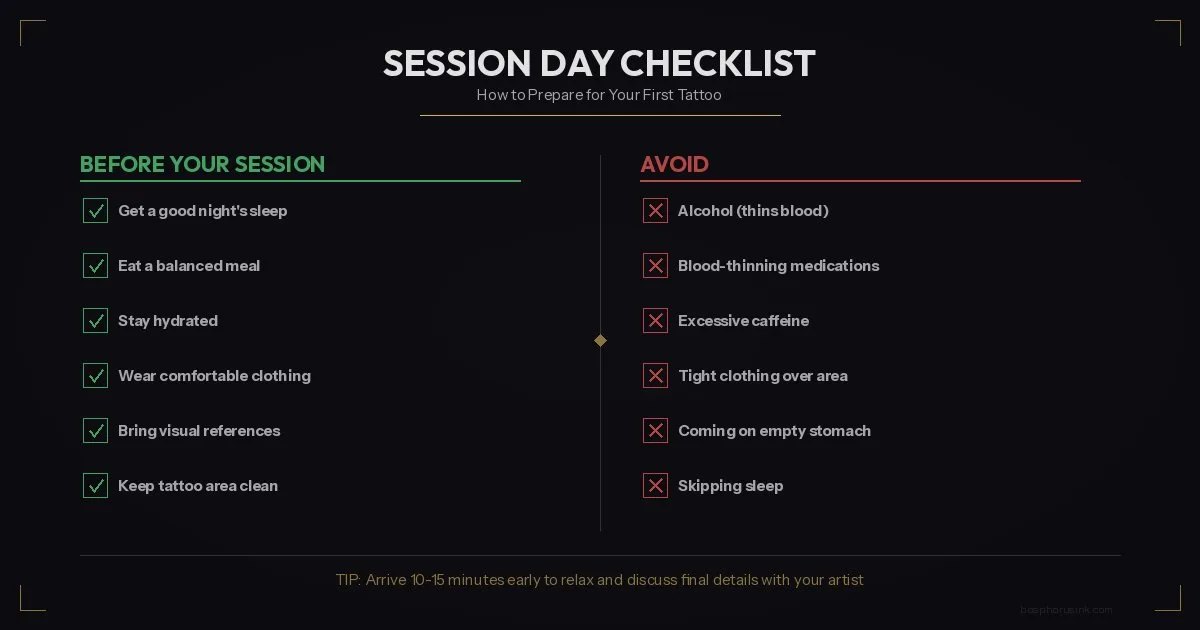
Coming prepared on the day of your tattoo appointment improves both your comfort and the quality of the tattoo.
Get a good night's sleep and eat a balanced meal before your appointment. Keep the area to be tattooed clean and free of moisturising products. When you arrive at the studio, your artist will place the stencil on your skin. At this stage, you can make final adjustments to the size, placement, and angle. Once the stencil is approved, the tattooing process begins.
A first tattoo session typically takes between 30 minutes and 2 hours for small to medium-sized designs. Throughout the session, your artist will keep you informed and breaks will be offered if needed.
6. Aftercare: The First 30 Days
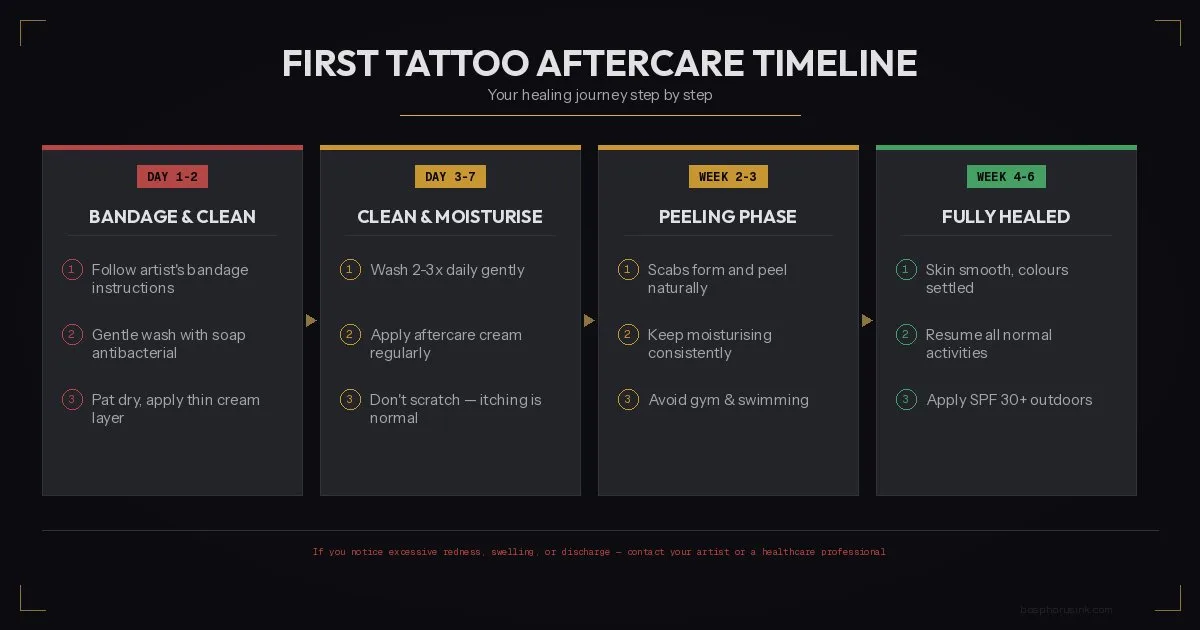
Tattoo aftercare is just as important as the tattoo process itself for ensuring your ink stays vibrant and sharp for years to come. Without proper care, you risk infection, colour loss, or uneven healing.
During the first 48 hours, follow your artist's instructions regarding the protective tattoo film. After removing the bandage, gently clean the tattoo with lukewarm water and fragrance-free antibacterial soap. Apply a thin layer of tattoo aftercare cream 3–4 times daily. Never scratch the tattoo or pick at scabs. Avoid sun exposure, swimming pools, and the sea for at least 4 weeks. Avoid exercise for the first 48 hours and intense workouts for 2–3 weeks.
For detailed aftercare instructions, we recommend reading our tattoo aftercare guide and our exercise after tattoo guide.
7. Budgeting for Your First Tattoo
Tattoo prices vary based on the design's size, detail level, style, session duration, and the artist's experience. First tattoos are usually small to medium-sized, which makes them more affordable, but it's important not to compromise on quality.
Fixing or covering up a poorly done tattoo costs significantly more than getting it done right the first time. When setting your budget, focus on finding the best quality rather than the lowest price — this approach will serve you well in the long run. For detailed pricing information, check out our Istanbul tattoo prices guide.
8. Common Mistakes and How to Avoid Them
The most common mistakes during a first tattoo experience include: copying a random design from the internet, choosing a studio based solely on price, arriving hungover or sleep-deprived, rushing the placement decision without careful thought, neglecting the aftercare process, and picking at scabs during healing.
Each of these mistakes can negatively affect the quality, healing, and long-term appearance of your tattoo. Be patient, do your research, and consult with our professional team.
Your First Tattoo at Bosphorus Ink
At Bosphorus Ink, we offer dedicated consultations for first-time clients at our Istanbul Beşiktaş and Pendik Lens Yaşam Merkezi locations. From design selection to placement advice, from the session process to aftercare guidance, we're with you at every step. With a sterile environment, single-use materials, and our experienced team, we make your first tattoo experience safe and enjoyable. For any questions about your first tattoo, reach out to our team via WhatsApp.
Frequently Asked Questions
What is the best body area for a first tattoo?
How much does a first tattoo hurt?
What style is recommended for a first tattoo?
How long does a first tattoo take?
What should I do before getting my first tattoo?
What happens if I get a bad tattoo?
How much does a first tattoo cost?