

Is it possible to create a striking tattoo using only black ink, with no color at all? Absolutely. Blackwork tattoo and its more delicate cousin, dotwork tattoo, are two related but distinct styles that create powerful visual impact through minimalist boldness. In this guide, we explain the difference between them, popular motifs, and the details of proper application.
Drawing on the experience of our team, who have created thousands of tattoos in Istanbul since 2021, we've put together a complete overview of the blackwork and dotwork world.
What Is Blackwork Tattoo?
As the name suggests, blackwork is created using dense, flat black ink fill. Geometric patterns, tribal-inspired compositions, large silhouettes and abstract shapes are all characteristic examples of this style. What makes blackwork so striking is its ability to create depth and contrast using nothing but the intensity of black, without color or shading.
What Is Dotwork Tattoo?
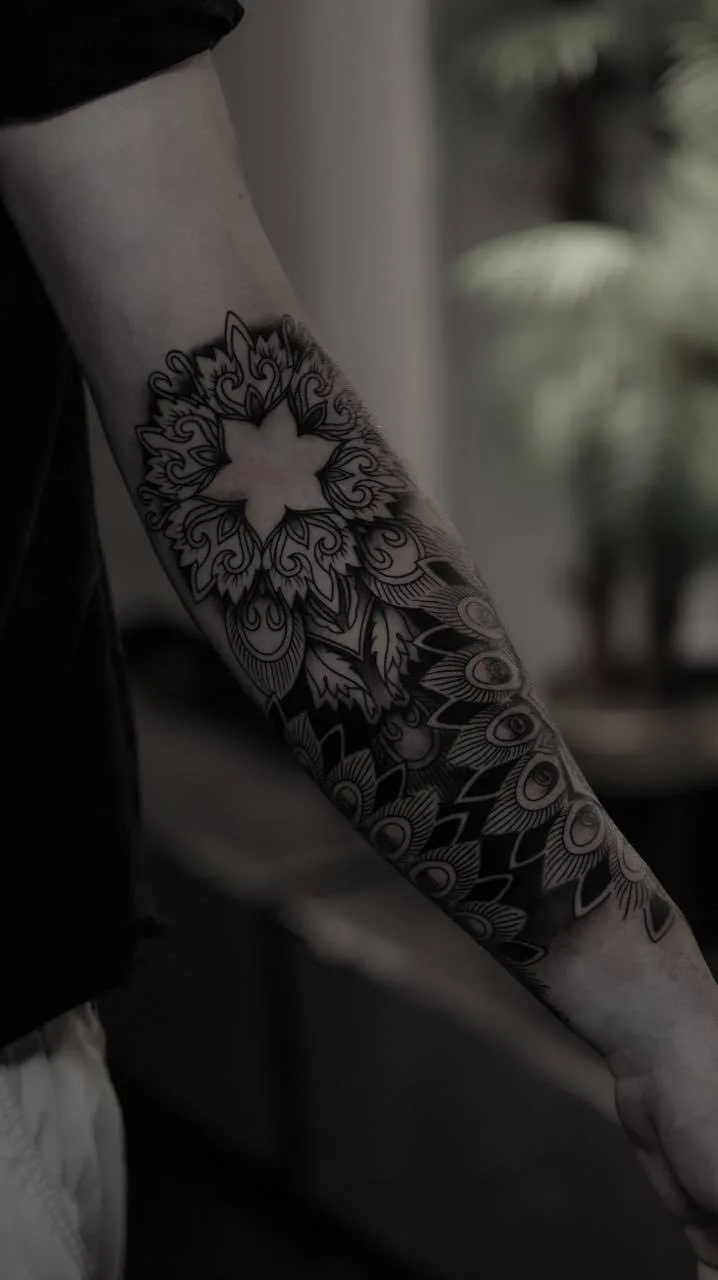
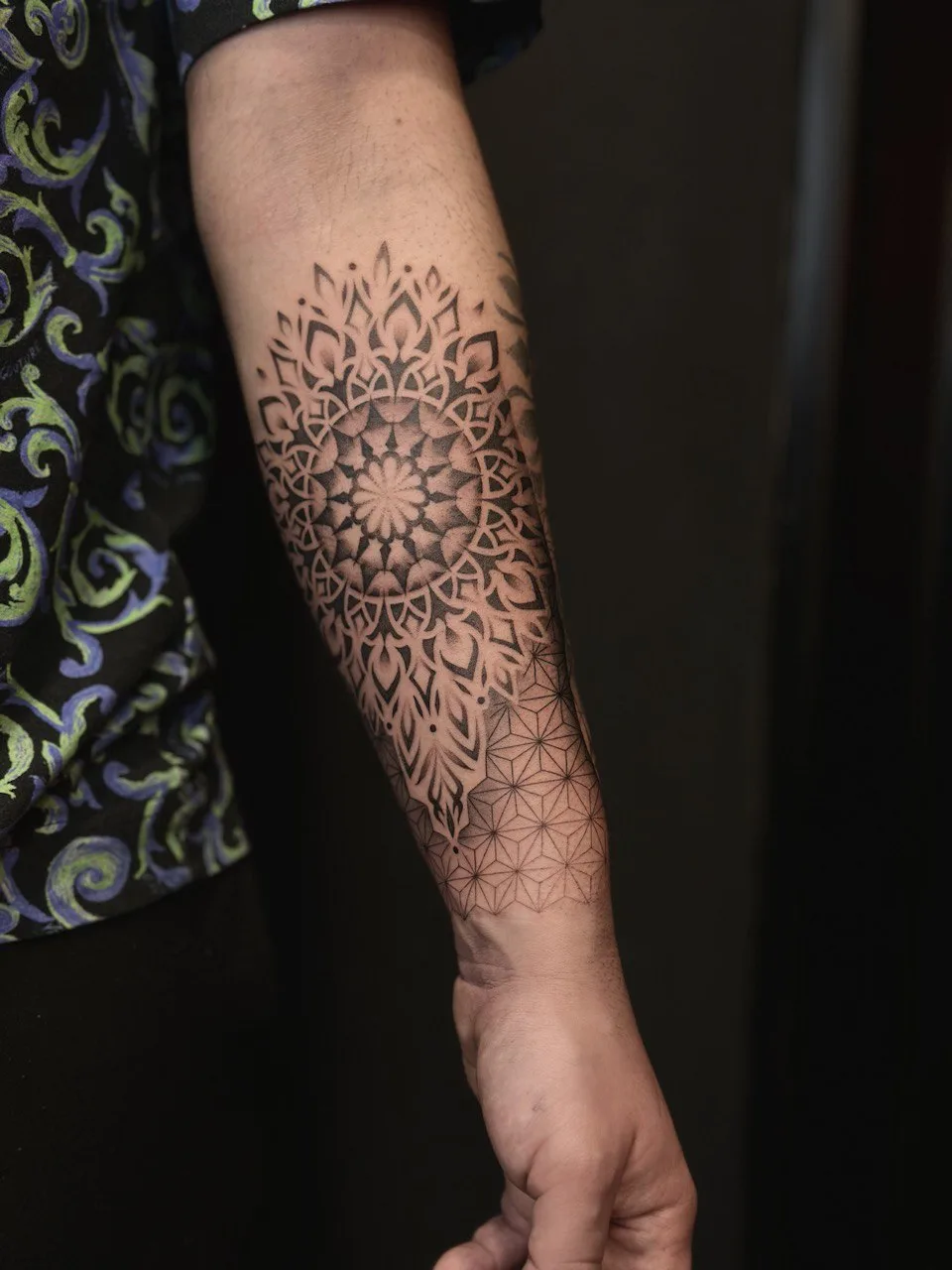
Dotwork is a technique built from thousands of tiny dots rather than solid lines or fills. By varying the density and spacing of the dots, artists create shading, texture and a sense of depth — much like old engraving techniques. Mandala patterns, geometric shapes and finely textured illustrations are frequently done using dotwork.
The Difference Between Blackwork and Dotwork
Blackwork offers a bolder, flatter, more graphic look, while dotwork's dot-built transitions give a more organic, textured feel. Many artists combine both techniques in a single composition, producing hybrid pieces with both solid black areas and dot-textured transitions.
Popular Blackwork and Dotwork Motifs
Mandalas: symmetrical, meditative patterns, usually done with dotwork technique.
Geometric shapes: triangles, polygons and sacred geometry motifs work beautifully with both techniques.
Tribal-inspired designs: dense black compositions inspired by Polynesian and Maori culture are one of blackwork's classic applications.
Large silhouette pieces: fully filled-in black silhouettes of animals, plants or abstract figures create powerful visual impact.
Pain Level and Application Time
Because blackwork requires densely filling large areas, it generally means longer sessions and more skin irritation. Dotwork can feel more sensitive in some areas due to the frequency of needle contact, though total application time depends on design size. For both styles, an experienced artist will guide you on pain management and break planning.
The Best Placement for These Styles
Blackwork's dense black areas look most striking on larger surfaces like the upper arm, back and calf. Dotwork's fine textural transitions can retain their detail even in smaller areas, such as the forearm or collarbone. When discussing placement with your artist, it's important to talk about how the design will follow your body's natural contours.
What to Watch for During Aftercare
In blackwork tattoos with dense black areas, skin stretching or drying during healing can cause the pigment to appear patchy, which is why regular moisturizing is critical. In dotwork pieces, sun protection is especially important to keep the dots crisp, since sunlight can fade fine details over time.
Is It Suitable for Cover-Ups?
Blackwork is a frequently chosen technique for covering old, faded tattoos. Dense black areas can effectively conceal old lines and colors underneath. That's why blackwork offers both an aesthetic and practical solution for cover-up projects. An experienced artist evaluates the shape and color intensity of the old tattoo to recommend the most suitable blackwork composition. In some cases, shifting to a slightly different area rather than working directly over the old tattoo may be recommended.
Blackwork and Dotwork Tattoos in Istanbul: The Bosphorus Ink Experience
At our Beşiktaş (Polat Towerside) and Pendik (Lens Yaşam Merkezi) locations, you can work with artists experienced in blackwork and dotwork techniques. Every project starts with a free consultation where the design is tailored specifically to you.
Blackwork and Dotwork Examples From Our Studio
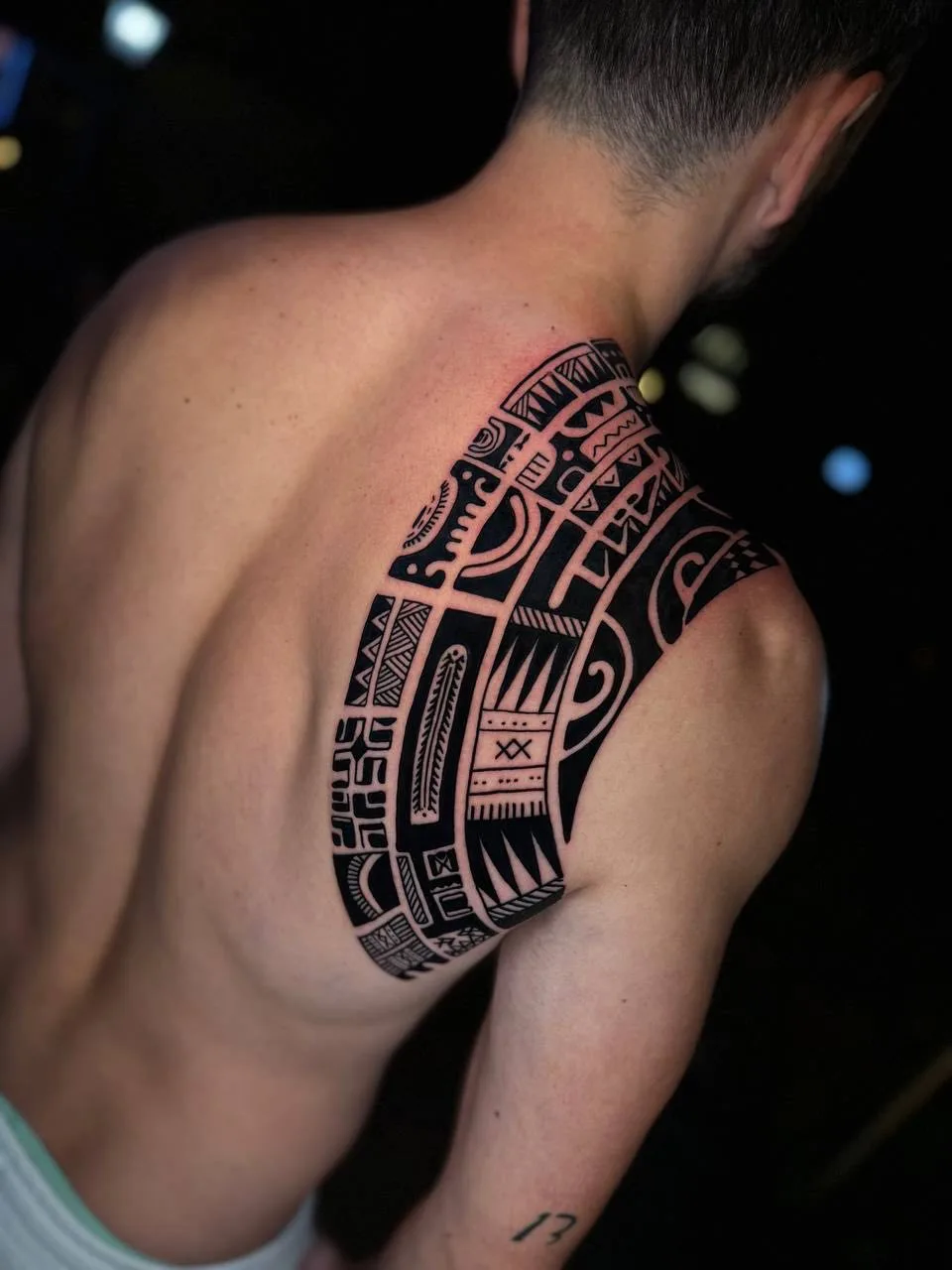
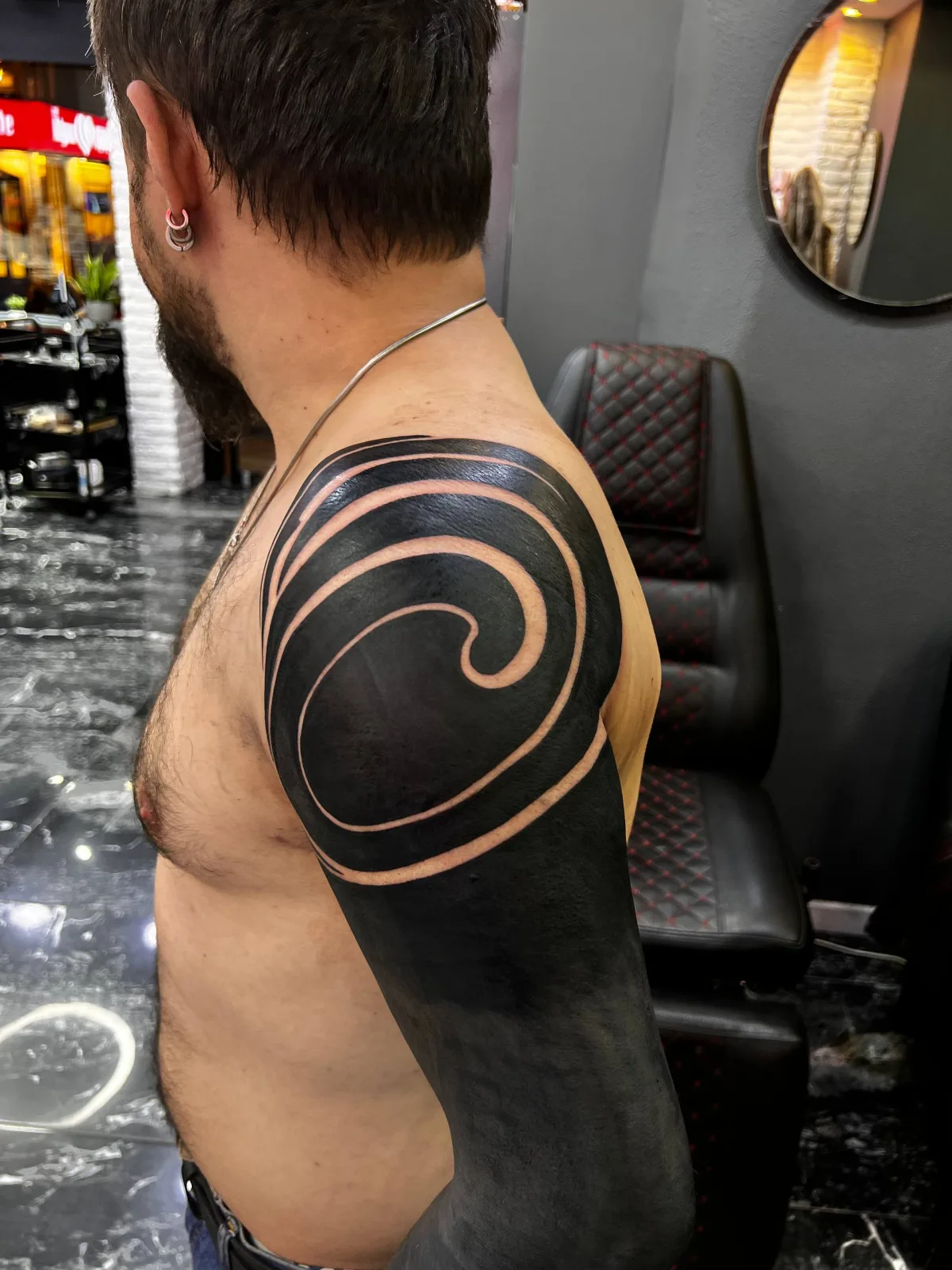
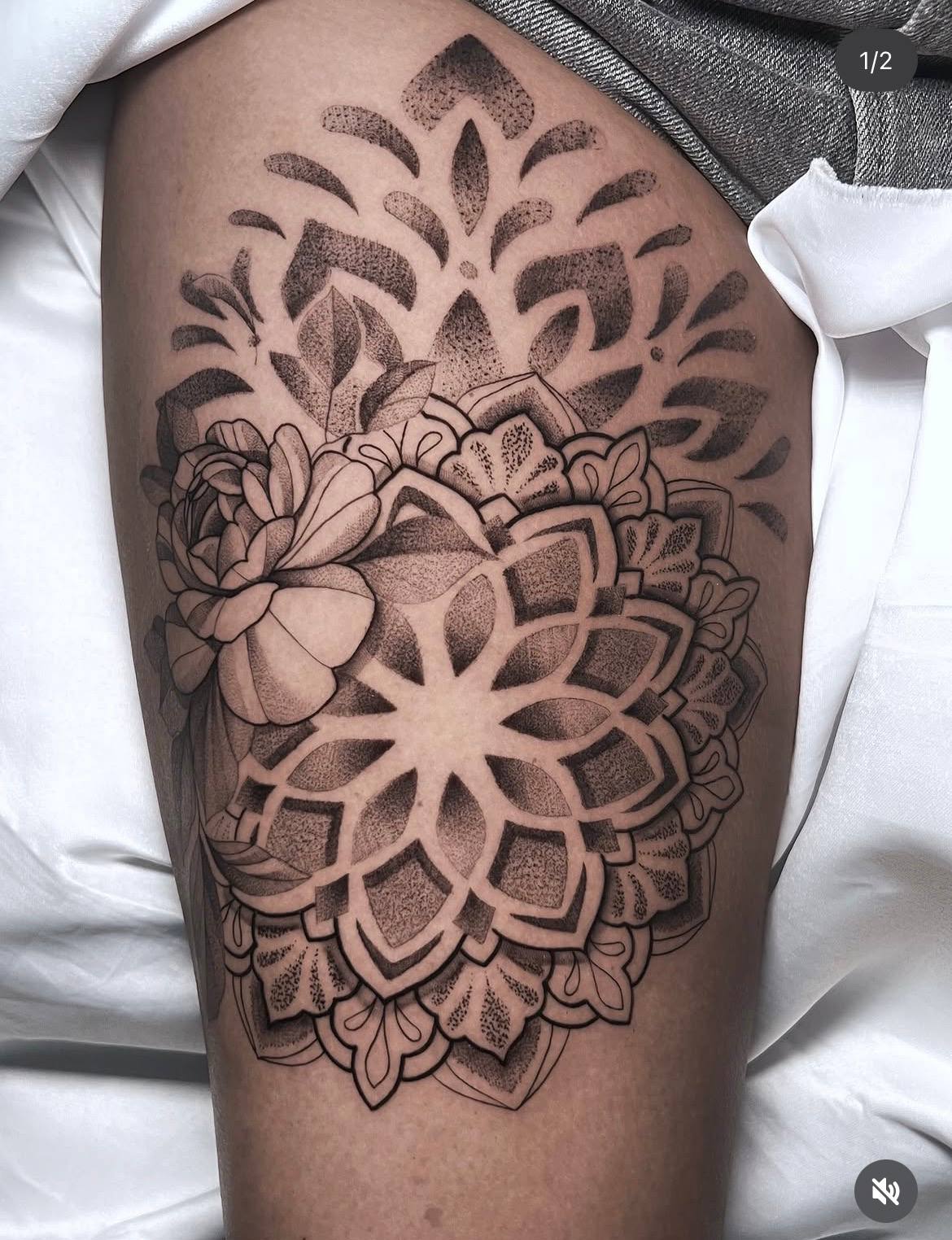
You can see three different approaches we use at Bosphorus Ink in our sample work. The first piece is a Polynesian (tribal) style blackwork composition on the shoulder and upper chest, using the contrast between solid black fill and bare skin to form geometric symbols, notched patterns and spirals. The second example is a fully solid blackwork piece covering the upper arm, highlighted by a bold spiral/wave motif left as negative space over the shoulder. The third is a symmetrical mandala on the thigh worked in dotwork (stippling), where fine-line floral and leaf details meet the classic dotwork aesthetic in which all shading is built from the density of tiny dots.
Frequently Asked Questions
Does blackwork tattoo fade over time? With quality pigment and proper application, blackwork tattoos retain their intensity for years; consistent sun protection supports this process.
How long does a dotwork tattoo take? A small mandala takes 2-3 hours, while a large, detailed composition may require multiple sessions.
Frequently Asked Questions
Does blackwork tattoo fade over time?
How long does a dotwork tattoo take?


