
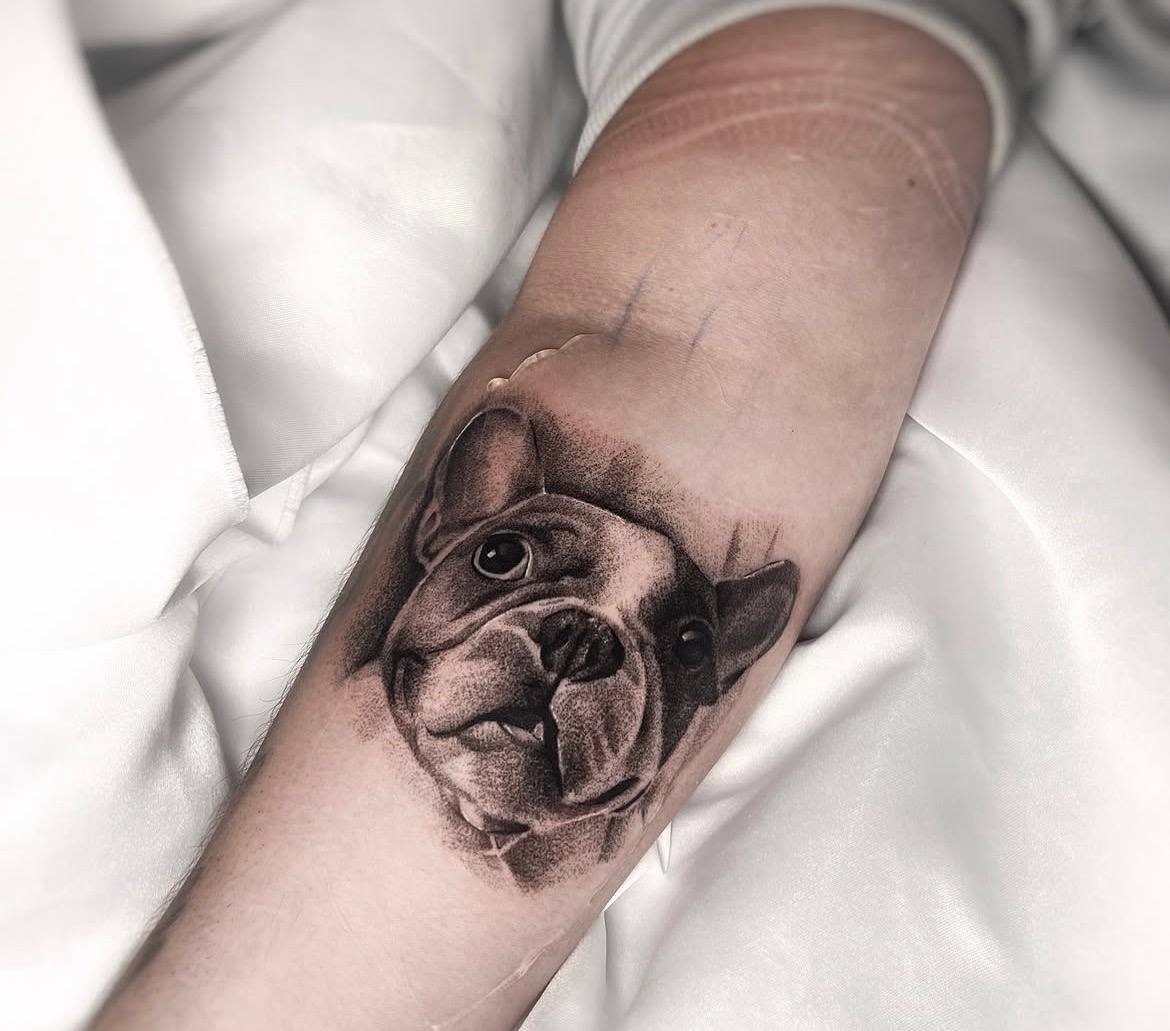
Almost everyone deciding to get a tattoo shares the same question: "How will this look in 10 or 20 years?" It is a completely fair question, because a tattoo is a permanent decision and skin is living tissue. The good news: a well-designed, well-placed and well-cared-for tattoo can stay clear and beautiful for years. The honest news is that no tattoo holds its first-day sharpness identically forever — but this is not a flaw, it is the nature of tattoos.
In this guide, we explain honestly why and how a tattoo changes over time, which factors speed up or slow down that process, and what our team considers at the design stage for longevity.
What exactly happens to a tattoo over time?
Ink is placed in the dermis, the layer beneath the epidermis (the skin's outermost layer). The epidermis constantly renews itself; the reason a tattoo is permanent is that the ink settles into the deeper, more stable dermis. But the dermis changes too: skin ages, loses some of its elasticity, and ink particles disperse very slowly.
The visible results fall into three categories. First, slight blurring: very fine lines placed close together can spread a little over the years, softening their sharpness. Second, fading: colours and black tones lighten somewhat over time. Third, loss of contrast: the difference between the darkest blacks and the lightest areas decreases slightly. All three processes are normal and can be slowed significantly with the right measures.
The factors that determine a tattoo's lifespan
1. Sun (UV) — the number one factor
The sun is a tattoo's greatest enemy. UV rays break down the ink particles beneath the skin and accelerate fading. Regular sun protection is the single most effective thing you can do to extend a tattoo's life. Once healing is complete, applying high-factor sunscreen to exposed tattoos makes a visible difference over the years.
2. Placement — friction and movement
Some areas of the body are tougher canvases than others. On areas exposed to friction and frequent washing throughout the day — hands, fingers, feet and palms — tattoos open up faster. By contrast, more stable, less-rubbed areas such as the outer arm, thigh, back and calf preserve a tattoo far better. Joints and folding areas also wear more over time due to movement.
3. Line weight and detail density
Very fine lines look elegant but are somewhat more prone to spreading in the long run. Bold lines and designs with clear contrast are more resistant to time. Likewise, dense detail crammed into a very small area can lose clarity years later. This does not mean you should avoid the fine-line style; it only means the design should be correctly balanced with size and placement.
4. Colour or black and grey?
In general, black and grey tones are more resistant to time than coloured inks. Among colours, some — especially light and pastel tones — can fade faster, while dark, saturated colours last longer. This does not mean you should avoid colour — it is simply important to know that colour choice and care affect longevity. For more, see our black & grey guide.
5. Skin and lifestyle
Keeping skin moisturised, healthy and cared-for helps a tattoo age better. Regular moisturising, adequate water intake and general skin health make a difference. Habits that wear down the skin, such as smoking and excessive sun exposure, indirectly contribute to a tattoo ageing faster too.
Longevity by style
Every style ages a little differently. Bold-line traditional designs are usually the most durable. Black and grey realism ages gracefully thanks to its soft gradients but needs care to preserve its contrast. Fine line designs are the most elegant, but also the most sensitive to placement and care. The watercolour style, when it lacks a clear outline, can soften faster over time; this is why it is often recommended to support it with a fine line underlying structure.
This information is not meant to talk you out of a style, but to set expectations correctly. Whichever style you choose, a satisfying lifespan is achievable with the right design and care.
What can you do to slow ageing?
The secret to longevity is not complicated — it is consistency:
- During healing, follow your team's aftercare instructions exactly. The first weeks determine how the tattoo settles.
- Protect it from the sun. After healing, apply high-factor sunscreen to exposed tattoos regularly.
- Moisturise. Regularly moisturised skin keeps a tattoo more vivid.
- Avoid excessive friction — especially on fine-line work and high-friction areas.
- Treat touch-ups as normal. Some areas and styles regain their first-day clarity with a small touch-up over the years.
For more detailed advice, read our aftercare guide.
Touch-ups: not a flaw, but part of care
A tattoo needing a touch-up over time is not a sign of error. Especially on tough areas such as hands and fingers, or on very fine-line work, a small touch-up done years later refreshes the tattoo. It is best thought of as a natural part of the long-term care of a good tattoo.
How do we plan for longevity at the design stage?
How a tattoo will look years later is largely determined by decisions made before it is even drawn. During consultation and design, our team weighs line weight, detail density, placement and size together with the wearer's lifestyle and the characteristics of the area. The aim is for a design that looks striking today to remain clear and legible 5, 10 or 20 years from now. We illustrated how we plan longevity for fine-line work in our birth flower article too. Sometimes this means making a very small design slightly larger, or strengthening an overly fine line a little — and these recommendations are precisely for the longevity of your tattoo.
Frequently asked questions
Does every tattoo fade over time? Some change is normal in every tattoo. But with sun protection and proper care, this process can be slowed significantly; a well-cared-for tattoo can stay clear for many years.
Are fine-line tattoos shorter-lived? Not shorter-lived, but more sensitive to placement and care. In the right area and with good care, fine-line work also stays beautiful for many years.
How do I protect my tattoo from the sun? After healing is complete, apply high-factor sunscreen to exposed tattoos. During healing, the tattoo should not be exposed to direct sun.
When is a touch-up needed? It depends on the area and style. Some work needs no touch-up for years, while fine-line work on tough areas can be refreshed with a small touch-up every few years.
The right start for a long-lasting tattoo
A tattoo that ages well begins with the right design decisions. At our Beşiktaş Polat Towerside and Pendik Lens Yaşam Merkezi branches, we plan your design together with longevity in mind. Share your idea and placement via WhatsApp, and let our team recommend the best path for both aesthetics and durability.


