

Some memories don't stay in photo albums — they get etched into skin. The most emotional branch of portrait tattoos, family and pet portraits, transform the people and animals at the center of our lives — or those we've lost — into a lasting piece of art. But this type of work is among the most technically demanding, and choosing the right artist is critical.
Drawing on the experience of our team, who have produced thousands of realism pieces in Istanbul since 2021, we've gathered what you need to know about family and pet portrait tattoos.
In recent years, demand for portrait tattoos has grown quickly thanks to references shared on social media — but this growth has also brought more low-quality work into the market. In this guide you'll find practical answers not only about choosing the right artist, but about preparing your reference photo, choosing the right size and placement, aftercare, and how a portrait tattoo really looks years later.
Why a Portrait Tattoo? The Emotional Meaning
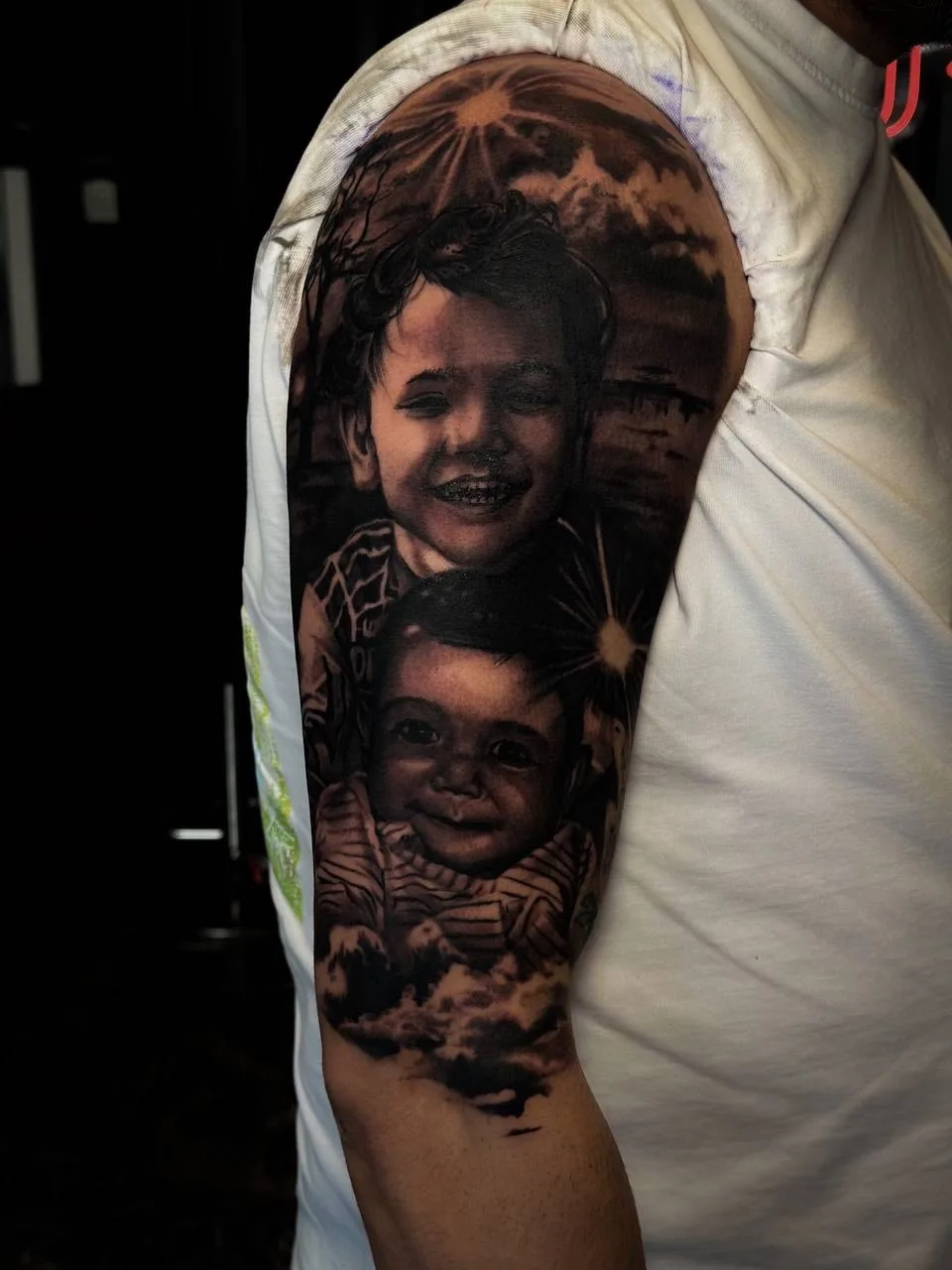
A grandparent's photograph, the eyes of a pet you've lost, your child's smile — these moments can fade over time, but a properly done realism tattoo keeps its clarity for years. Memorial portraits are also frequently chosen as a way to find comfort during grief.
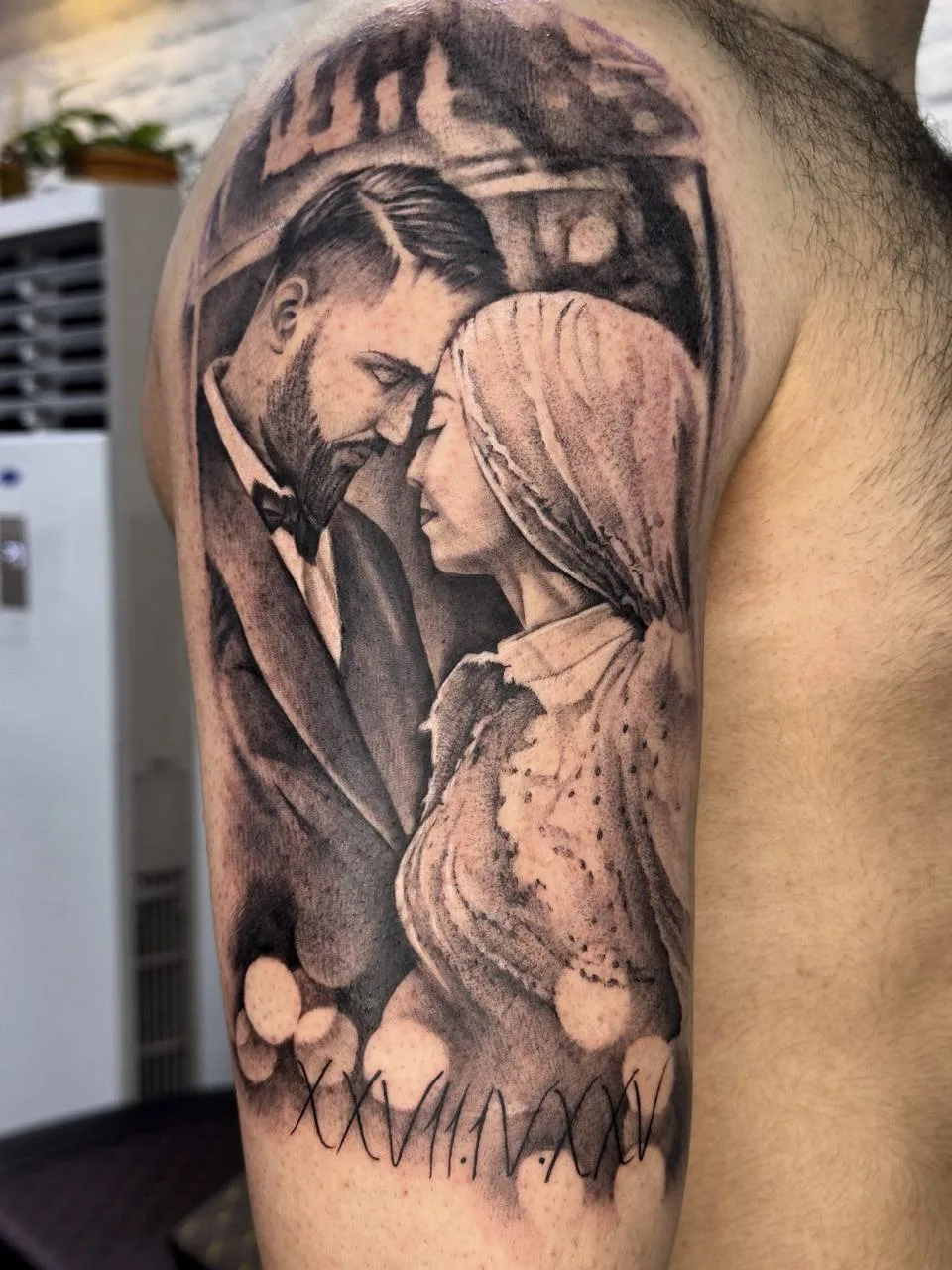
One of the sentences we hear most often during consultations is: "I want to feel them with me every day." A portrait tattoo can be the physical form of grief after a loss, but it can just as easily express gratitude for someone still very much part of your life. Some clients choose a photo of their partner from their youth for an anniversary; others choose a beloved pet from its later years. In both cases, the common thread is the desire to make a captured moment permanent.
Why Realism Technique Matters for Portraits
Portrait work is done using black and grey realism or color realism techniques. This requires the skill to render light-shadow transitions, skin texture and eye detail with photographic precision. Not every artist specializes in this — it's essential to choose an artist whose portfolio proves success specifically with human or animal eye detail.
Black and grey realism focuses on shading transitions to build photographic depth, while color realism conveys skin tone, eye color and hair detail more vividly. Which technique to choose depends on the lighting in your reference photo and your personal preference. What usually makes a portrait feel "alive" is the light reflection in the eyes — an artist who can't render this detail in the right proportion can leave a portrait looking flat, even if technically skilled otherwise. That's why we recommend asking to see close-up shots of an artist's previous portrait work during your consultation.
How to Choose the Right Reference Photo
The quality of your reference photo directly determines the quality of the final portrait — an artist can't produce more detail than what's visible in the photo. Keep the following in mind:
- Sharp and high-resolution: blurry or low-quality photos make it harder for the artist to interpret details correctly.
- Good lighting conditions: photos taken in soft, natural light give the best results for shading. Avoid heavy flash or dark photos.
- Clear facial angle: a sharp shot looking directly at the camera or at a slight angle helps ensure the eyes and facial features are rendered accurately.
- Bring multiple photos: letting your artist see reference from different angles helps produce a more accurate portrait.
- Keep the background simple: a busy background can distract the artist's focus from facial features; frames where the face stands out clearly work best.
- Share the original file: images downloaded from social media are often compressed and lose detail; where possible, share the original or highest-resolution version of the photo.
Why Size and Placement Matter So Much
When portrait tattoos are squeezed into small areas, eye and facial details blur over the years. That's why larger surfaces like the upper arm, forearm, chest or back are recommended. Our team always gives honest guidance on minimum size so the portrait retains its clarity for years — trying to fit a detailed portrait into a small area can disappoint both artist and client.
As a general rule, we recommend a minimum working area of about 10-13 cm to clearly render a single face; group portraits require more space depending on the number of subjects. The inner forearm and outer upper arm are the most popular placements, offering both visibility and a comfortable healing process, while the back and chest are ideal for larger, multi-person compositions. Smaller, high-movement areas like the wrist or foot are not recommended for portrait work, since skin folds distort detail and clarity fades much faster over time.
Special Considerations for Pet Portrait Tattoos
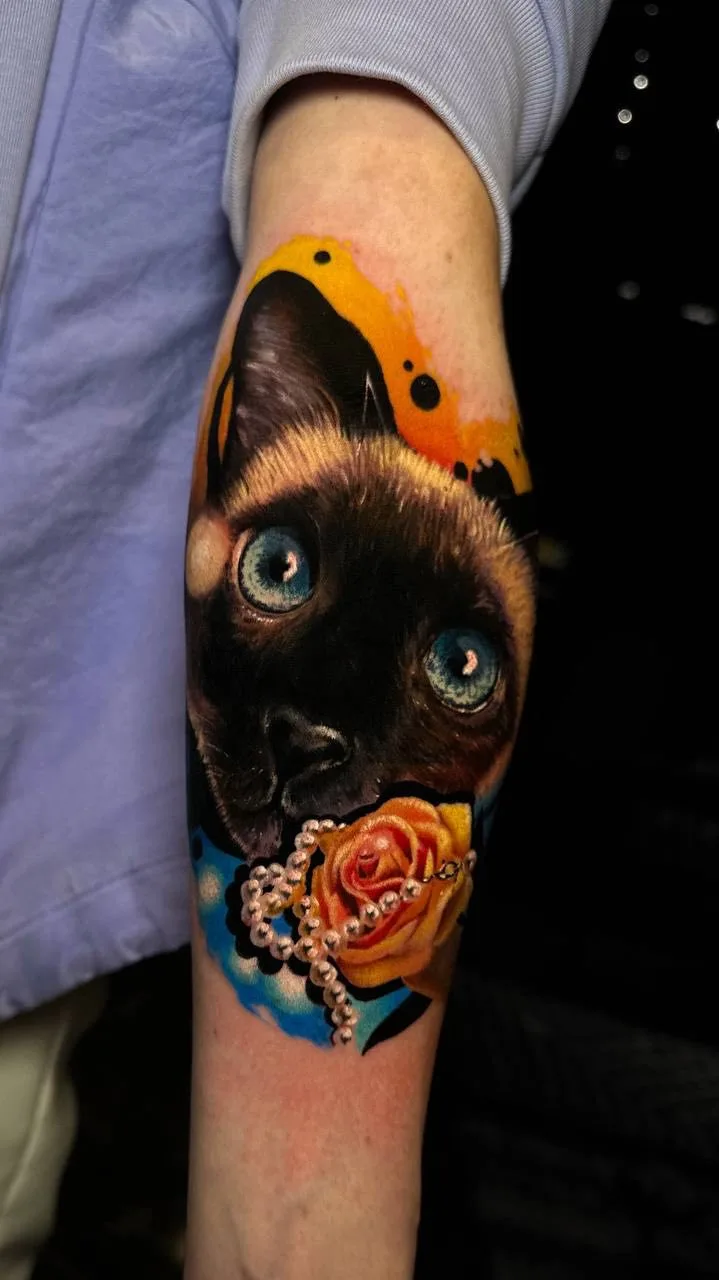
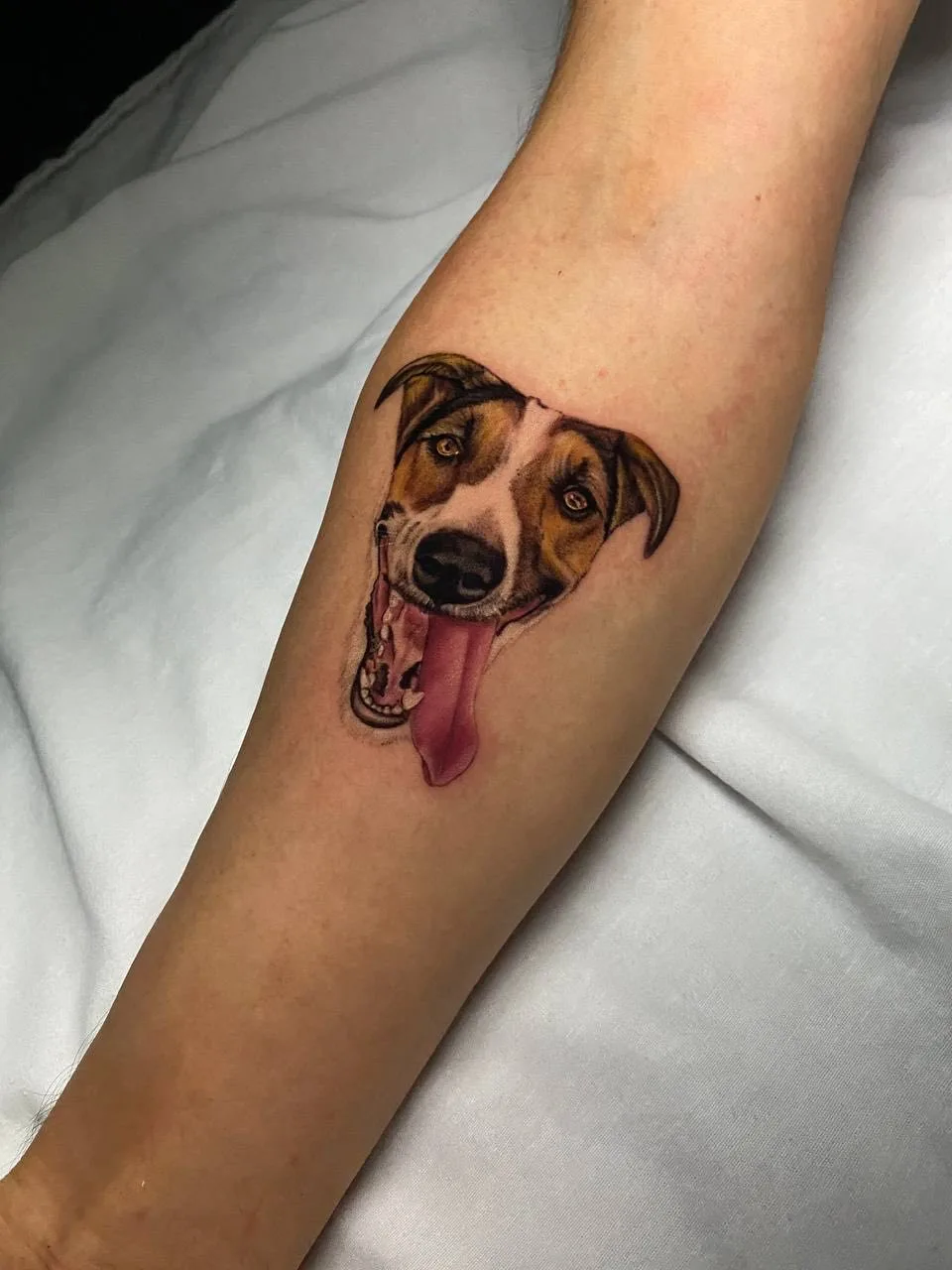
For pet portraits, fur texture, eye brightness and characteristic expression (like the position of the ears) are the details that matter most. These are what make a tattoo feel like it truly belongs to that specific pet, rather than just "an animal drawing." An experienced realism artist can capture these small but meaningful details.
Nose texture and whisker detail matter most for cats and dogs, feather pattern and color transitions for birds, and mane and muscle definition for horses. When it comes to a pet that has passed away, we often ask clients to choose the most characteristic moment possible — sleeping on a favorite blanket, or a typical expression captured mid-glance — since this is what turns a generic "animal portrait" into something that's truly theirs.
Symbolic Alternatives to a Full Portrait
For those who prefer a more symbolic expression rather than a full portrait, alternatives exist: a loved one's signature or handwriting, your pet's paw print, a birth date, or a meaningful phrase. These options fit smaller areas and carry less technical risk.
These alternatives are especially suited to clients getting their first tattoo, or who want something smaller and less noticeable. A paw print set inside a heart shape, or a note in your loved one's actual handwriting recreated as a tattoo, can carry the same emotional weight without the technical risk of a full portrait. Symbolic designs also heal faster and are far less likely to lose clarity over the years.
Aftercare and Longevity of Portrait Tattoos
Realism portraits contain fine shading transitions, which makes aftercare especially important. Moisturizing and sun protection during the first two weeks play a decisive role in keeping shadows crisp. A slight softening over the years is normal; if needed, a simple touch-up session after 5-7 years can restore the portrait's original clarity. Consistent sunscreen use is the single most important factor in preserving the sharpness of facial details.
Gently cleaning the area and applying a thin layer of the recommended moisturizer during the first 3-4 days helps prevent uneven scabbing and blotchy shading. Once healing is complete (around 3-4 weeks), regularly applying SPF 50 sunscreen to the tattooed area is the most effective way to slow UV fading of the pigment. Avoiding saunas, prolonged sun exposure and chlorinated pools for the first month also helps keep shading transitions crisp.
What Affects the Price of a Portrait Tattoo?
Portrait tattoo pricing depends on size, level of detail, technique (black and grey vs. color) and the number of sessions required. A small, single-subject portrait can often be completed in one session, while group portraits or large back pieces may require several. An artist's experience level also affects price directly; working with an artist who specializes in realism can actually be more economical long-term, since it reduces the need for future touch-ups. For an exact quote, book our free consultation with your reference photo.
Portrait Tattoos in Istanbul: The Bosphorus Ink Experience
At our Beşiktaş (Polat Towerside) and Pendik (Lens Yaşam Merkezi) locations, you can work with artists who specialize in realism. Every portrait project starts with a free consultation where we review your reference photos and give honest advice on size, placement and technique.
A detailed conversation with your artist before your appointment helps clarify expectations and lets you settle on the best composition together. Group portraits combining several people or pets in a single composition are also possible; these typically require a larger area and a longer session.
Our team always reviews your reference photo with you first, suggesting a better shot if needed so the project starts on solid footing. During the consultation we also let you review size and placement visually, so you have a clear idea of what to expect before the tattoo begins.
Frequently Asked Questions
How long does a portrait tattoo take? Depending on size and detail, a small portrait takes 3-4 hours, while a large, detailed piece may require multiple sessions.
Which body area is best for the clearest result? Larger, flat surfaces like the upper arm, forearm, chest and back keep details sharp for many years.
Does a portrait tattoo hurt? Pain level varies by body area and personal pain tolerance; areas closer to bone (ribs, inner arm) tend to be more sensitive. Since realism work takes longer, our artists schedule regular breaks during the session to keep it comfortable.
What determines the price of a portrait tattoo? Size, level of detail, chosen technique and the number of sessions required are the main factors affecting price. For an exact quote, you can book our free consultation session with your reference photo.
Frequently Asked Questions
How long does a portrait tattoo take?
Which body area is best for the clearest result?
Does a portrait tattoo hurt?
What determines the price of a portrait tattoo?


