
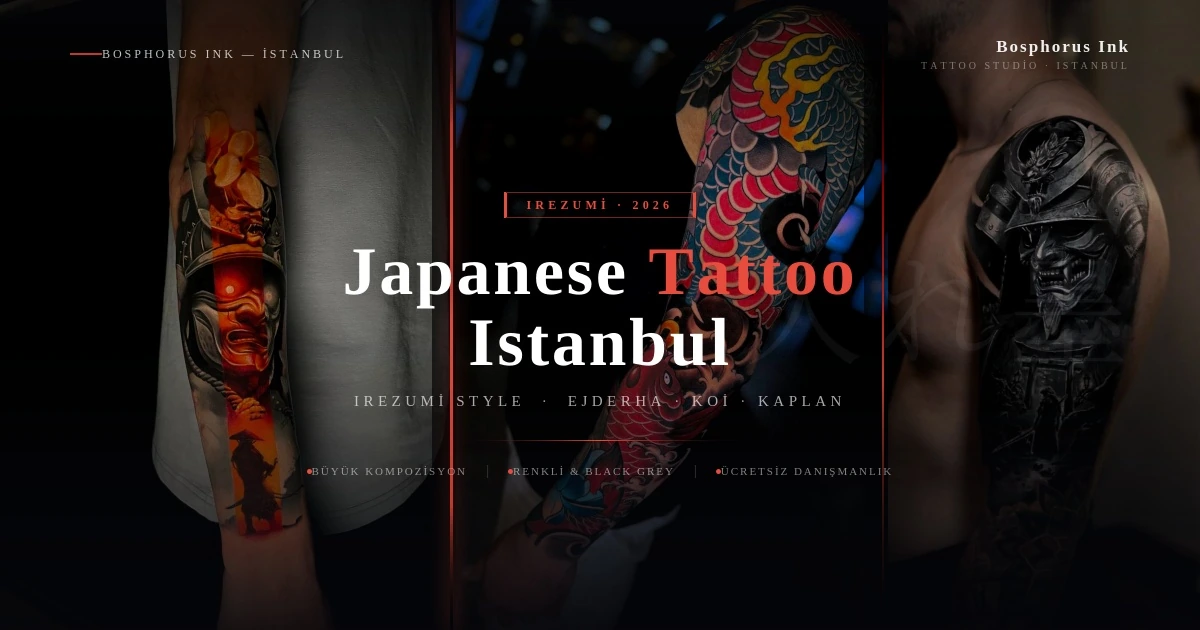
Japanese tattoo Istanbul — in 2026, the ancient art of Irezumi continues to be one of the most sought-after styles for large-scale tattoo projects in the city. Carrying centuries of history and a visual language unlike any other, this tradition combines powerful symbolic motifs, a rich color palette and a cohesive compositional philosophy that treats the tattoo not merely as a design, but as a true work of art.
In this guide, we cover the origins of the Japanese tattoo style, its most popular motifs, technical requirements, and what to look for when choosing a professional studio in Istanbul for this type of work.
What Is Japanese Tattooing (Irezumi)?
Irezumi literally means "inserting ink under the skin" in Japanese, and refers to Japan's centuries-old tattooing tradition. Traditional Irezumi was applied using the hand-needling technique known as tebori; today it is executed with modern tattoo machines. However, the essence of the style — bold outlines, solid color fields, and symbolic motifs arranged in a cohesive composition — remains unchanged.
Japanese tattooing is not simply about placing a motif on skin. This style treats the body as a canvas and is built around a comprehensive compositional philosophy in which every element exists in harmony with the others. For this reason, Irezumi projects are typically applied to large areas such as full sleeves, half sleeves, the back, or the chest.
The History and Cultural Significance of Japanese Tattooing
The Japanese tattooing tradition dates back to the Edo period (1603–1868). During this era, tattoos served as both status symbols and expressions of social identity. Over time, following periods of prohibition and social change, tattooing became associated with underground culture — before experiencing a powerful international renaissance from the mid-20th century onward.
Today, Japanese tattooing is recognized worldwide as an art form carrying universal themes of freedom, strength, transformation, and harmony with nature. In Istanbul, Irezumi is increasingly in demand — particularly among international visitors and local clients with ambitious large-scale project visions.
The Most Popular Japanese Tattoo Motifs and Their Meanings
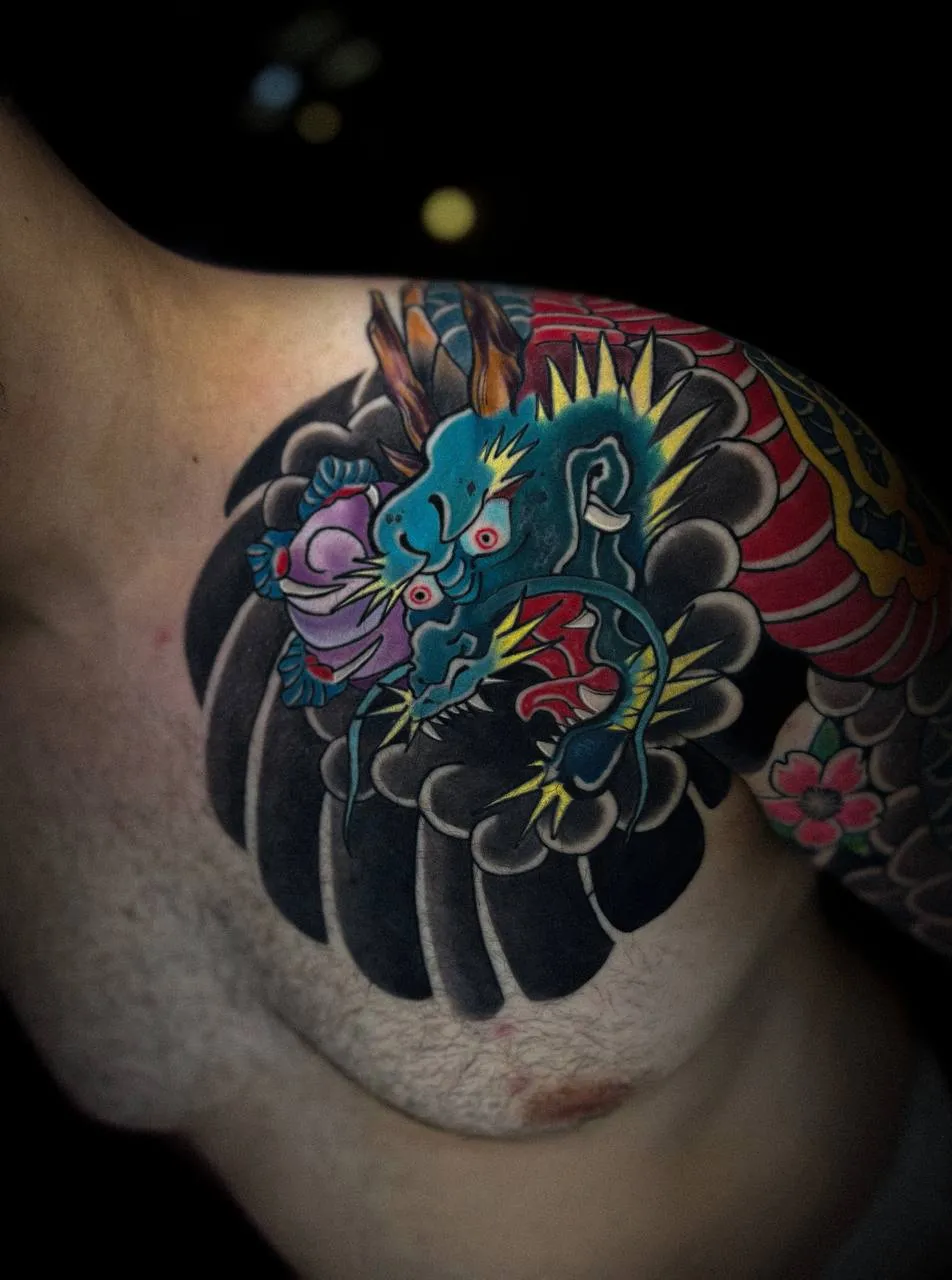
Dragon (Ryū) Tattoo
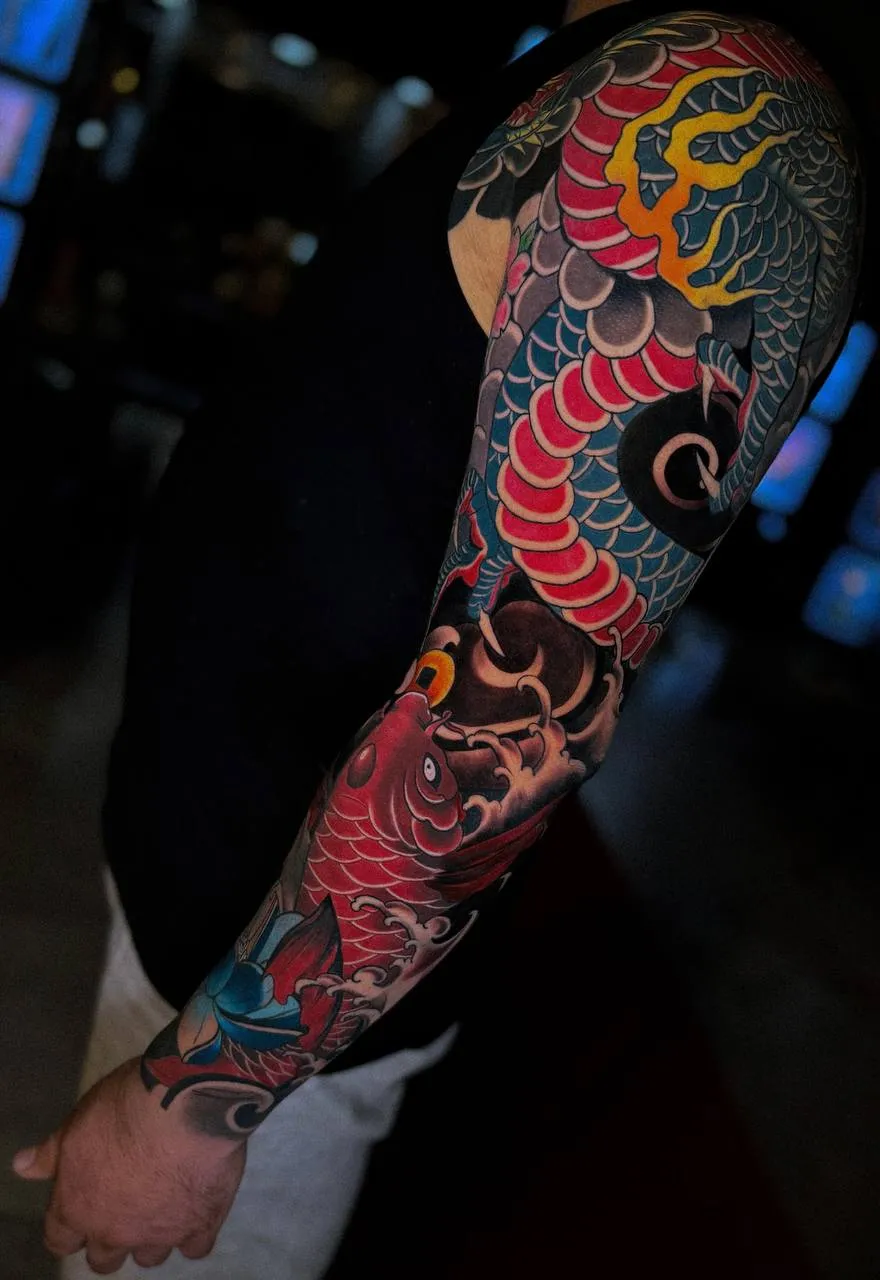
The dragon is the most iconic symbol in Japanese tattooing. Unlike the malevolent dragons of Western mythology, Japanese dragons represent wisdom, strength, and protection. Color choice also carries meaning: a black dragon symbolizes experience and wisdom, while blue represents calm and compassion. Dragon motifs are most commonly featured as the central focus of full sleeve or back piece compositions.
Koi Fish Tattoo
The koi fish carries one of the most profound symbolic meanings in Japanese tattooing. According to legend, a koi that swims upstream against powerful currents and passes through a waterfall transforms into a dragon. The koi therefore symbolizes perseverance, determination, and transformation. A koi swimming upward represents achieving success; one swimming downward represents struggling through current hardships. Koi motifs are typically composed alongside water waves and lotus flowers.
Tiger (Tora) Tattoo
In Japanese tradition, the tiger represents courage, strength, and protection against evil spirits. It is often depicted alongside bamboo or pine trees. When the tiger and dragon appear together, they express the balance of opposites — heaven and earth, the spiritual and the physical. For a powerful arm or back project, the tiger remains one of the most compelling choices.
Cherry Blossom (Sakura) Tattoo
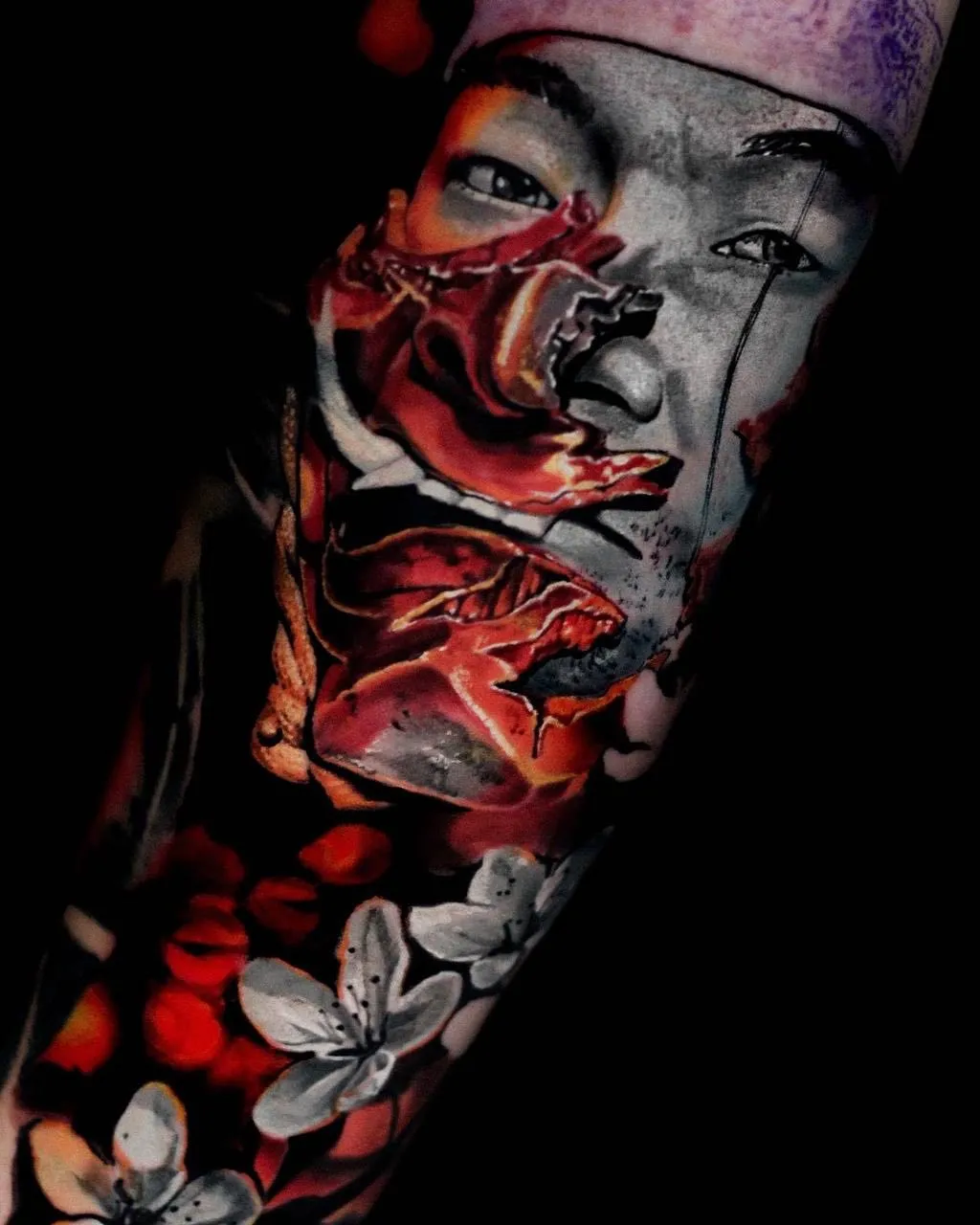
Sakura symbolizes the transience of life and the beauty of the present moment in Japanese culture. The cherry blossom, which blooms briefly each spring, represents an acceptance of existence's fragility — and the freedom that acceptance brings. In Japanese tattoos, sakura is typically used as a background element alongside other motifs, adding a romantic depth to the composition.
Waves (Nami) and Other Elements
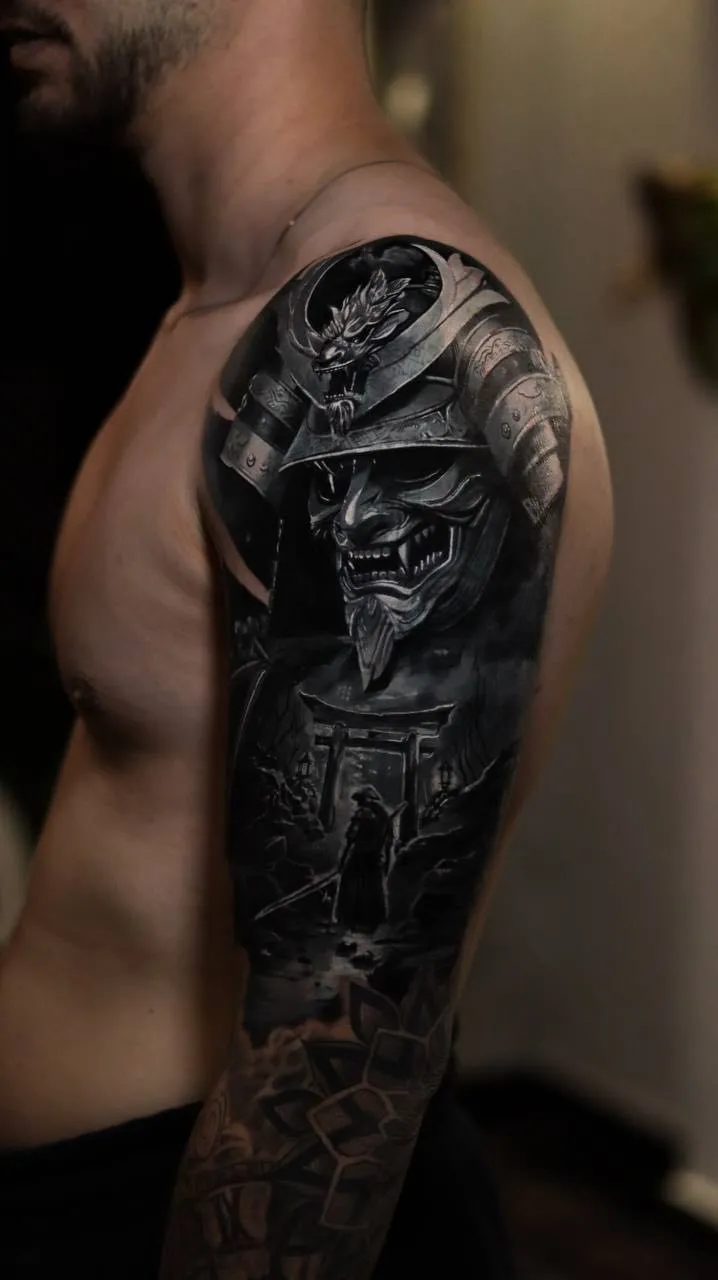
The great wave motif — particularly in the form associated with Hokusai's iconic artwork — symbolizes power, change, and the endless cycle of nature. Waves function both as standalone motifs and as compositional elements that connect and unify other design components. Other core elements of Irezumi include the lotus flower, peony (botan), phoenix (Hō-ō), and oni mask.
Japanese Tattooing: Technical Requirements
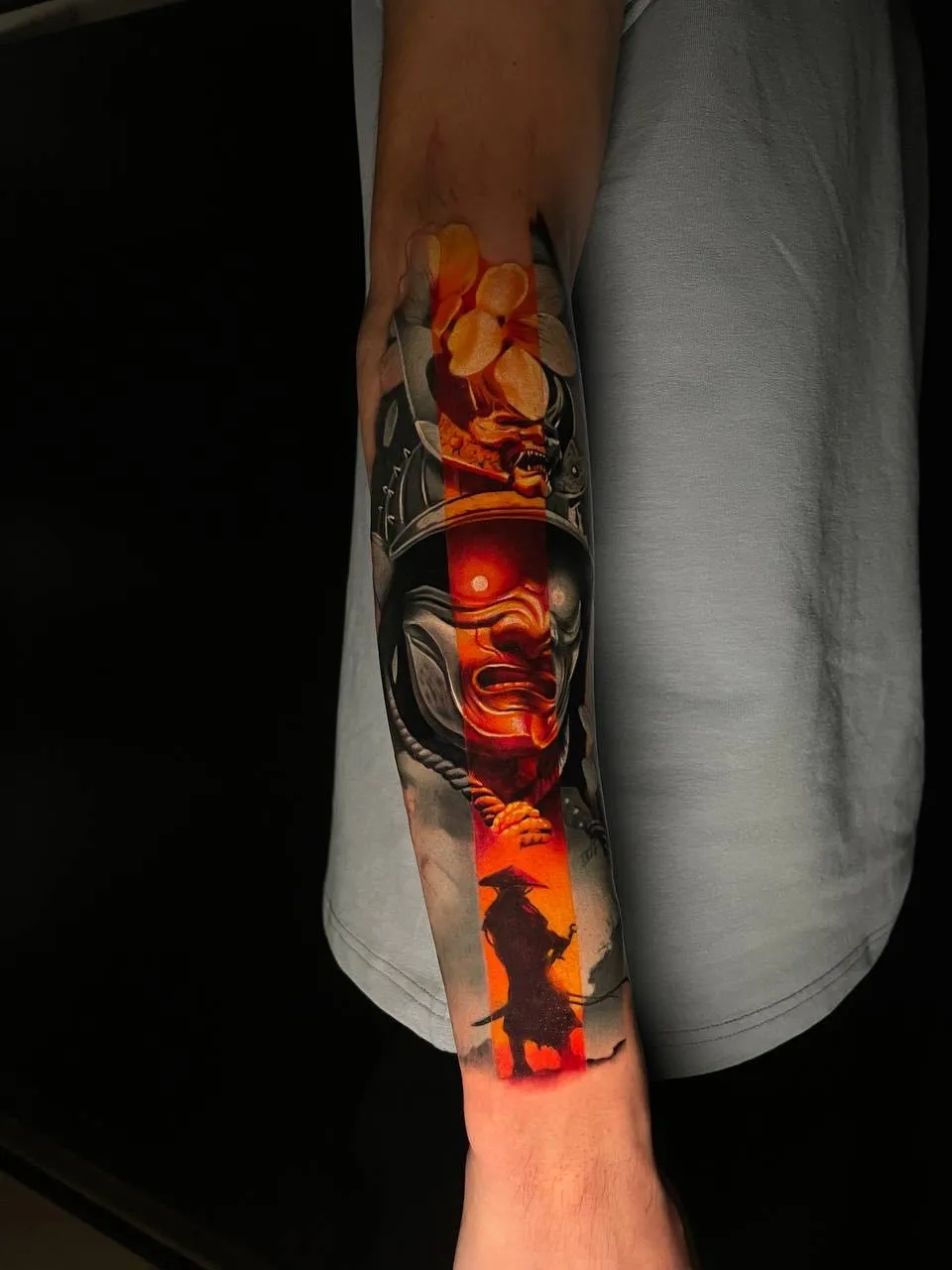
Irezumi is one of the most technically demanding tattoo styles. Large color fields, strong contour lines, and a cohesive compositional approach require both an experienced artist and a patient client.
Session Duration and Planning
Japanese tattoos require multiple sessions due to their size and level of detail. A full sleeve project typically takes between 4 and 8 sessions, with each session lasting 3 to 6 hours. At least 3 to 4 weeks of healing time is recommended between sessions. For this reason, planning a comprehensive Irezumi project realistically requires a timeline of at least 6 months.
Color and Ink Quality
The vivid colors of Japanese tattoos — particularly reds, oranges, blues, and yellows — require high-quality, skin-compatible ink. The quality of the ink directly affects both long-term color stability and skin health. At Bosphorus Ink, all of our work is done using internationally certified inks that meet the highest safety standards.
Japanese Tattoo Prices in Istanbul 2026
Japanese tattoo pricing varies based on the size of the project, level of detail, number of colors used, and total session time. The table below reflects general market trends and can be used as a starting point for budgeting. For an exact quote, request a free consultation via our contact page.
| Project Type | Estimated Duration | Price Range |
|---|---|---|
| Small Motif (10–15 cm) | 2–3 hours | [Contact for pricing] |
| Half Sleeve | 8–15 hours | [Contact for pricing] |
| Full Sleeve | 20–35 hours | [Contact for pricing] |
| Back Piece | 30–50+ hours | [Contact for pricing] |
Prices vary based on design complexity, ink type, and artist experience. For a style-by-style price comparison, see our Istanbul tattoo prices 2026 guide.
Japanese Tattoo Aftercare
Proper aftercare is critical for keeping an Irezumi project looking its best long-term.
Healing Phase
During the healing period, regular moisturizing, protection from sunlight, and avoiding swimming pools and the sea are the fundamental rules. Full skin recovery typically takes 3 to 4 weeks, and it is important not to interfere with the tattooed area throughout this process.
Long-Term Care
Color work is more sensitive to sun damage than black & grey tattoos, so high-SPF sun protection is recommended even after the tattoo has fully healed. Regular moisturizing will also help preserve the vibrancy of your colors for years to come.
Japanese Tattooing at Bosphorus Ink
At Bosphorus Ink, we bring a personalized approach to every Japanese tattoo project. From the design process to session planning, from ink selection to aftercare guidance, we're with you every step of the way. Whether your vision is a small koi motif or a full back piece, we approach every project with the same level of precision and artistic commitment.
To book a free consultation, visit our contact page or call the studio directly. Share your design ideas and we'll build the perfect project plan together.
To explore other tattoo styles, check out our 2026 tattoo styles guide. For black & grey work, visit our black & grey tattoo page.
Frequently Asked Questions
What is Japanese tattooing (Irezumi)?
How many sessions does a Japanese tattoo take?
What do the dragon and koi fish symbolize in Japanese tattooing?
How much does a Japanese tattoo cost in Istanbul?
How do I care for a Japanese tattoo after it's done?
Which body areas work best for Japanese tattoo compositions?
How do I book a Japanese tattoo appointment at Bosphorus Ink?


