
Nose piercings have become one of the fastest-growing body modifications in Turkey and across global piercing culture. From the classic nostril to the trending septum, from high nostril to bridge — the variety of options offers different aesthetic statements and personal expressions. This guide covers all major nose piercing types, healing timelines, proper aftercare protocols, and the most common mistakes to avoid. Drawing on in-studio experience at our Beşiktaş and Pendik branches, the team at Bosphorus Ink helps you make the right choice and ensures a healthy healing process.
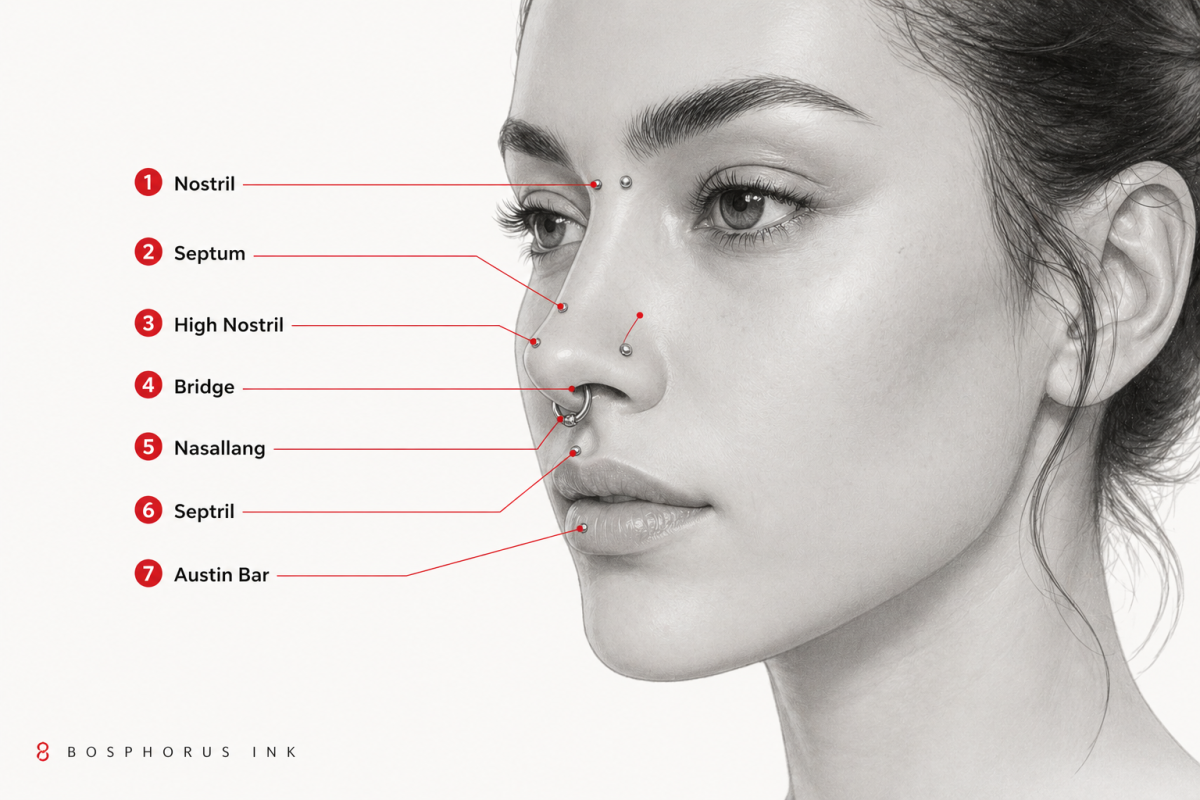
Types of Nose Piercings
A nose piercing is not a single procedure — there are multiple variations depending on anatomical location, jewelry type, and aesthetic preference. The right choice depends on your facial features, lifestyle, and the time you can dedicate to the healing process.
Nostril (Classic Side Piercing)
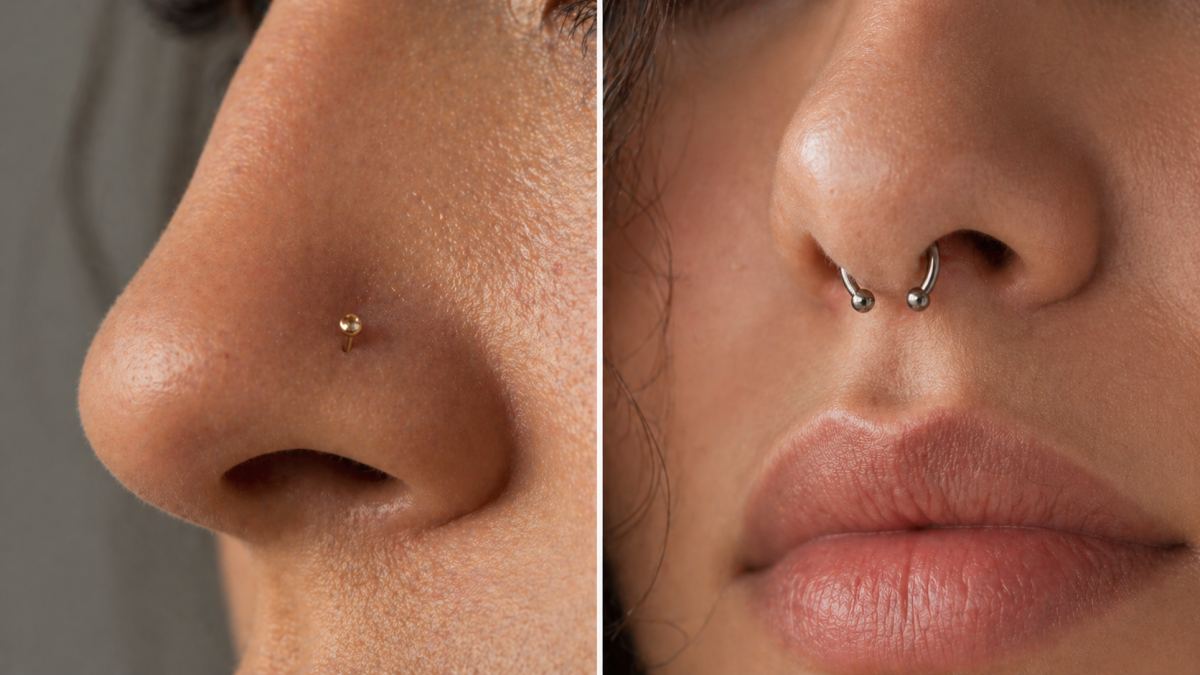
The most common and recognizable nose piercing. Located on the side of the nostril, just above the natural curve. Anatomically suitable for both left and right sides — the choice depends on your aesthetic and symmetry preferences. With roots in Indian culture, it has become globally widespread since the 1990s. Ideal for first-time piercing seekers, it has a relatively short healing time and moderate pain level. Common jewelry options include nose studs (L-bend, nose screw) or small hoops.
Septum
The septum piercing passes not through the hard cartilage of the nasal septum, but through a thin connective tissue called the “sweet spot”. Its popularity has surged in Turkey over the past three years. When done at the correct anatomical point, pain is minimal; if done through cartilage by mistake, it causes severe pain and prolonged healing. Its biggest advantage: the jewelry can be “flipped up” inside the nose, making it completely invisible. Ideal for those who need flexibility for professional environments. Initial jewelry options include titanium captive bead rings (CBR) or horseshoe barbells.
High Nostril
Positioned higher than the classic nostril, closer to the bridge of the nose. Offers a more sophisticated aesthetic, but the cartilage tissue in this area is denser and vascularization is lower. As a result, healing time is longer and pain level is significantly higher. Not recommended as a first piercing — requires experienced clients and a skilled professional piercer.
Bridge (Erl Piercing)
A horizontal piercing through the surface tissue between the eyebrows, above the bridge of the nose. Technically a “surface piercing” — passing only through the skin's surface tissue, not through cartilage or bone. This dramatically increases the risk of rejection (the body pushing the jewelry out). While visually striking, longevity is limited; rejection rates within 1-3 years are high. Typically uses a straight barbell.
Nasallang
A triple piercing formed by a single long barbell passing through both nostrils and the septum. Because three holes are created in a single procedure, this is an advanced placement that should only be done by experienced piercers. Visually it can resemble a single nostril piercing, but the bar actually traverses both sides of the nose and the septum. Demand in Turkey is limited — chosen by those seeking a unique aesthetic.
Septril
An additional piercing made through the underside of an already-healed septum, extending downward toward the inside of the nose tip. The septum must be fully healed first (minimum 6-9 months) before a septril can be added. Due to its complex anatomical position, very few piercers in Turkey perform this procedure. Aesthetically, it creates an effect similar to a Madonna piercing.
Austin Bar
A rare horizontal piercing through the tip of the nose, passing only through surface tissue rather than cartilage. Named after the first client (Austin) on whom it was performed. Very few piercers in Turkey offer this procedure, and rejection rates are high. Should be considered a short to medium-term aesthetic statement rather than a permanent piece.
Healing Times: How Long for Each Type?
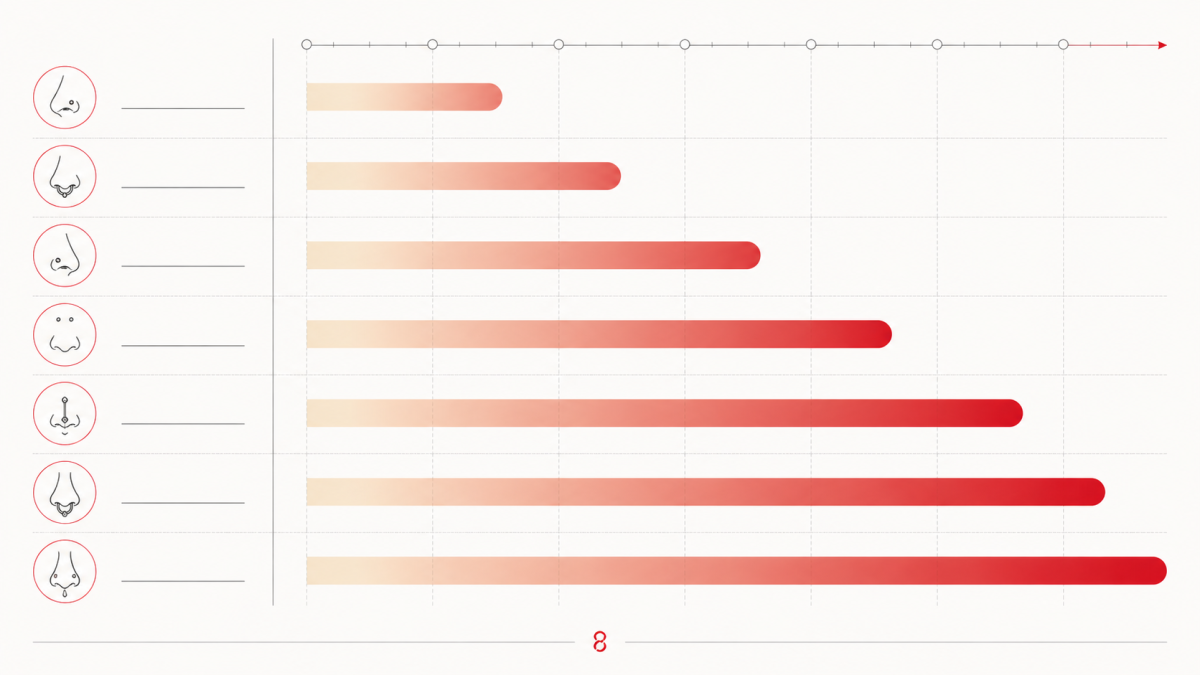
Each piercing type has a different full healing window, during which the jewelry should not be changed and the channel must remain undisturbed. The timeframes below are general guidelines; individual healing speed varies with age, nutrition, smoking, immune function, and aftercare discipline.
- Nostril: 4-6 months
- Septum: 6-8 weeks (one of the fastest-healing types when placed correctly)
- High Nostril: 6-9 months
- Bridge: 8-12 weeks (high rejection risk)
- Nasallang: 4-6 months
- Septril: 3-6 months
- Austin Bar: 8-12 weeks (high rejection risk)
Aftercare Protocol: From Day One to Month Six
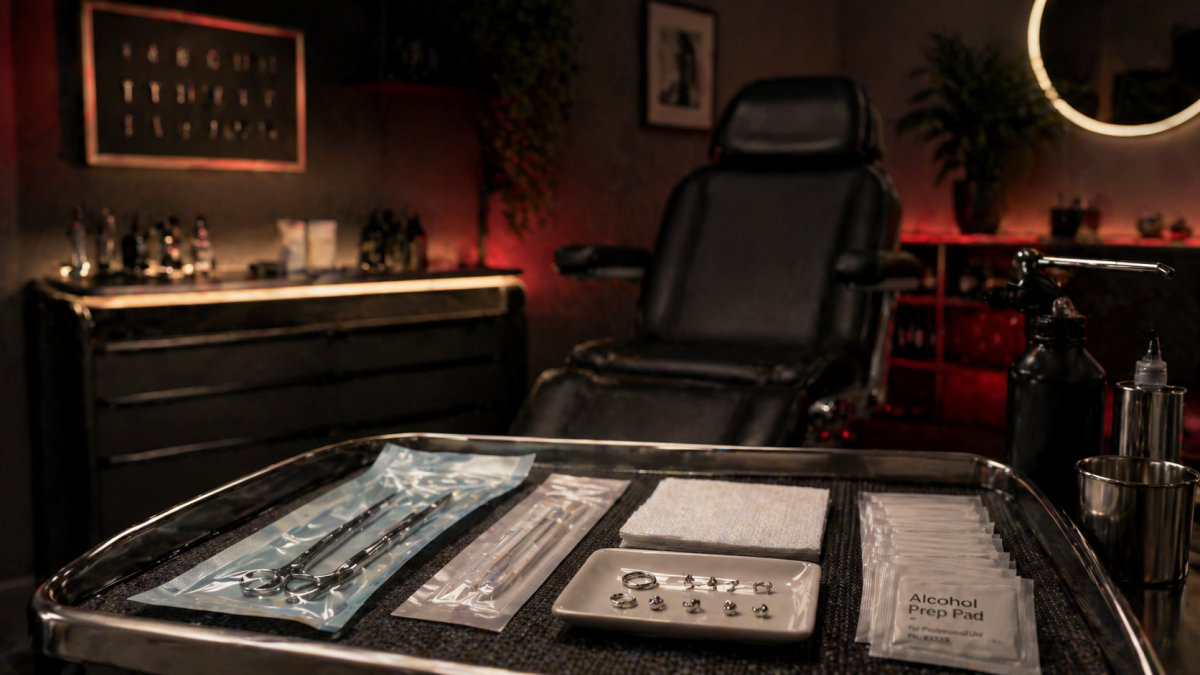
First 24 Hours
Slight bleeding, redness, and swelling at the entry point are completely normal. Cold therapy (cold gel pad, never direct ice) can help reduce swelling. Do not touch, rotate, or move the jewelry. Try to sleep on your back the first night; sleeping on the pierced side increases swelling.
First Two Weeks
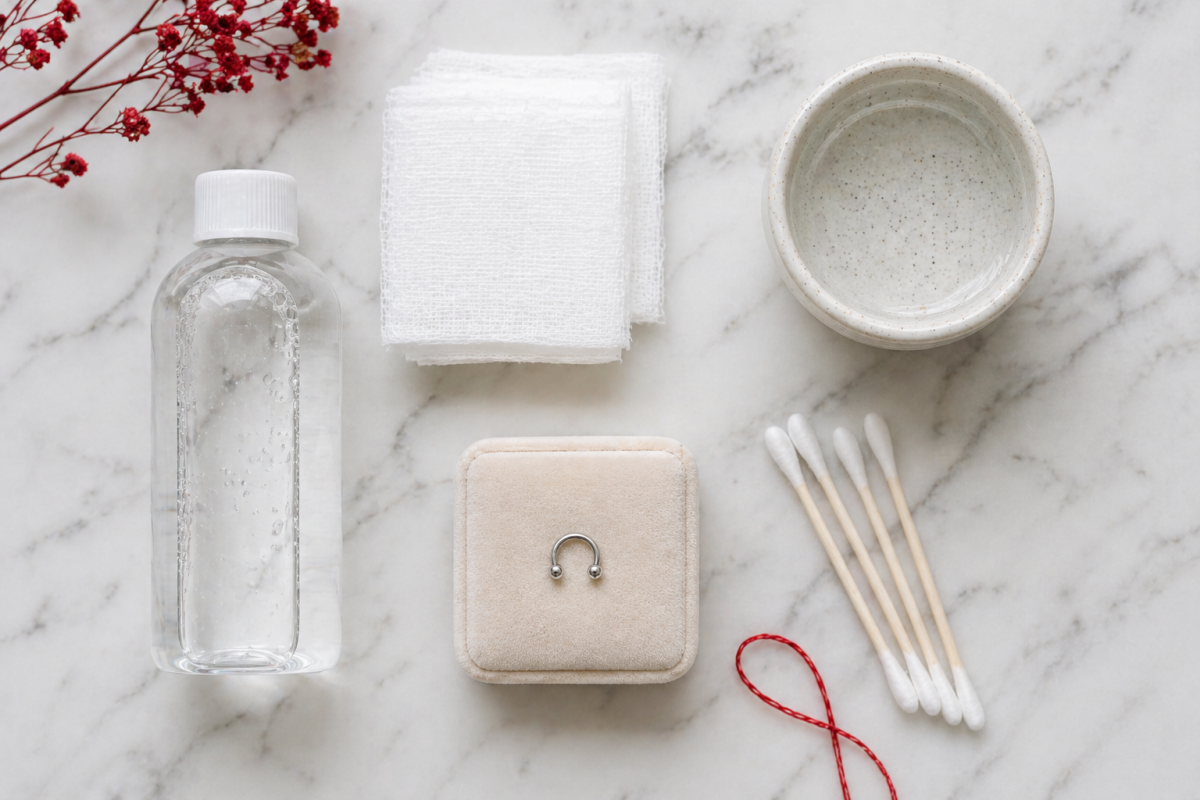
Clean twice daily with sterile saline solution (NeilMed, H2Ocean, or medical-grade solutions recommended by Bosphorus Ink). Use sterile gauze rather than cotton swabs. Apply solution, wait 2-3 minutes, rinse with lukewarm water, pat dry. Keep makeup, foundation, and perfume away from the area.
From Week Two Until Full Healing
Reduce cleaning frequency to once daily. Never remove or change the jewelry. Wear a sweatband during exercise (sweat must not reach the piercing). Protect the area during hair coloring or salon visits. Pools, the sea, and steam rooms are strictly off-limits for the first six weeks; consult your piercer before reintroducing them.
Don'ts: 7 Common Mistakes
- Using alcohol or hydrogen peroxide: These dry the tissue, kill healing cells, and delay scab formation.
- Rotating the jewelry: An outdated myth. Rotating the jewelry creates micro-tears and invites infection.
- Picking at scabs: Scabs are part of the natural healing process. Leave them alone until they fall off on their own.
- Changing jewelry too early: Switching jewelry before full healing creates serious infection and rejection risk.
- Using low-quality jewelry: Unknown alloys instead of surgical steel cause nickel allergies and chronic irritation.
- Swimming in pools, sea, or sauna: Bacterial contamination risk is extremely high during the first six weeks.
- Trying to remove the jewelry yourself: Removing jewelry from an unhealed piercing can cause the channel to close or leave parts of the jewelry trapped inside.
Jewelry Materials: Which Metal Is Safe?
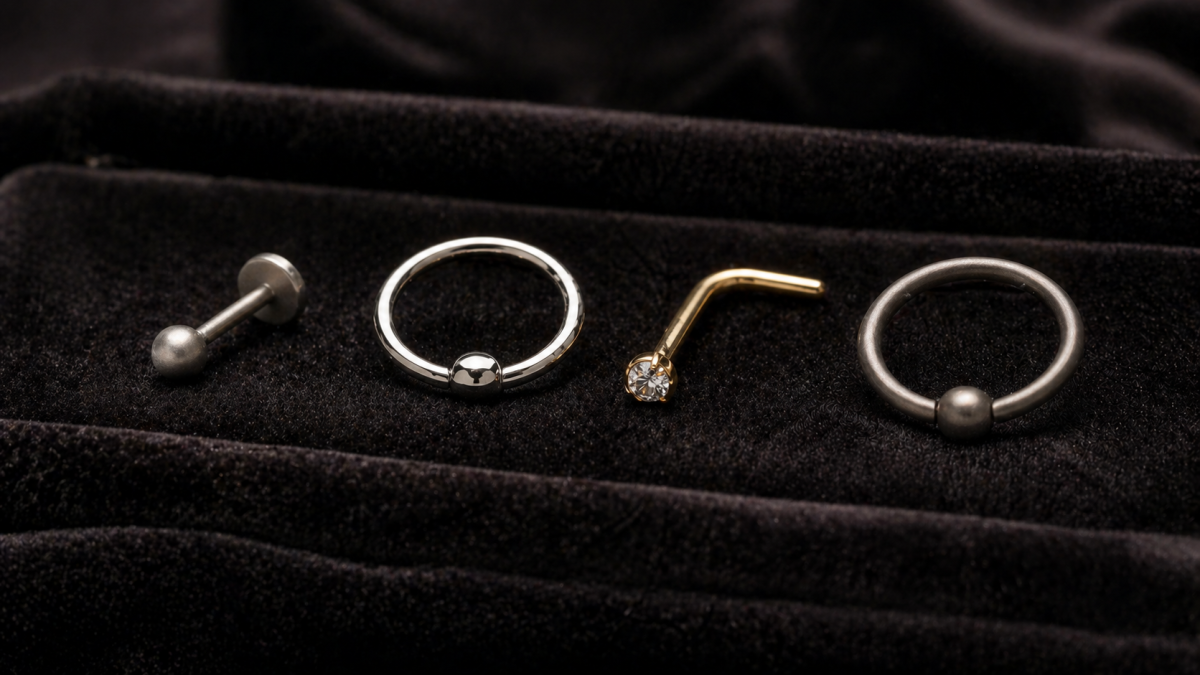
- Implant Grade Titanium (ASTM F-136): The gold standard for new piercings. Nickel-free, hypoallergenic, and extremely durable.
- Surgical Steel (316L or 316LVM): An acceptable alternative, but may contain trace amounts of nickel. Not recommended for those with allergies.
- 14k or 18k Gold: Safe to use after healing is complete; not recommended for initial piercings. Lower-karat gold (8k, 10k) is unsuitable due to its copper content.
- Niobium: Hypoallergenic and an alternative to titanium; particularly suited to those with metal allergies.
Materials to Avoid: Silver (oxidizes and leaves permanent staining), brass, copper, plated jewelry, and cheap kit jewelry sold in non-specialist outlets.
Notes for the Turkish Climate and Lifestyle
Summer heat and sweating: Istanbul's humid summer climate is challenging for piercing healing. Excessive sweating leads to salt build-up and irritation. We recommend planning piercings either before May or after September if possible.
For headscarf wearers: A septum piercing can be the most practical choice for clients who wear a headscarf — the jewelry can be flipped up and hidden completely. For nostril piercings, choose flat L-bend studs over hoops, which can catch on fabric. When tying the scarf, ensure the fabric does not press directly on the piercing.
Makeup and aesthetics: Foundation, concealer, and powder should not be used near the piercing during healing. Even after full healing, avoid products that come into direct contact with the jewelry; chemical residue can damage it.
Conclusion: Right Type + Right Aftercare = Smooth Healing
A nose piercing, when placed at the correct anatomical position in a sterile environment with quality jewelry, can be a lifetime aesthetic statement worn without complications. At Bosphorus Ink, the team in Beşiktaş and Pendik Lens Yaşam Merkezi offers free pre-piercing consultations and ongoing aftercare follow-up. If you're unsure which type suits you best, get in touch with the studio to schedule an anatomical assessment appointment.
Trusted sources: This guide draws on the Association of Professional Piercers (APP) standards for jewelry materials and hygiene, Mayo Clinic guidance on infection symptoms and the Turkish Ministry of Health TİTCK regulations on tattooing and piercing.
Related reading: Nose Piercing Istanbul: Complete Guide · Piercing Healing Times: Area-by-Area Guide · Navel Piercing: Aftercare and Healing
For sterile application of your chosen type and booking, visit our nose piercing service page.
Frequently Asked Questions
Does a nose piercing hurt?
Will it leave a scar?
What's the minimum age?
When can I change the jewelry?
Will the piercing close up?


