

What Is a Piercing Bump?
A piercing bump is a raised area of tissue around the piercing hole. It is common during healing, especially with nose piercings, cartilage piercings, navel piercings and oral piercings.
A small bump around your piercing can be worrying, but the first thing to know is this: not every piercing bump is a keloid. In many cases, a bump is a temporary irritation response caused by touching, friction, pressure, poor jewelry fit, moisture, trauma or aftercare mistakes.
However, some bumps may be related to infection, allergic reaction, hypertrophic scarring or a true keloid. That is why squeezing, picking, burning or randomly applying creams is not the right approach. The safest first step is to understand what may be causing the bump.
⚠️ Important: This article is for general information only and does not replace medical diagnosis or treatment. If you notice severe pain, spreading redness, heat, foul-smelling discharge, fever or rapidly growing tissue, seek medical advice.
Common types include:
- Irritation bump: Usually caused by friction, pressure, touching or jewelry problems.
- Granuloma: A soft tissue response that may appear during healing.
- Hypertrophic scar: Raised scar tissue that stays within the wound area.
- Keloid: Scar tissue that can grow beyond the original wound.
- Infection-related swelling: May come with pain, heat, spreading redness or yellow-green discharge.
Piercing Bump vs Keloid vs Infection
| Sign | Irritation Bump | Keloid | Infection |
|---|---|---|---|
| Appearance | Small, close to piercing hole | Firm, growing scar tissue | Swollen, red, warm |
| Pain | Mild tenderness | Usually less painful | Increasing pain possible |
| Discharge | Usually none | None | Yellow/green, bad smell possible |
| Growth | May shrink when irritation stops | Can grow beyond wound edges | Swelling may worsen |
| Common cause | Friction, pressure, jewelry issue | Scar tendency/genetics | Bacterial infection possible |
| What to do | Piercer check + gentle care | Dermatologist | Doctor / healthcare professional |
Do not rely only on appearance. Pain, heat, foul smell, spreading redness or fever should not be treated as simple irritation.
What Causes a Piercing Bump?
1. Touching or Twisting the Jewelry
Touching the piercing often can irritate healing tissue and introduce bacteria. Twisting or rotating jewelry is unnecessary and may delay healing.
2. Poor Jewelry Material
Jewelry containing nickel or low-quality metals may trigger irritation or allergic reactions. Implant-grade titanium, niobium or appropriate quality gold are often safer choices for initial jewelry.
3. Incorrect Jewelry Size or Shape
A bar that is too short, a ring that moves too much, poor jewelry angle or pressure on the piercing channel may cause ongoing irritation.
4. Pressure and Friction
Sleeping on the piercing, catching it on clothing, towels, headphones, helmets, masks or hairbrushes can create repeated trauma.
5. Harsh or Excessive Aftercare
Alcohol, hydrogen peroxide, iodine, harsh soaps, antibiotic ointments, steroid creams or tea tree oil can irritate the skin. Over-cleaning can also slow the healing process.
6. Moisture
Leaving the area wet after showering, sweating or swimming can increase irritation, especially around navel, nose and cartilage piercings.
7. Infection
Increasing pain, warmth, spreading redness, yellow-green discharge, bad smell or fever may suggest infection. In that case, seek professional medical advice.
How to Help a Piercing Bump Heal
1. Stop Touching It
Only touch the piercing with clean hands during cleaning. Do not squeeze, pop, pick or twist the jewelry.
2. Use Sterile Saline
Use sterile wound wash saline containing only 0.9% sodium chloride. Avoid homemade saltwater mixtures, as they may be too strong and dry the piercing.
How to Use Saline Solution Step by Step
- Wash your hands thoroughly with soap and water.
- Spray sterile saline directly onto the piercing or saturate a sterile gauze pad.
- Hold it gently against the piercing for 30–60 seconds — do not scrub.
- Pat dry with a clean, single-use paper towel.
- Repeat no more than twice a day — over-cleaning can increase irritation.
Do not use: Alcohol, hydrogen peroxide, soap, tea tree oil or any lotion on a healing piercing. These can damage the tissue and slow healing.
3. Dry the Area Gently
After cleaning or showering, dry the area with clean disposable paper towel or sterile gauze. Avoid cloth towels that can snag on jewelry or carry bacteria.
4. Use a Warm Compress
A warm compress may help with mild irritation or fluid buildup. Use clean gauze and avoid excessive heat.
5. Get the Jewelry Checked
If the jewelry is too tight, too long, poorly angled or made of unsuitable material, the bump may not improve until the issue is corrected by a professional piercer.
6. Reduce Friction
Avoid sleeping on the piercing. Reduce pressure from headphones, helmets, masks, tight clothing or hair.
7. Be Patient
A piercing bump usually will not improve if the irritation source is still present. Jewelry fit and friction often matter as much as cleaning.
What Should You Put on a Piercing Bump?
The safest first step is usually not a cream, but reducing irritation and using gentle sterile saline care.
| Product / Method | Why it may be risky |
|---|---|
| Alcohol | Can dry and irritate tissue |
| Hydrogen peroxide | Can damage healing tissue |
| Iodine | Can dry sensitive tissue |
| Tea tree oil | May cause burning and irritation |
| Crushed aspirin paste | Can cause chemical irritation |
| Antibiotic ointment | Not every bump is an infection |
| Steroid cream | May mask symptoms; medical advice needed |
| Popping the bump | Increases trauma and infection risk |
Simple rule: do not try to burn, dry out or pop a piercing bump. The real solution is often removing the source of irritation.
Should You Remove Jewelry If You Have a Piercing Bump?
Usually, you should not remove it by yourself. If infection is suspected, removing jewelry can allow the channel to close and trap discharge inside. Jewelry removal or change should be assessed by a professional piercer, a doctor, or a dermatologist.
Should You See a Piercer or a Doctor?
| Situation | Who to see |
|---|---|
| Jewelry feels too tight or painful | Professional piercer |
| Bump appeared after friction or trauma | Professional piercer |
| You suspect jewelry material problem | Professional piercer |
| Yellow/green discharge | Doctor |
| Bad smell, heat or spreading redness | Doctor |
| Fever | Doctor |
| Firm tissue is growing | Dermatologist |
| History of keloids | Dermatologist |
| No improvement after 2–3 weeks | Piercer + dermatologist if needed |
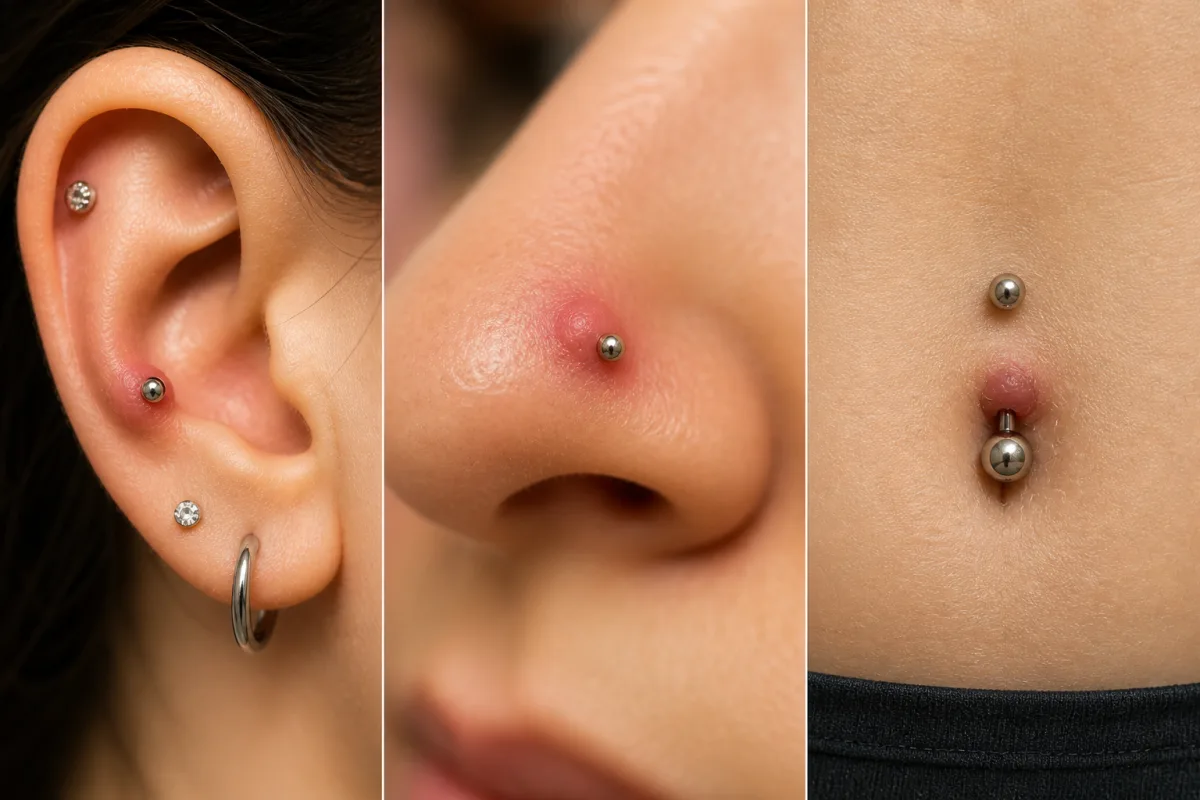
Piercing Bumps by Location
Nose Piercing Bump
Common triggers include touching the jewelry, makeup, face cleansers, towel friction, jewelry movement or changing jewelry too early.
Example: Three weeks after a nostril piercing, a small red bump appears. The person has been touching and checking the piercing several times a day, increasing irritation. Once touching stops and sterile saline care begins, the bump noticeably reduces within 2–3 weeks. Read our complete nose piercing Istanbul guide →
Cartilage Piercing Bump
Cartilage piercings may take longer to heal. Sleeping on the piercing, headphones, helmets, hairbrushes and towel snags are common causes. See our cartilage piercing healing guide for the full aftercare routine.
Example: Six weeks after a helix piercing, a firm reddish bump develops. The person wears earphones daily, applying constant pressure to the jewelry. After stopping earphone use for 4–6 weeks and adjusting sleep position, the bump slowly begins to shrink.
Always have the first jewelry change done by a professional piercer — changing cartilage jewelry too early is one of the most common causes of irritation bumps.
Navel Piercing Bump
Tight clothing, high-waisted pants, sweating, friction during workouts and moisture can irritate navel piercings.
Example: Five weeks after a navel piercing, a red bump forms at the top hole. The person wears high-waisted jeans every day, causing constant friction. Switching to loose clothing and maintaining regular saline care reduces the bump significantly within 3–4 weeks.
Lip and Oral Piercing Bump
Jewelry rubbing against teeth or gums, poor oral hygiene, incorrect jewelry length or swelling can cause irritation.
Example: Four weeks after a lip piercing, redness and swelling appear around the entry point. The person regularly drinks from plastic bottles that press against the piercing. Switching to a straw and maintaining daily saline care reduces the bump within 2–3 weeks.
Eyebrow Piercing Bump
Face washing, towels, makeup, pillow pressure and accidental knocks can trigger bumps around eyebrow piercings.
What Is Normal During Piercing Healing?
- Mild redness in the first days is normal.
- Clear or light-yellow fluid (lymphatic fluid) is a sign of healing.
- Slight dryness or crusting around the jewelry can occur.
However, spreading redness, foul-smelling yellow-green discharge, increasing pain or fever are not normal and require professional assessment.
How Long Does a Piercing Bump Take to Go Away?
There is no exact timeline. Healing depends on piercing location, jewelry material, jewelry fit, cause of the bump, skin type, ongoing friction, and aftercare consistency. If the bump is caused by irritation, it may shrink once the irritation source is removed. If there is no improvement after 2–3 weeks of proper care, get a professional assessment.
Estimated Healing Timeline by Piercing Location
| Piercing Location | Bump Starts to Shrink | Full Healing (Average) |
|---|---|---|
| Nose (nostril) | 2–4 weeks | 4–6 months |
| Earlobe | 1–2 weeks | 6–12 weeks |
| Cartilage (helix/tragus) | 4–8 weeks | 6–12 months |
| Navel | 4–6 weeks | 6–12 months |
| Lip / Oral | 2–3 weeks | 3–6 months |
| Eyebrow | 3–4 weeks | 6–9 months |
These timelines assume the irritation source has been removed and proper aftercare is applied consistently. Infection or keloid cases may differ significantly. View the full healing times guide →
When to Seek Medical Help
- Increasing pain
- Severe swelling
- Heat around the piercing
- Yellow, green or foul-smelling discharge
- Spreading redness
- Fever
- Jewelry embedding into the skin
- Rapid bump growth
- Signs of cartilage piercing infection
- No improvement after 2–3 weeks of proper care
How to Prevent Piercing Bumps
- Do not touch the piercing with dirty hands.
- Do not twist or rotate the jewelry.
- Avoid sleeping on the piercing.
- Use sterile saline only unless advised otherwise.
- Dry the area gently after showering.
- Choose safe jewelry material.
- Do not change jewelry too early at home.
- Avoid swimming, sauna and excessive moisture while healing.
- Reduce pressure, friction and trauma.
Common Mistakes When Treating a Piercing Bump
Many people reach for the wrong products when trying to speed up the healing of a piercing bump — and end up making things worse.
One of the most common mistakes is applying alcohol or antiseptic solutions directly to the piercing. These over-dry the skin and disrupt the cellular environment needed for proper healing. Another widespread error is using tea tree oil in concentrated form, which can cause burning and additional irritation on healing tissue. Cleaning the piercing five or six times a day is also frequently misunderstood as "good aftercare" — in reality, over-cleaning strips the area of moisture and interferes with natural healing.
Avoiding all of these products and sticking to sterile saline and minimal touching almost always delivers the fastest results.
FAQ
Q: Should I pop a piercing bump?
A: No. Popping it can damage tissue and increase infection risk.
Q: Will a piercing bump go away on its own?
A: Sometimes, if it is caused by irritation and the irritation source is removed. Infection, keloids or jewelry problems require professional assessment.
Q: Can I use tea tree oil on a piercing bump?
A: Not without professional advice. Tea tree oil can irritate healing tissue.
Q: Can I use antibiotic cream?
A: Only if recommended by a healthcare professional. Not every bump is an infection.
Q: Is a piercing bump always a keloid?
A: No. Many bumps are irritation-related. Keloids are more persistent and can grow beyond the original wound.
Q: Should I change my jewelry?
A: Maybe, but do not do it at home during irritation. A professional piercer should check the size, material and angle.
Q: Why do nose piercing bumps happen?
A: Common causes include touching, makeup, cleansers, towel friction, jewelry movement and early jewelry changes.
Q: Why are cartilage piercing bumps harder to heal?
A: Cartilage piercings often heal more slowly and are more easily irritated by pressure, headphones, helmets and sleeping position.
Q: Should I see a piercer or a doctor?
A: See a piercer for jewelry fit, angle or material issues. See a doctor for discharge, heat, spreading redness, fever or worsening pain.
Conclusion
Most piercing bumps can be managed by reducing irritation, using gentle sterile saline care and having the jewelry checked. But not every bump is the same. Some are caused by jewelry pressure, while others may involve infection or keloid scarring.
If you are unsure whether your bump is related to jewelry size, material or piercing angle, you can book a professional piercing check with Bosphorus Ink.
If the bump persists and you suspect keloid tissue, read our piercing keloids: causes and treatment guide.
For sterile, professional piercing services and consultations, visit our Piercing service page.
Frequently Asked Questions
Should I pop a piercing bump?
Will a piercing bump go away on its own?
Can I use tea tree oil on a piercing bump?
Is a piercing bump always a keloid?
Why do nose piercing bumps happen?
Should I see a piercer or a doctor?


