

A cartilage piercing (helix, tragus, conch, rook, daith) takes 6 to 12 months to heal — nearly ten times longer than an earlobe (6-8 weeks). The reason is simple: cartilage tissue has far less blood flow than the soft tissue of a lobe, so both nourishment and repair happen much more slowly. This guide covers healing times by placement, the correct cleaning routine, and one risk that's specific to cartilage — chondritis.
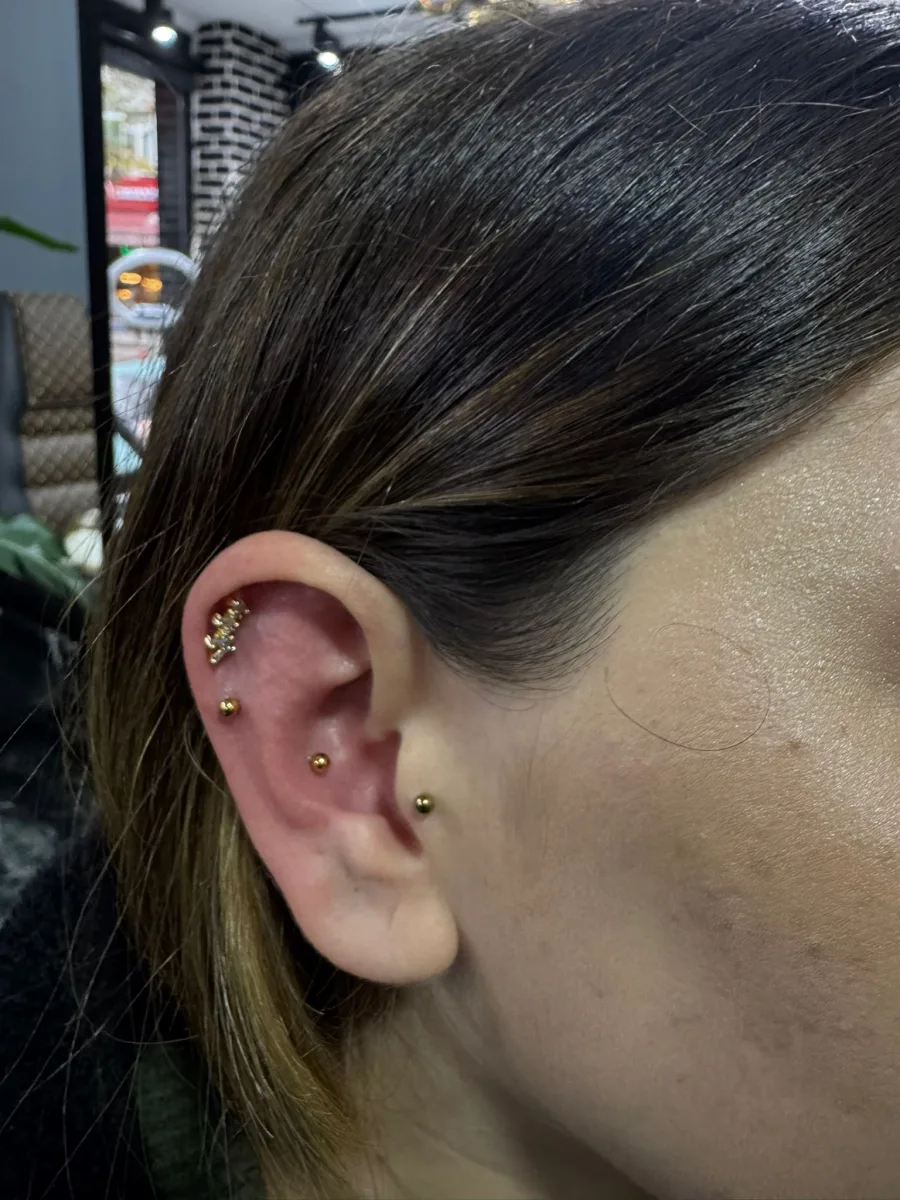
Why Does Cartilage Take So Much Longer?
An earlobe is soft tissue and fat, richly supplied with blood vessels close to the surface. Cartilage is different: it's avascular, firm, flexible connective tissue that gets its nourishment through the surrounding membrane (perichondrium), fed slowly by nearby blood vessels. That's why a cartilage piercing of the same size heals far slower than a soft-tissue one, and why irritation there takes longer to settle down.
Healing Times by Placement
| Placement | Average healing time |
|---|---|
| Helix (upper ear rim) | 3-6 months |
| Tragus | 3-6 months |
| Conch | 6-9 months |
| Rook | 6-9 months |
| Daith | 6-9 months |
| Industrial (two points) | 9-12 months |
These are general averages — your immune system, aftercare routine and jewellery quality can shorten or extend them. "Fully healed" doesn't just mean it no longer hurts from the outside; the internal tissue settling in fully takes longer than the surface looking fine.
Cleaning Routine for the First Weeks
- Clean 1-2 times a day with sterile saline (isotonic) solution. Use a ready-made pharmacy saline rather than mixing your own — an incorrect ratio can irritate the skin.
- Soak a clean piece of gauze in saline and hold it against the area as a compress for 5-10 minutes, then pat dry gently.
- Never use alcohol, hydrogen peroxide, iodine or tea tree oil — these irritate the tissue and slow healing, even though they're often mistakenly thought to "disinfect".
- Don't rotate or twist the jewellery unnecessarily — that's a myth, and it causes micro-trauma instead of helping.
The Chondritis Risk in Cartilage Piercings
An infection in the earlobe is usually superficial and heals easily. Cartilage is different: because blood flow is limited, it's harder for the immune system to reach the area, which raises the risk of chondritis — an infection of the cartilage tissue itself. Left untreated, chondritis can cause permanent deformity of the cartilage, sometimes referred to as "cauliflower ear". The Association of Professional Piercers, the leading US piercing safety authority, likewise stresses that infections in cartilage need to be taken more seriously than those in soft tissue.
The distinguishing sign of chondritis: redness and swelling spread across a wide area of the ear, not just around the piercing hole, the area feels hot to the touch, and pain increases over time rather than easing. If you see this pattern, see a doctor (ideally an ENT specialist) without delay — this isn't a "ask your piercer" situation, it's a "see a doctor" one.
Normal vs. Concerning Symptoms
| Normal (first 1-2 weeks) | See a doctor |
|---|---|
| Mild redness and tenderness | Widespread redness across the ear |
| Clear or slightly yellow fluid (lymph) | Yellow-green, foul-smelling discharge |
| Mild swelling | Noticeable swelling that feels hot |
| Occasional mild throbbing | Increasing, throbbing severe pain |
| - | Fever |
If you notice a raised, firm bump at the piercing site, that's usually a keloid or irritation bump rather than chondritis — we cover the causes and care for that separately in our piercing bump guide.
Why Jewellery Choice Matters
Because cartilage heals slowly, the quality of your initial jewellery matters more than usual. Your piercer should use implant-grade titanium or ASTM F136-certified surgical steel; cheap jewellery containing nickel raises the risk of irritation and allergic reaction. The initial jewellery is usually a flatback barbell rather than a ring, since rings can snag on cartilage and prolong healing.
Sleep and Daily Life Considerations
- Try not to sleep on the pierced side for the first few months — pressure causes pain and slows healing. A travel pillow with a cut-out centre can help.
- Limit contact with headphones, phones and hats/beanies that rub against the area while it heals.
- Be careful that hairbrushes, combs and hair ties don't snag the jewellery.
- Avoid pools, the sea and saunas until the jewellery has fully healed.
Cartilage Piercing at Bosphorus Ink
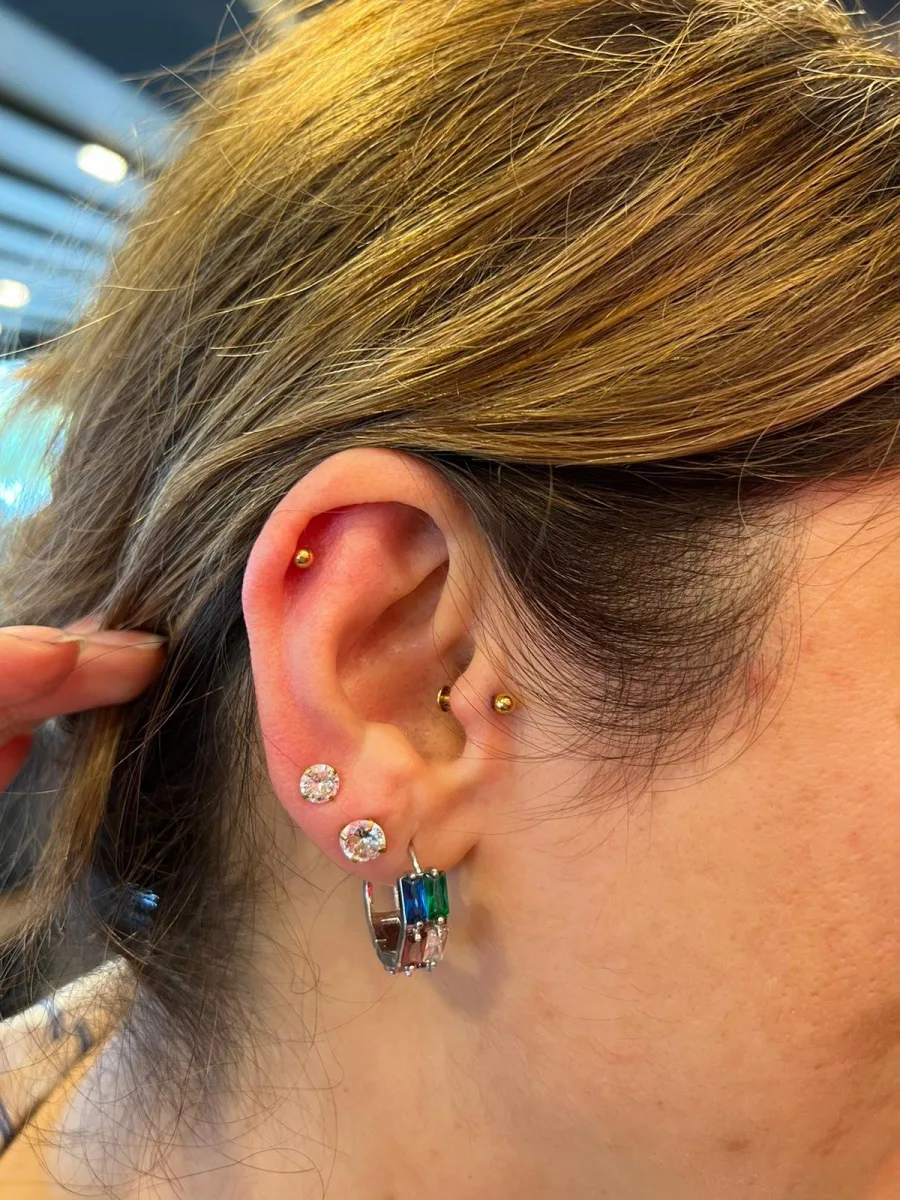
At our Beşiktaş and Pendik studios, helix, tragus, conch, rook and daith piercings are performed by our piercing specialist Buse. Every procedure uses implant-grade titanium and gold jewellery, single-use sterile needles, in a disinfected environment. See placement types and pricing on our ear piercing page, or general piercing aftercare in our Piercing Healing Times guide.
Conclusion
A cartilage piercing takes 6-12 months to heal due to its limited blood supply. A correct cleaning routine (saline 1-2 times a day, hands off, no alcohol or peroxide) and quality initial jewellery make the process easier. If redness spreads across the ear, the area feels hot, or you develop a fever, that can be a sign of chondritis — see a doctor without delay.
Note: This article is for informational purposes and is not a substitute for medical advice. If you suspect an infection, always consult a healthcare provider.
Frequently Asked Questions
How long does a cartilage piercing take to heal?
What is chondritis in a cartilage piercing and how do I recognise it?
How should I clean a cartilage piercing?
What jewellery should be used for a cartilage piercing?
What should I do if a bump appears on a cartilage piercing?
How should I protect a cartilage piercing while sleeping?


