
Medically reviewed: This guide was prepared by the Bosphorus Ink piercing team with input from a board-certified board-certified dermatologist. Keloid treatment is individualized; please consult a dermatologist for clinical findings. Last updated: May 12, 2026.
What Is a Keloid?
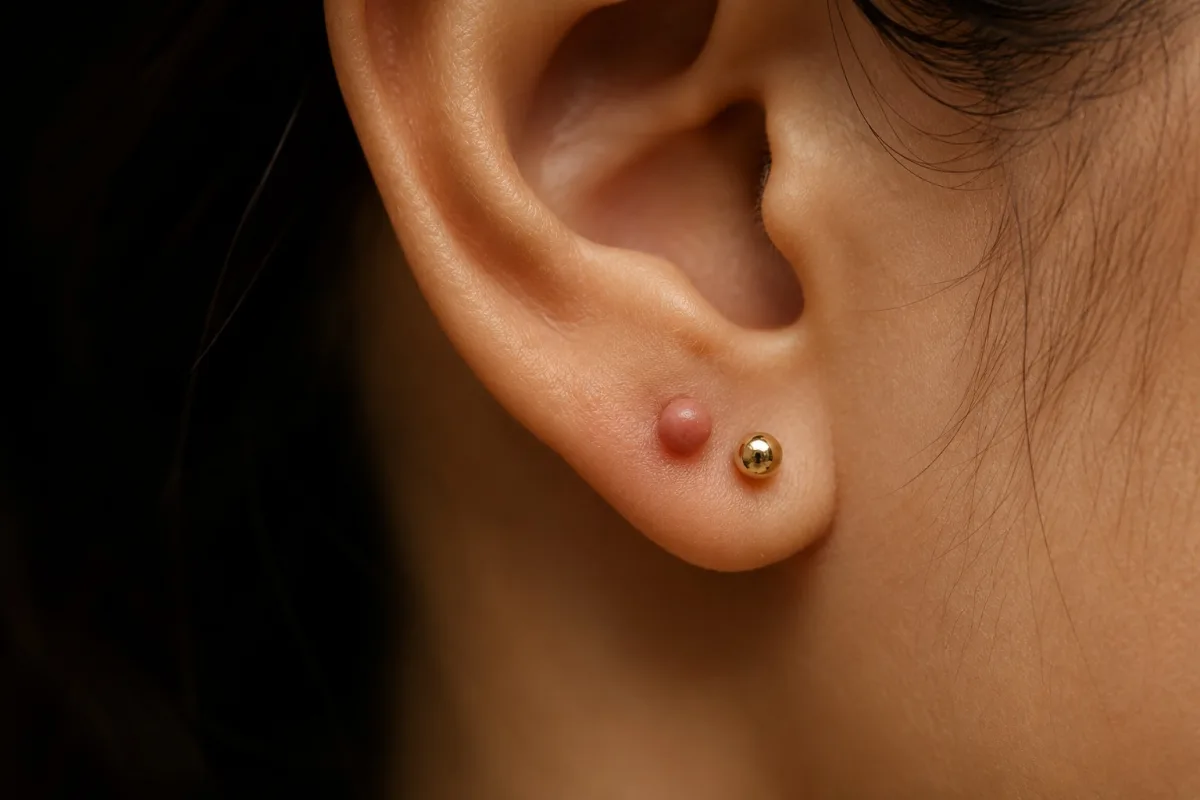
A keloid is an abnormal wound-healing response. When the skin is injured, the body produces collagen to close the wound; in most people, this stops at the wound's edges. In keloid-prone individuals, fibroblasts go into overdrive — generating a thick, shiny, rubbery tissue that extends well beyond the original injury.
This is the crucial difference from a hypertrophic scar. Hypertrophic scars stay within the wound boundary and often soften and flatten over 12-18 months. Keloids do neither: they spread outward and rarely shrink without intervention.
In medical literature, piercing-related keloids are most often documented on the earlobe, ear cartilage (helix, conch, tragus), upper chest, back and navel. Even in low-tension areas like the face, neck and earlobe, genetically predisposed individuals can develop them.
Why Do Keloids Form After Piercings?
A piercing is, in effect, a controlled skin injury. Several factors can stack up and push the healing response from normal into keloid territory:
1. Genetic Predisposition
Genetics is the single strongest driver. If a first-degree relative has had a keloid, your risk rises sharply. People with darker skin tones (Fitzpatrick IV-VI) are reported to develop keloids 15-20 times more often than lighter-skinned individuals, but every skin type can be affected.
2. Prolonged Inflammation
The longer a wound takes to heal, the more fibroblast activity it accumulates. Cartilage piercings take 6 to 12 months to heal — far longer than a 6-8 week earlobe — which is exactly why they carry significantly higher keloid risk.
3. Mechanical Trauma and Friction
Rotating jewelry, sleeping on the piercing, and pressure from headphones or eyewear all create micro-trauma. Chronic irritation triggers excess collagen deposition over time.
4. Poor-Quality Jewelry
Nickel-containing alloys can cause contact dermatitis, which means chronic inflammation, which means higher keloid risk. At Bosphorus Ink, our team uses implant-grade titanium (ASTM F-136) or surgical steel for every first piercing.
5. Incorrect Technique or Placement
Piercing guns crush tissue and should never be used on cartilage. Wrong angles or anatomically poor placement extend healing and can prime the area for a keloid. A professional studio using a single-use sterile needle, careful marking, and correct angle delivers far less trauma.
Risk Factors: Who Should Be Extra Cautious?
- Age: Keloid tendency peaks between ages 10 and 30.
- Hormonal shifts: Puberty and pregnancy can increase keloid activity.
- Family history: A parent or sibling with keloids at least doubles your risk.
- Prior keloid: If you have had one anywhere, you are more likely to form another.
- Skin tone: Higher incidence in Fitzpatrick IV-VI skin types.
- Autoimmune or connective tissue conditions: Can disrupt normal healing.
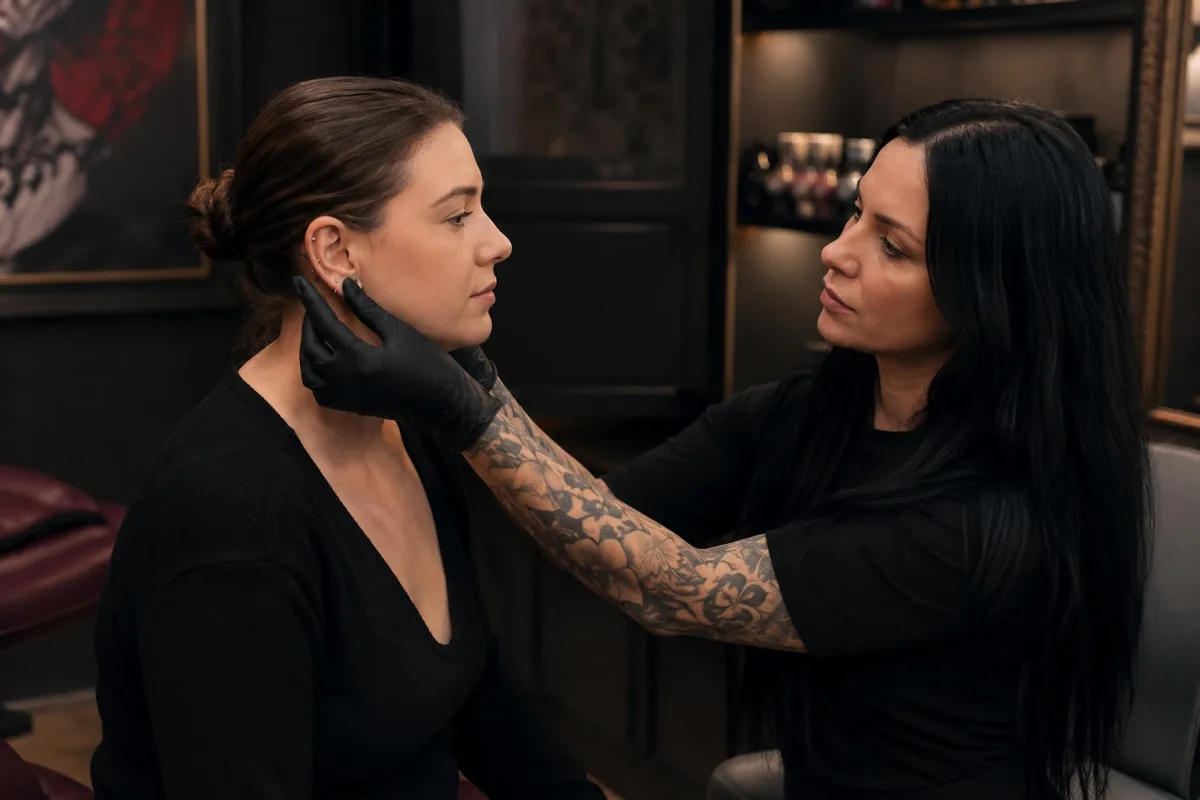
Bosphorus Ink protocol: Before any piercing session, clients complete a screening form covering family history, prior keloids and active skin conditions. For high-risk profiles, our team recommends a dermatology consultation before proceeding — and in some cases we decline to perform the piercing.
Keloid, Hypertrophic Scar, or Piercing Bump?
Most bumps that appear around a fresh piercing are not keloids. Knowing the differences prevents unnecessary panic and bad treatment choices:
Piercing Bump (Irritation)
- Appears in the first 2-8 weeks
- Soft, sometimes fluid-filled
- Stays around the hole
- Recedes with proper care
- Often caused by jewelry or aftercare issues
Hypertrophic Scar
- Develops over months
- Pink/red, firm
- Stays within the wound border
- Often softens over 12-18 months
- Responds well to silicone and pressure
Keloid
- Develops over months to years
- Firm, shiny, rubbery
- Grows beyond the wound border
- Does not resolve on its own
- Can itch, sting or feel tender
Granuloma / Cyst
- Forms inside the piercing channel
- Soft, mobile
- May discharge fluid
- Needs professional intervention
- Antibiotics sometimes required
Important: The distinction is made by both inspection and palpation — not by photo alone. A dermatologist is the only one who can give a definitive diagnosis. At Bosphorus Ink we assess piercing bumps in person and refer clients to the right medical specialist when needed.
How to Prevent a Piercing Keloid
Genetic predisposition aside, controlling the mechanical and inflammatory triggers dramatically lowers risk.
Right Studio, Right Materials
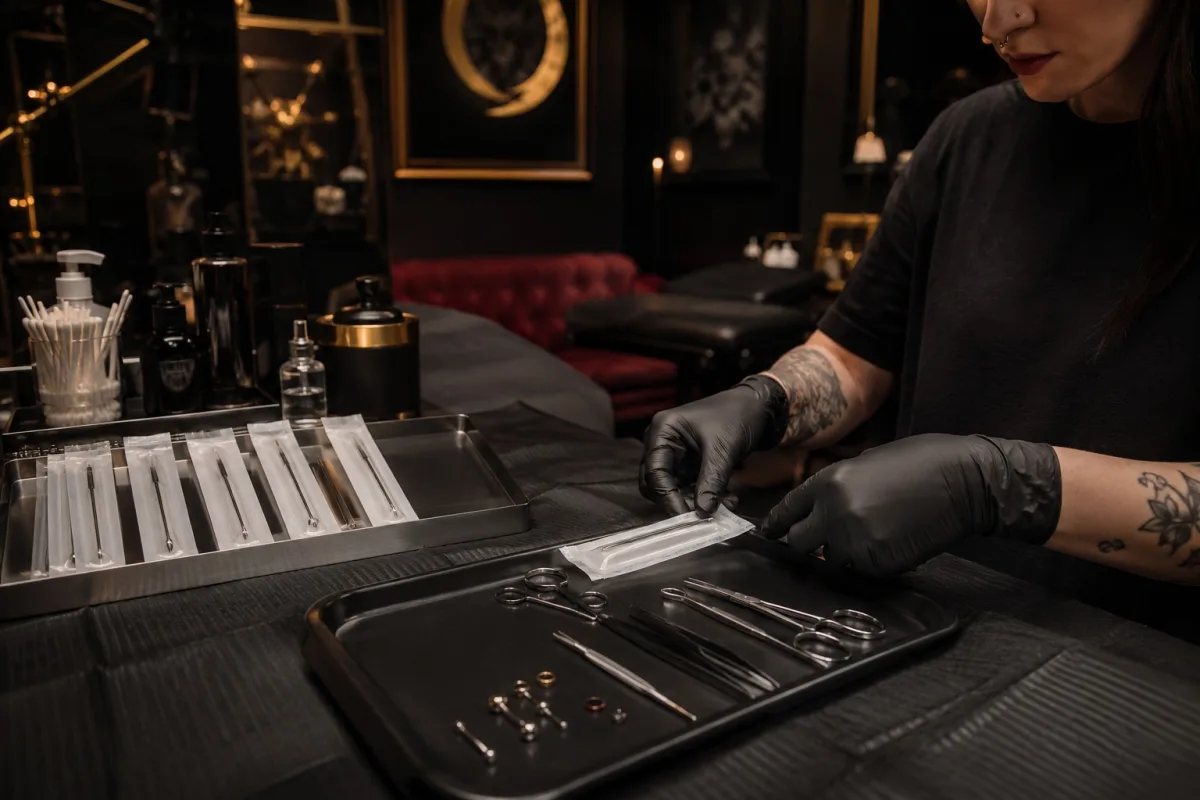
A skilled piercer and implant-grade titanium jewelry are non-negotiable. Piercing guns are never appropriate for cartilage — they crush tissue and compromise healing. A single-use sterile needle, precise anatomical marking, and correct angle make a measurable difference.
Aftercare Discipline During Healing
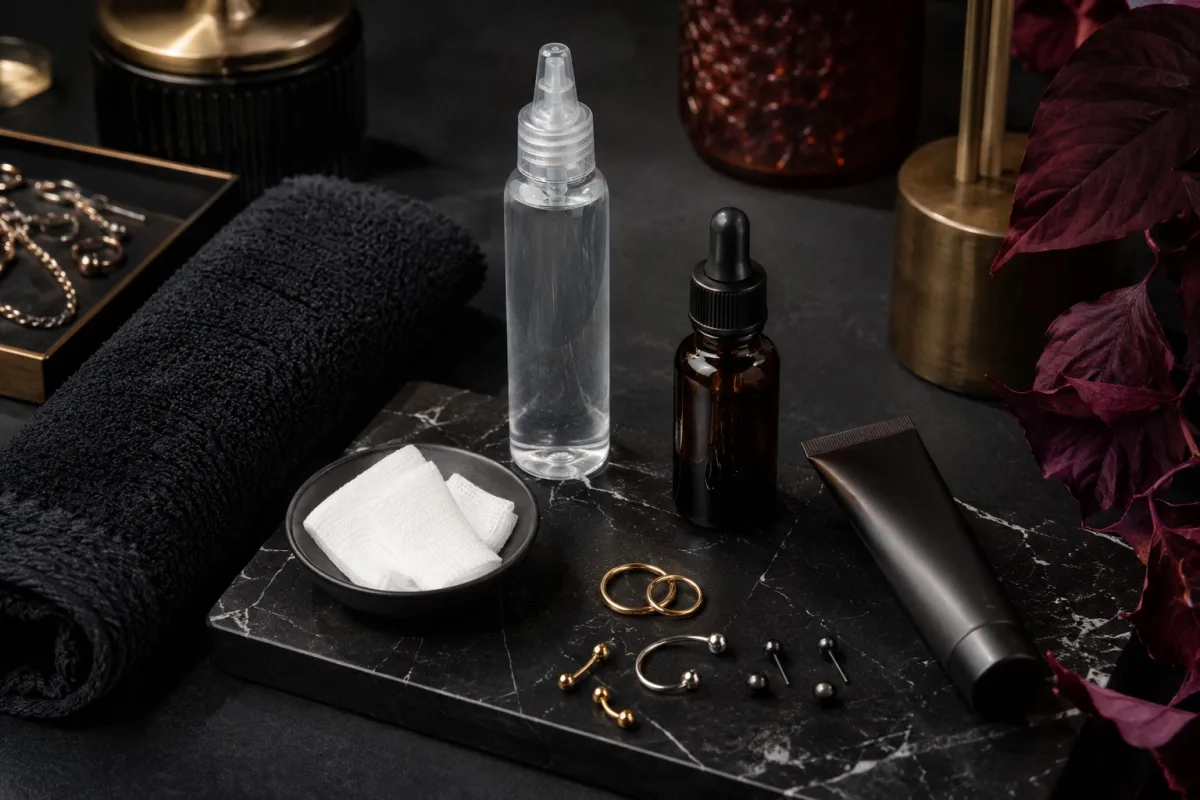
- Clean with sterile saline or wound-care spray twice daily
- Do not rotate the jewelry — modern protocols advise against it
- Avoid sleeping on the piercing; consider a travel pillow with a hole
- Keep shampoo, perfume and makeup away from the site
- Avoid pools, the sea and saunas for the first 6-8 weeks
- Watch for pressure from headphones, eyewear and hats
Early Intervention
If you spot a bump forming, do not remove the jewelry — this is the most common mistake. Removing it lets the channel close suddenly, trapping the tissue inside and risking cyst formation. Instead, return to your studio or see a dermatologist promptly.
Piercing Keloid Treatment Options
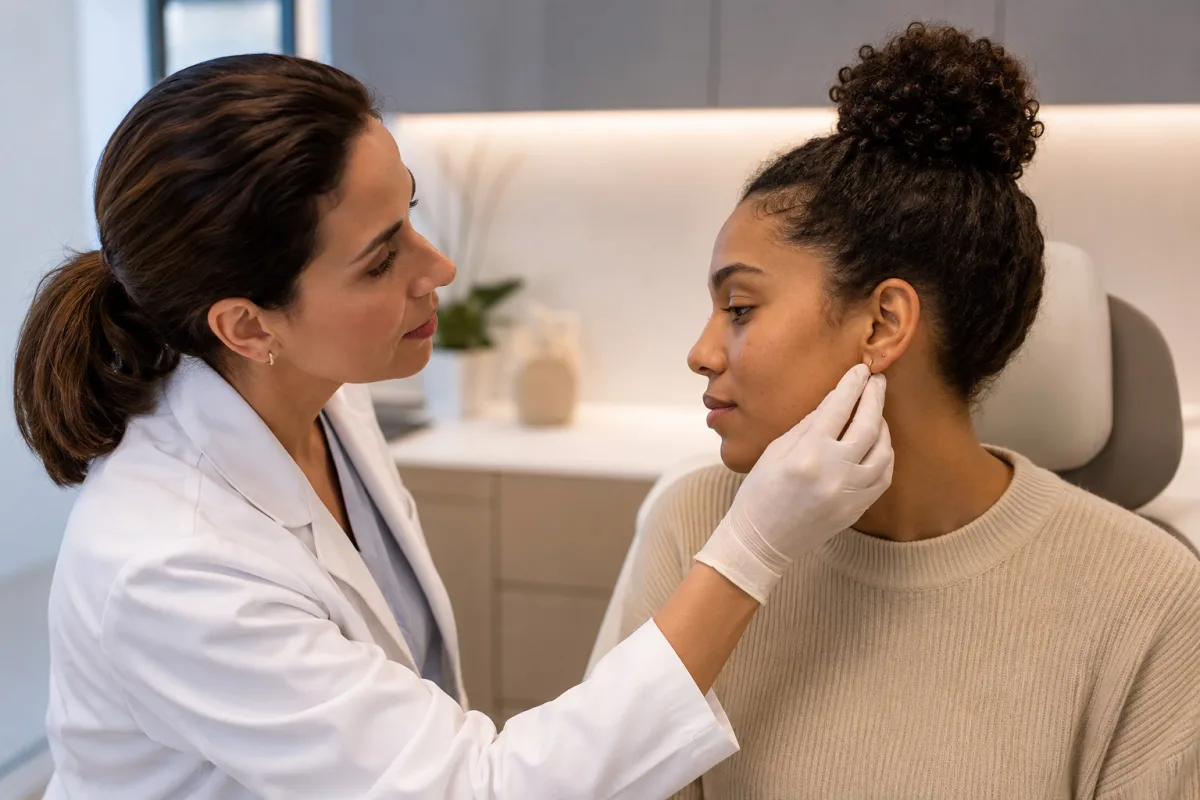
Keloid treatment is highly individualized. Bosphorus Ink collaborates with dermatologists for clients dealing with keloids; medical procedures are referred to certified specialists.
1. Intralesional Corticosteroid Injections
Triamcinolone acetonide injections are among the highest-evidence first-line treatments. Administered every 4-6 weeks, they soften the lesion, reduce volume and ease itching. Most patients need 3-5 sessions.
2. Silicone Gel and Silicone Sheets
For early or small keloids, silicone gel/sheets hydrate the scar and help organize collagen. Daily wear of 12-24 hours over 3-6 months gives the best results. More effective on hypertrophic scars than mature keloids.
3. Pressure Therapy (Pressure Earrings)
For earlobe keloids, clip-on pressure earrings provide sustained compression. Worn 12-16 hours daily for at least 4-6 months, they are among the most reliable methods for preventing recurrence after surgical excision.
4. Cryotherapy
Liquid nitrogen freezing — alone or combined with steroid injection — can shrink small keloids. Multiple sessions are needed, and pigment changes are a known risk in darker skin.
5. Surgical Excision
Used alone, surgery has a 50-100% recurrence rate, so it is always paired with another modality (steroid injection, radiotherapy, pressure). Best for large, pedunculated lesions.
6. Laser Therapy
Pulsed dye and Nd:YAG lasers target keloid vasculature, reducing redness and softening the lesion. Typically combined with intralesional steroids.
7. Radiotherapy
Low-dose, localized radiotherapy after surgical excision is one of the most effective ways to prevent recurrence. Used in advanced centers under careful patient selection.
Set realistic expectations: Keloid treatment is a months-to-years process. Most patients undergo 6-18 months of active treatment, and some recurrence risk always remains. Catching the lesion early is the single biggest factor in success.
The Bosphorus Ink Approach
Our experienced team treats post-piercing follow-up as a core part of the service — not a bonus. At our Beşiktaş Polat Towerside and Pendik Lens Yaşam Merkezi locations:
- Every client completes a risk profile form covering family history, prior keloids and skin type.
- First piercings are performed only with implant-grade titanium jewelry.
- Single-use sterile needles and surgical sterilization protocols are standard.
- Written aftercare instructions are provided, with free WhatsApp follow-up during healing.
- Any unusual bump is assessed in-studio, and clients are referred to dermatology when a medical opinion is warranted.
One critical point: keloid treatment itself is a medical procedure and falls outside the scope of any piercing studio. Our role is to minimize the risk through correct technique, support clients with reliable aftercare guidance, and bridge them to qualified physicians when needed.
Disclaimer: This article is for general information only and does not substitute for medical diagnosis or treatment. If you suspect a keloid or any abnormal skin lesion, consult a qualified dermatologist. Bosphorus Ink is a professional piercing studio; keloid treatment is a medical procedure performed only in licensed healthcare settings.