

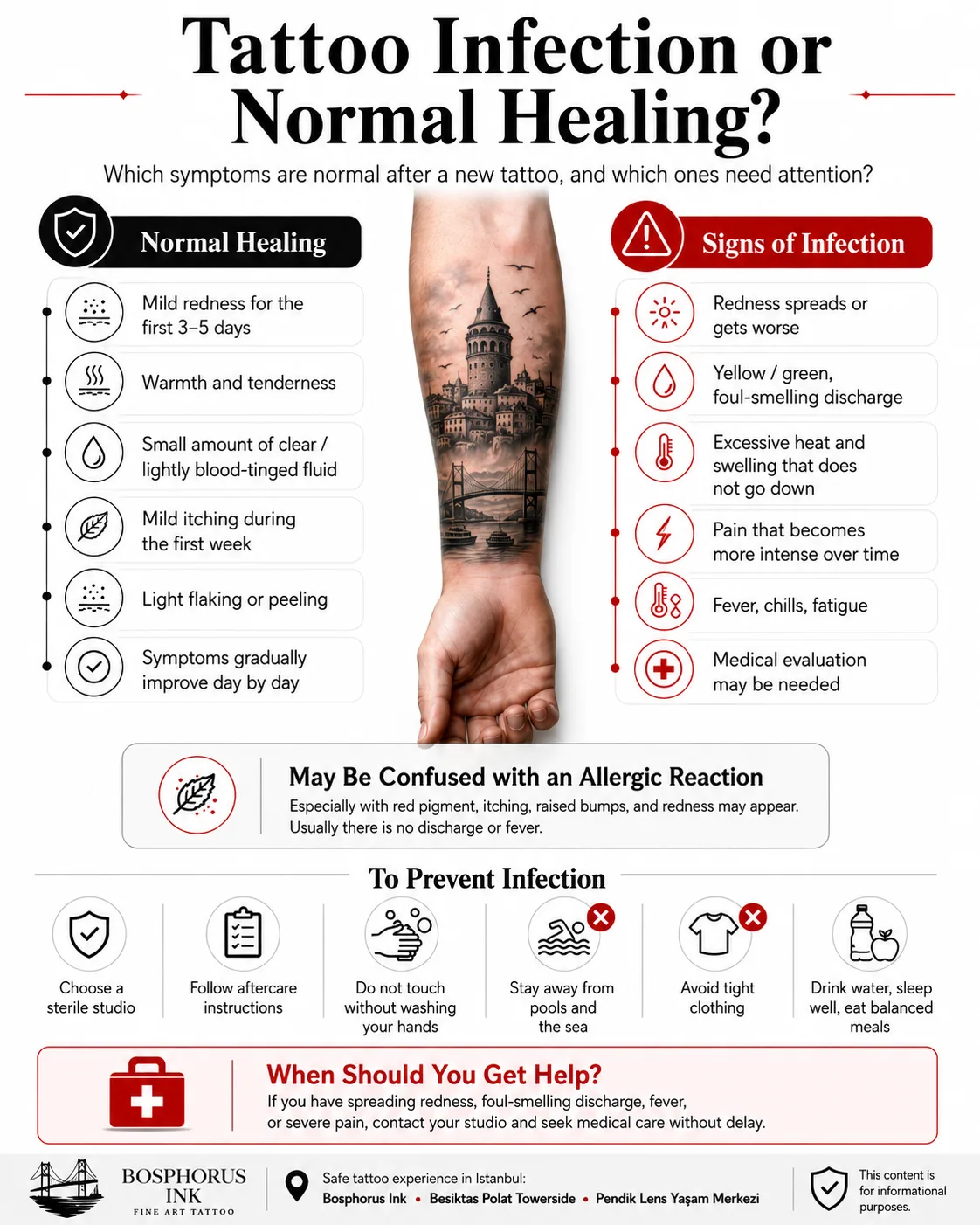
 Seeing redness, tenderness or mild swelling around your new tattoo can be worrying — but most of these signs are a completely normal part of the healing process. So how do you tell a tattoo infection apart from an ordinary healing reaction? This guide covers the signs of both, when to be concerned, and how to prevent infection.
Drawing on the experience of our team, who have performed thousands of tattoos in Istanbul since 2021 and closely monitor the healing process, we answer the most common questions on this topic.
What to Expect During Normal Healing
For the first 3-5 days after a new tattoo, mild redness, warmth, tenderness and a small amount of clear or slightly bloody oozing are completely normal. Mild itching and flaking during the first week are also expected. These symptoms gradually fade over time.
What Are the Signs of Tattoo Infection?
Spreading redness: if redness increases or spreads instead of fading after the first few days, pay attention.
Greenish or yellow, foul-smelling discharge: clear fluid is normal, but colored, foul-smelling discharge can indicate infection.
Excessive heat and swelling: if the tattooed area feels abnormally hot to the touch and swelling doesn't decrease over days, this is concerning.
Intense pain: unlike the tenderness of the first days, pain that increases or becomes unbearable over time is a warning sign.
Fever and fatigue: body-wide fever, chills or fatigue suggest the infection may have spread and require urgent medical evaluation.
Infection or Allergic Reaction?
Another condition sometimes confused with infection is an allergic reaction to pigment. Allergic reactions typically appear only in areas where specific colors were applied (especially red pigment), causing itching, raised bumps and redness, without discharge. Unlike infection, fever isn't present. If you're unsure, always consult a healthcare professional or the studio that did your tattoo.
How to Prevent Infection
Get tattooed in a sterile environment: choosing a studio that uses single-use needles and certified equipment minimizes infection risk.
Follow instructions: follow your artist's aftercare instructions exactly — cleaning frequency, moisturizing, and which products to avoid.
Don't touch without washing: always wash your hands before touching the tattoo to reduce bacterial contamination risk.
Avoid pools and the sea: avoid chlorinated water, seawater and public pools until healing is complete.
Avoid tight clothing: tight garments rubbing against the tattoo area can increase irritation and delay healing.
What to Do If You Suspect an Infection
If you notice a few of the signs above, first contact the studio where you got tattooed — an experienced studio can assess the situation and guide you correctly. If serious symptoms like fever, spreading redness or intense pain are present, seek medical care without delay. Avoid self-medicating with antibiotics or aggressively cleaning the area.
Scabbing and Itching: When Is It Normal, When Isn't It?
Mild scabbing and itching are expected during tattoo healing, as these reactions are natural while the skin regenerates. However, pus coming from under a scab, unusually thick or moist scabbing, or itching that becomes unbearable and creates an urge to scratch the skin are situations to watch for. Scratching increases infection risk and can damage the tattoo's pigment. When you feel itchy, gently tapping the area or applying moisturizer can provide relief.
Safe Tattooing in Istanbul: The Bosphorus Ink Experience
At our Beşiktaş (Polat Towerside) and Pendik (Lens Yaşam Merkezi) locations, all our needles are single-use and our sterilization protocols meet international standards. Every client receives detailed aftercare instructions, and we remain available for questions throughout the healing process.
Frequently Asked Questions
How soon do tattoo infection signs appear? Symptoms usually appear within the first 2-7 days, though in some cases they can develop several weeks later.
Does mild redness always mean infection? No, mild redness and tenderness are normal in the first days. Spreading redness, foul-smelling discharge or fever alongside it point to infection.
Frequently Asked Questions
How soon do tattoo infection signs appear?
Does mild redness always mean infection?


