
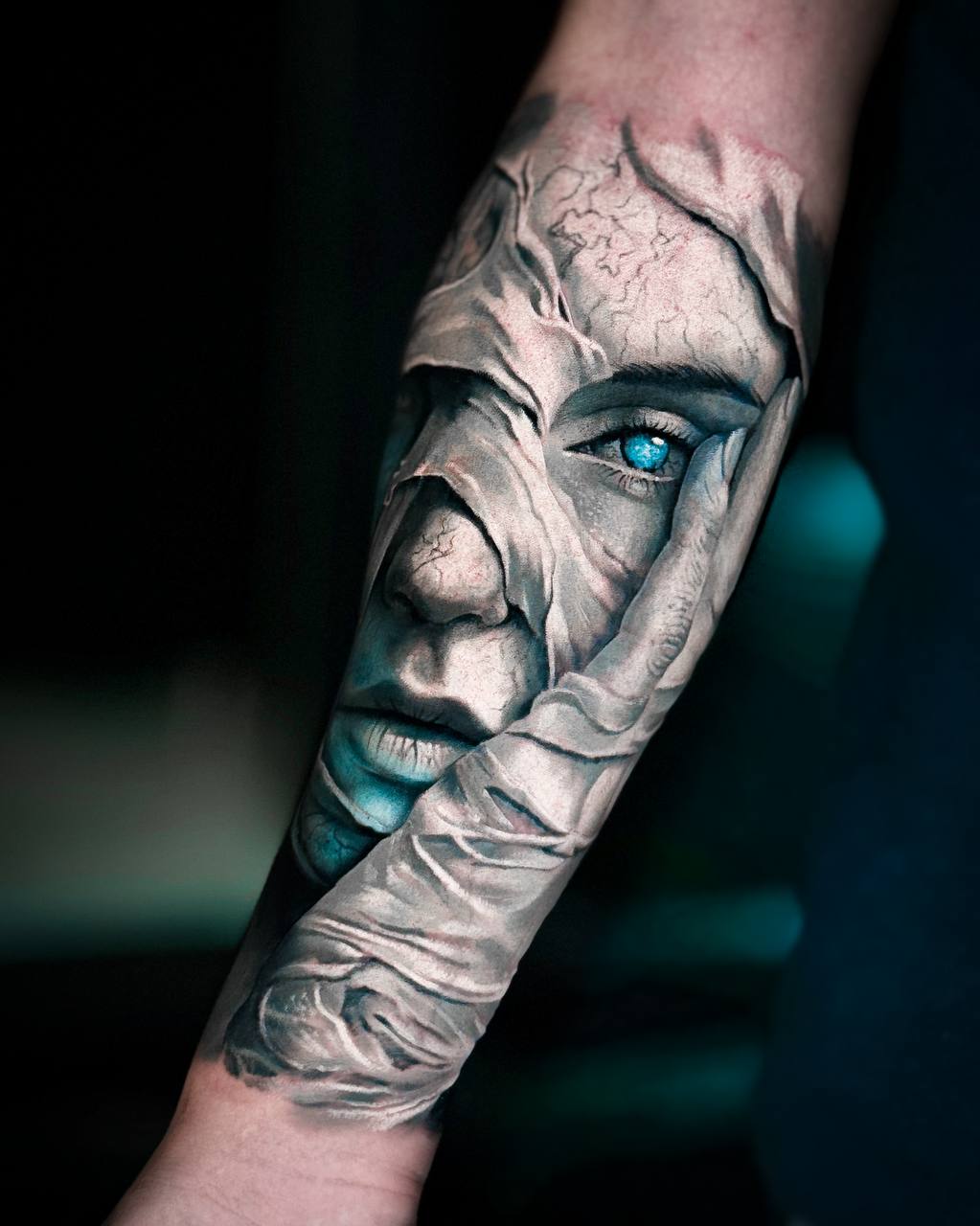
The healing process is the single most important factor in how your new tattoo will look in the long run. A tattoo that is cared for properly keeps sharp lines and rich colour; a neglected one can fade, blur or end up with patches where the ink has dropped out. The healing timeline below shows what happens in your skin from the first day to the third month, and what you should be doing at each stage.
How Long Does a Tattoo Take to Heal?
Surface healing usually takes two to three weeks: the scabs come away and the skin closes over. The deeper layers, however, need one to three months to repair completely. In other words, even when your tattoo looks healed from the outside, the repair is still going on underneath. The timing depends on the size and placement of the tattoo, your skin type and your general health. Ribs, hands, feet and joints tend to heal more slowly.
Day-by-Day Tattoo Healing Timeline
Click on the stages below to see what to do and what to avoid during that period.
Days 1–3 · The First Days
THE MOST DELICATE STAGE
A tattoo is essentially a fresh wound; cleanliness and the right moisture balance are what matter most at this stage.
✓ DO
- Remove the first wrap once the time your artist gave you has passed
- Wash your hands, then clean the area gently with lukewarm water and unscented soap
- Pat it dry with a clean paper towel
- Apply a thin layer of the recommended aftercare cream
- Clean and moisturise it two to three times a day
✕ DON'T
- Don't pick at scabs or peeling skin
- Don't scrub the area or dry it with a rough cloth
- Don't apply thick layers of cream and block the pores
- Don't touch it with unwashed hands
- Pool, sea, bathtub — don't soak it
What does it look like?
The area may be red, slightly swollen and warm. Clear or lightly tinted weeping (plasma and excess ink) is normal.
Days 4–7 · Scabbing Begins
THE ITCHY PHASE
The redness settles down and the itching starts. The golden rule of this stage: don't scratch.
✓ DO
- Keep moisturising regularly
- When it itches, apply cream or press gently with your palm
- Wear loose cotton clothing
- Keep the area out of the sun
✕ DON'T
- Don't scratch or pull off the scabs — you will be left with gaps in the ink
- Don't shave the area
- Don't do heavy workouts that make you sweat
- Don't expose it to direct sunlight and stay out of tanning beds
What does it look like?
Fine scabbing and flaking start on the surface. The tattoo may look dull and a little faded — that is normal.
Week 2 · The Peeling Stage
DAYS 8–14
The scabs fall away on their own. The surface may look healed, but the layer beneath is still repairing.
✓ DO
- Carry on moisturising
- Let the scabs come off by themselves
- You can go back to light activity
- Keep showers short and lukewarm
✕ DON'T
- Don't force off scabs that are not ready
- Don't use exfoliants or harsh products
- No long hot showers, no sauna
- Don't swim in the sea or in a pool
What does it look like?
The scabs come away and reveal shiny, slightly pink new skin underneath. The tattoo can look dull in places.
Weeks 3–4 · Surface Healing
DAYS 15–30
The surface has largely healed. The colours sharpen and the tattoo starts to come alive.
✓ DO
- Keep moisturising daily
- Use a high-factor sunscreen if you are going out in the sun
- Ease back into your normal exercise routine
- Talk to your artist if a touch-up is needed
✕ DON'T
- Don't spend long periods in the sun without protection
- Don't use tanning beds
- Don't leave the area exposed to constant friction
What does it look like?
The skin is close to normal. Slight dryness or a difference in sheen can linger. The colours become more defined.
Months 1–3 · Full Healing
THE PERMANENT LOOK
The deeper layers of skin have repaired too. Your tattoo now settles into its permanent appearance.
✓ DO
- Moisturise regularly so it lasts
- Make sun protection a habit
- Book a touch-up appointment if you need one
✕ DON'T
- Don't neglect sun protection — it is the main cause of fading
- Don't use aggressive chemical peels
What does it look like?
Colours and lines are at their sharpest. The skin texture matches the area around it.
5 Basic Rules That Speed Up Tattoo Healing
- Keep it clean, but don't overdo it. Unscented soap two or three times a day is enough; washing too often dries the skin out.
- Get the moisture balance right. Apply a thin layer of cream; a thick one clogs the pores and slows healing down.
- Don't scratch. Pulling off scabs leaves gaps in the ink and permanent marks.
- Protect it from the sun. UV is the number one cause of fading in a fresh tattoo.
- Don't soak it. Stay away from the sea, pools and the bathtub for the first two weeks; a short shower is fine.
When Should You See a Doctor?
⚠ Warning signs
- Redness that increases and spreads
- Yellow or green, foul-smelling discharge
- Pain or throbbing that keeps getting worse
- Fever or chills
- Excessive heat in the area
- A spreading rash or blisters
If you have any of these signs, don't wait — see a healthcare professional.
Related Guides
- Tattoo Aftercare: The First 30 Days — with aftercare products and the daily routine in detail
- Swimming After a Tattoo — safe waiting times by body area
- Exercise After a Tattoo — when you can go back to training
- Our tattoo and piercing services
Frequently Asked Questions
How many days does it take for a tattoo to scab?
Scabbing usually starts between days four and seven and comes away on its own during the second week. Pulling the scabs off can leave permanent marks.
When can I shower after getting a tattoo?
A short, lukewarm shower is usually possible from the first day. Avoid soaking the area (bathtub, pool, sea) for the first two weeks.
Is it normal for a tattoo to look faded while it heals?
Yes. The tattoo looks dull while it scabs and new skin forms. Once it is fully healed, the colours come back to their proper clarity.
When can I exercise after a tattoo?
Put off heavy, sweaty training for the first week. From weeks three to four you can gradually return to your normal routine.
Not sure about something with your tattoo? Ask our artist — free of charge.
Get in TouchThis timeline is for general information and describes a typical healing process. Healing can vary depending on the size and placement of the tattoo, your skin type and your general health. For your own situation, consult your tattoo artist. If you notice signs of infection or suspect an allergic reaction, see a healthcare professional.


