
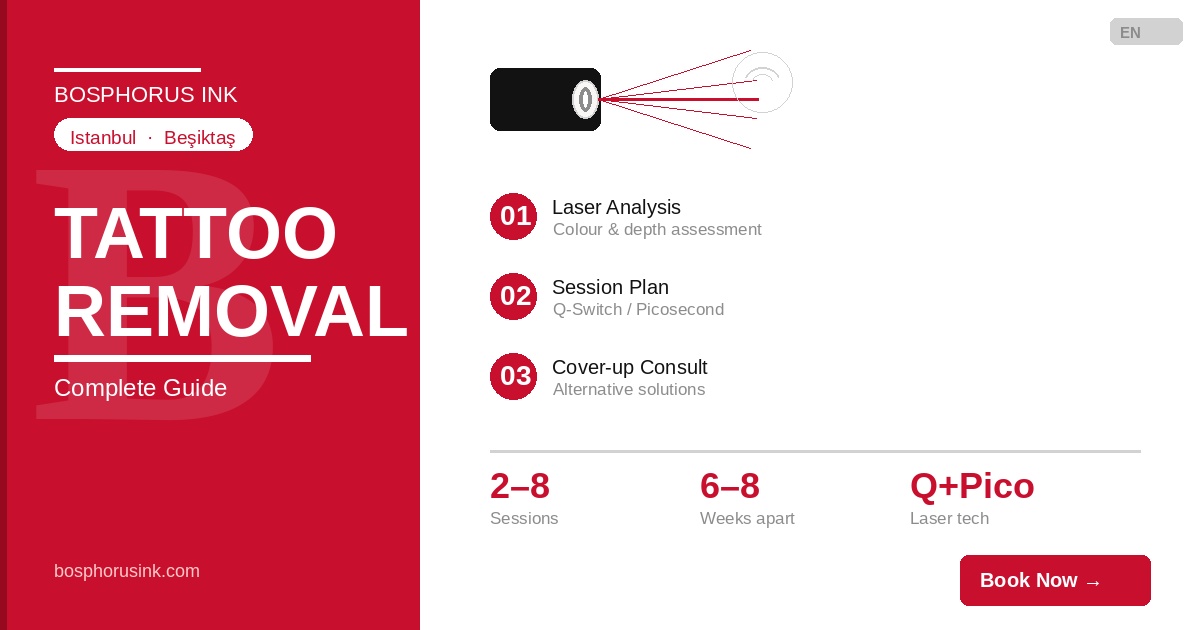
Why Is Tattoo Removal Growing in Istanbul?
Tattoo removal in Istanbul has become one of the fastest-growing aesthetic services in Turkey. Istanbul has established itself as one of the leading tattoo destinations in Europe and the Middle East, with hundreds of studios across Beşiktaş, Kadıköy, Beyoğlu and Nişantaşı serving thousands of clients every year. Yet alongside the boom in tattooing, the demand for laser tattoo removal in Istanbul has grown steadily in parallel.
The reasons are many: career changes requiring a more conservative image, evolving aesthetic tastes, a desire to move on from a past relationship or simply a youthful decision that no longer feels right. Whatever the motivation, making an informed choice is the most important step — and that starts with understanding what tattoo removal actually involves.
Tattoo Removal Methods Available in Istanbul
When it comes to effective and safe tattoo removal, laser technology is currently the only method that delivers permanent results without significant risk of scarring. Older approaches such as dermabrasion, chemical peels and surgical excision are no longer recommended by specialists due to their high risk of leaving permanent marks, burns or discolouration.
Two main laser systems are widely used in Istanbul clinics:
Q-Switched Nd:YAG Laser
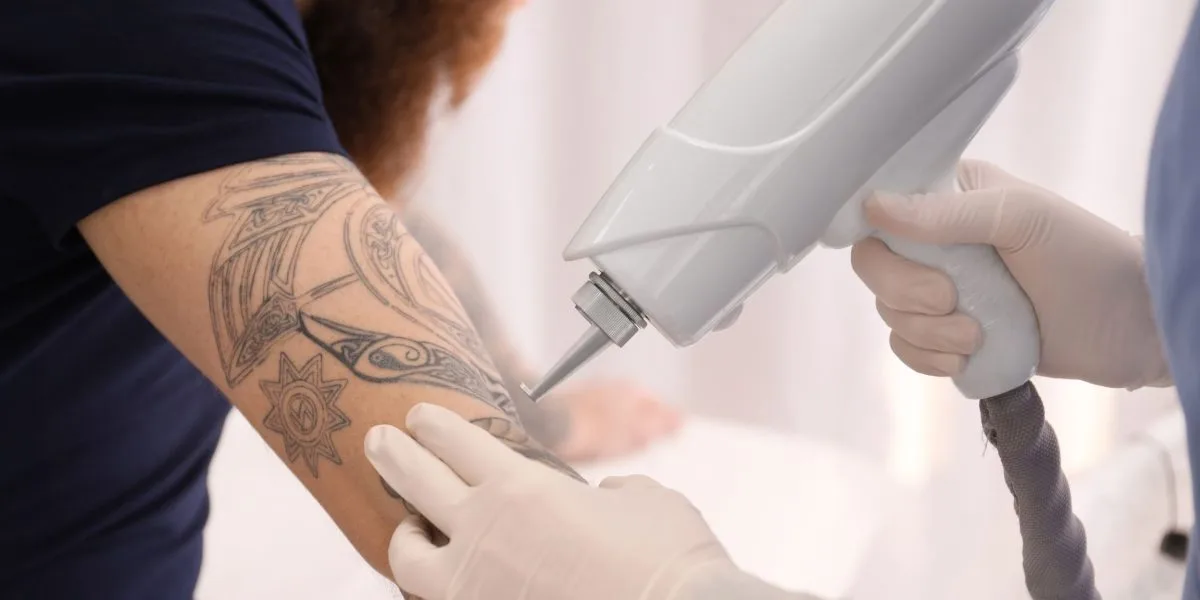
A well-established technology that fires extremely short bursts of energy — in the nanosecond range — to shatter tattoo pigment. It works at wavelengths of 1064 nm and 532 nm, making it particularly effective on black, dark blue and red ink. The fragmented pigment particles are then processed and eliminated by the body's immune system over the following weeks.
Picosecond (Pico) Laser
A newer generation system that delivers energy pulses approximately 1,000 times faster than Q-Switch lasers. By breaking pigment into finer particles, it can reduce the number of sessions required and speed up the healing process. It is especially useful for resistant colours and for cases where Q-Switch treatment has already been started.
Both technologies are considered safe when used by qualified professionals with FDA and CE certified equipment. Authoritative resources such as the U.S. FDA and the American Academy of Dermatology (AAD) provide further guidance on laser tattoo removal safety.
How Many Sessions Does Tattoo Removal Take?
There is no single answer — session count depends on multiple variables: the size and placement of the tattoo, the colour palette used, the quality and depth of the ink, the age of the tattoo (older ink tends to respond faster), and the individual's skin type and immune response.
As a general guideline, black and dark-coloured tattoos typically require four to eight sessions with Q-Switch laser, or two to four sessions with picosecond laser. Coloured tattoos — particularly those containing yellow, light green or light blue pigments — are the most resistant and may need considerably more sessions. Sessions are usually spaced six to eight weeks apart to allow the skin to heal fully between treatments.
Does Tattoo Removal Hurt?
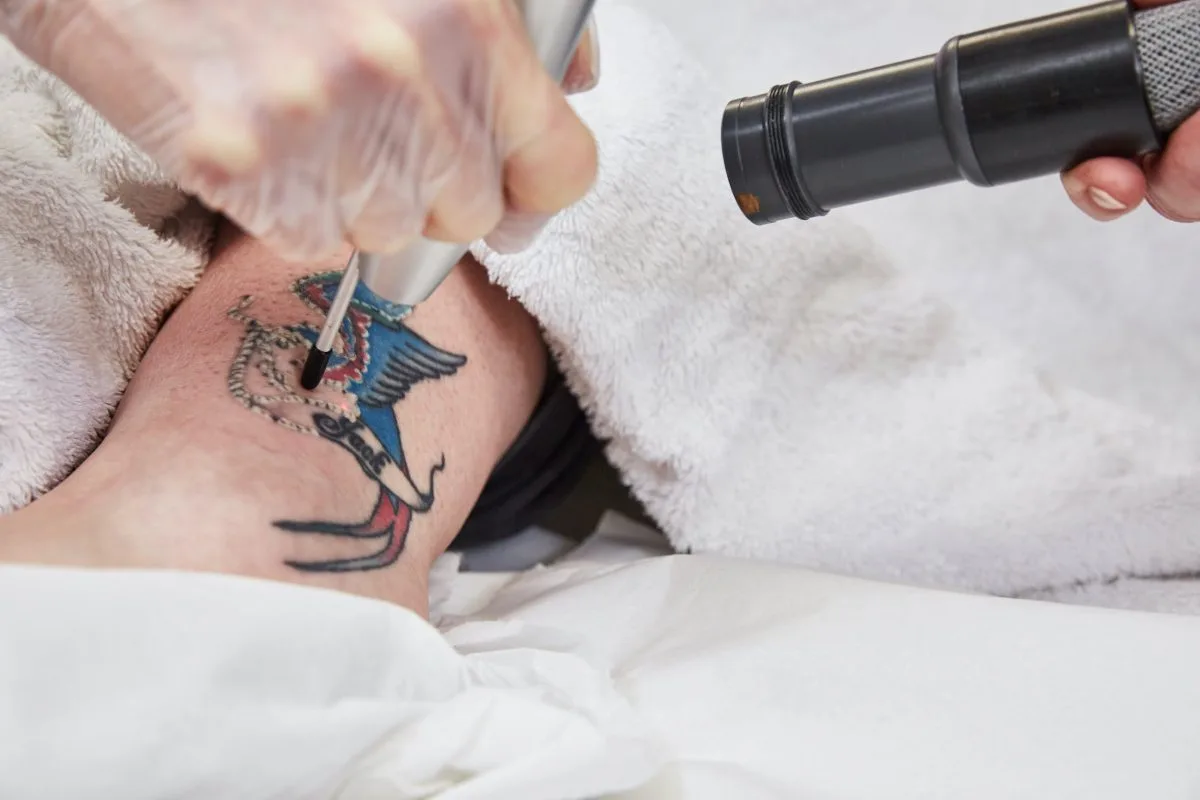
Honesty matters here: laser tattoo removal is not completely pain-free. However, modern clinics have made the experience far more manageable than it once was. Topical anaesthetic cream is applied to the treatment area before each session, significantly reducing discomfort. Many clinics also use cooling systems during the procedure to further minimise any sensation of heat or stinging.
Most people describe the feeling as similar to the snap of a rubber band — brief, localised and tolerable. The majority of clients find it comparable to or less uncomfortable than getting a tattoo in the first place. Post-treatment, mild redness, swelling and some flaking are normal and typically subside within a week. Proper aftercare, including sun protection and moisturising with recommended creams, greatly supports the healing process. For a complete routine, see our tattoo aftercare guide. For a complete routine, see our tattoo aftercare guide.
What Results Can You Realistically Expect?
Laser tattoo removal can achieve significant fading or complete elimination of a tattoo in many cases — but complete removal cannot be guaranteed for every situation. Key factors that influence the outcome include: ink colour (black and dark tones respond best; yellow, light green and light blue are most resistant), ink depth and quality, tattoo age and whether a previous cover-up or re-work is involved.
A professional pre-treatment consultation — during which the tattoo is assessed and realistic expectations are discussed — is essential before committing to a removal programme. The UK NHS tattoo removal guide also offers an unbiased overview of what to expect. Understanding what is achievable for a specific tattoo prevents disappointment and allows you to make the most informed decision.
Before and After Your Session: Key Care Points
Before your session
Protect the tattoo area from sun exposure for at least two weeks beforehand — tanned or sunburned skin reduces laser effectiveness and increases the risk of complications. Inform your practitioner if you are taking blood-thinning medications and discuss whether to pause them. Do not proceed if there is an open wound or active skin infection in the area.
After your session
Keep the treated area covered for the first 24 hours. Resist the temptation to pick at any scabbing — doing so significantly increases the risk of scarring. Apply sun protection diligently — at least SPF 50 — whenever the area is exposed. Use the moisturising creams recommended by your clinic. Avoid tight clothing that rubs against the treated skin. Reducing alcohol and tobacco intake can also support faster healing.
Cover-Up Tattooing: A Powerful Alternative to Removal
Laser removal is not the only path forward. In many situations, a well-executed cover-up tattoo offers a faster, more economical and artistically satisfying solution — particularly when the goal is not a blank canvas but simply a fresh start.
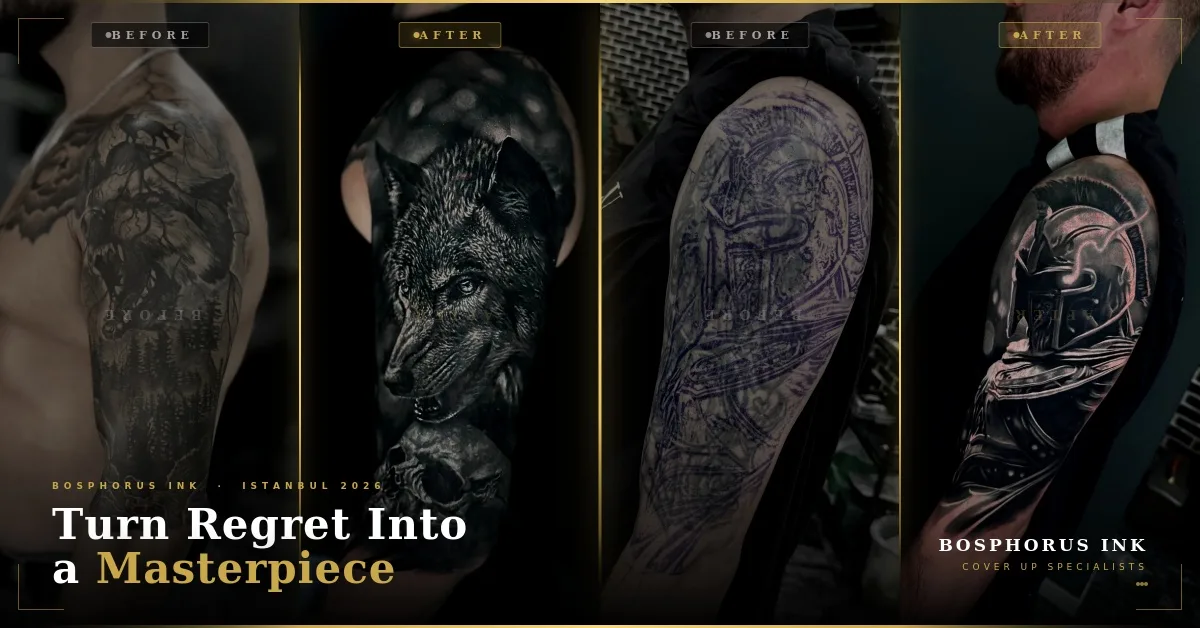
A cover-up involves designing a new piece that incorporates or fully conceals the existing tattoo. With the right artist and the right style, the original design can disappear entirely into the new work. Black and grey, geometric, Japanese and blackwork styles are particularly well-suited to cover-up projects.
At Bosphorus Ink, the team always recommends discussing a cover-up consultation before committing to a removal programme. In some cases, a combination approach works best: a few laser sessions to fade the existing tattoo enough to broaden the design options for the cover-up, followed by a new piece that truly reflects where you are now. This approach is often faster and more affordable than full removal.
How to Choose the Right Tattoo Removal Clinic in Istanbul
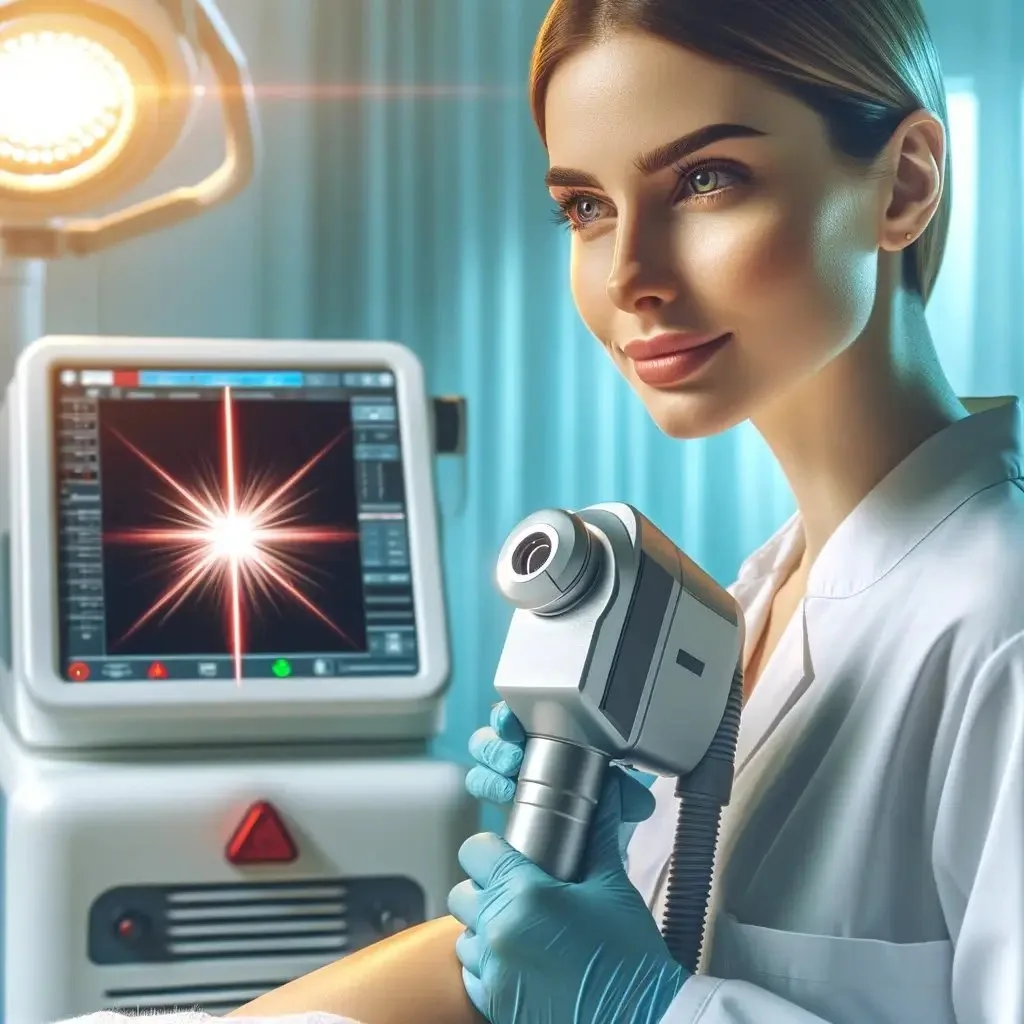
Istanbul has many clinics offering laser tattoo removal. To make a safe and informed choice, consider the following: confirm that the laser device used is FDA or CE certified; check whether the procedure is supervised or performed by a dermatologist, plastic surgeon or certified laser technician; ask to see before-and-after portfolios from previous clients; choose clinics that offer a proper pre-treatment consultation; and do not assume the cheapest option is the best one. Comparing two or three clinics before deciding is always worthwhile.
Tattoo Consultation at Bosphorus Ink
While Bosphorus Ink does not provide laser removal services, as one of Istanbul's most established tattoo studios the team offers comprehensive consultation on cover-up alternatives, tattoo reworking and pre- or post-laser tattoo planning.
With studios in Beşiktaş and Pendik Lens Yaşam Merkezi, the team has worked with thousands of clients over the years and understands that every tattoo story is unique. If you are not happy with an existing piece or are considering a significant change, explore our services, browse the gallery, or reach out to the team — the right path forward starts with the right conversation.
Free cover-up consultation: Send us a photo of your old tattoo and we will go through your cover-up options together → Message us on WhatsApp
Disclaimer: This content is for informational purposes only and does not replace medical advice. Always consult a certified dermatologist or licensed clinic before undergoing laser tattoo removal.
Frequently Asked Questions
How many sessions does tattoo removal take?
Does laser tattoo removal hurt?
Does laser tattoo removal leave scars?
Can colored tattoos be completely removed?
Should I choose a cover-up instead of tattoo removal?


